Supreme Court Rules Girl Can Claim SC Status Through Mother, Not Non-SC Father

In a rare and sensitive intervention, the Supreme Court on Monday allowed a minor girl to be issued a Scheduled Caste (SC) certificate based on her mother’s caste, prioritising the child’s education while keeping a larger and long-pending legal question open.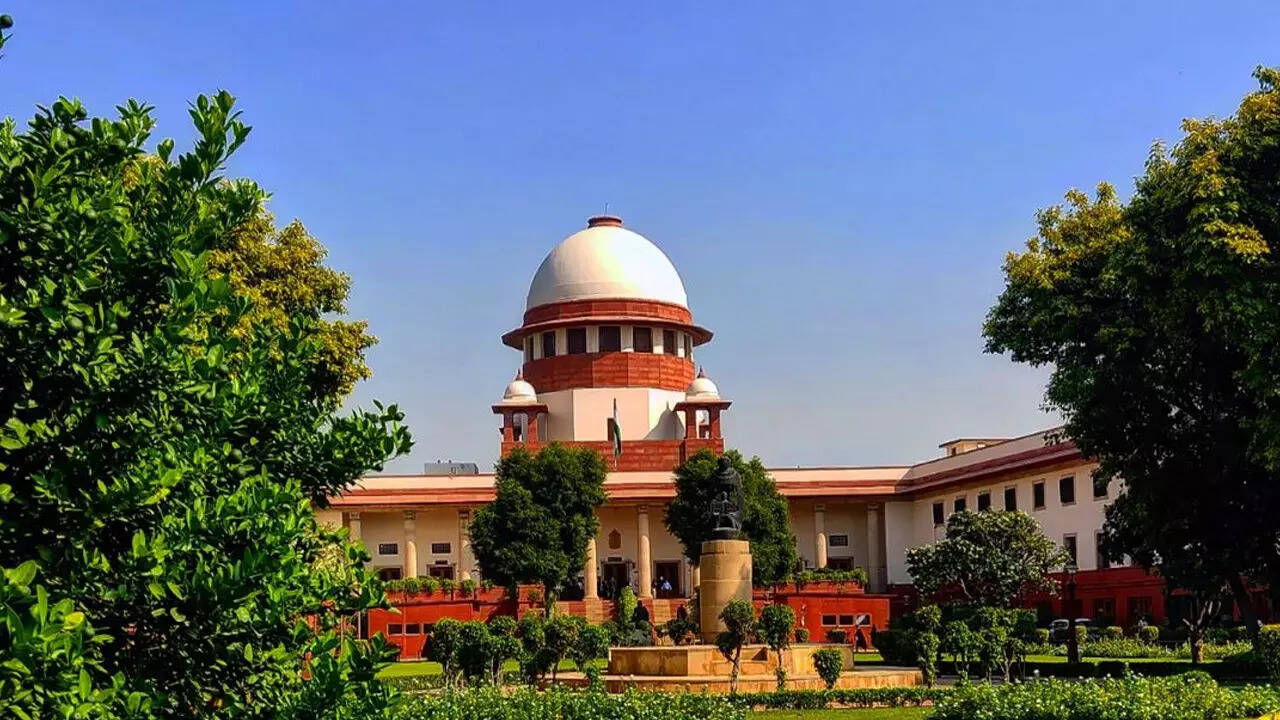
A bench comprising Chief Justice Surya Kant and Justice Joymalya Bagchi refused to interfere with a Madras High Court order that had directed authorities to grant the SC certificate to a Puducherry-based student. The court underlined that denying the certificate at this stage could seriously harm the girl’s academic future.
"We are keeping the question of law open," the bench clarified, making it clear that this order should not be seen as a final ruling on whether a child can legally inherit caste from the mother instead of the father. However, what followed immediately after was significant. The Chief Justice remarked, "With changing times, why should a caste certificate be not issued based on the mother's caste?" an observation that could potentially reopen a national debate on caste determination.
The case stemmed from a request made by the girl’s mother, who belongs to the Hindu Adi Dravida community. She had applied to the local tahsildar seeking SC certificates for her three children two daughters and a son. In her application, she explained that her husband, who is not from an SC community, had been living with her parents since their marriage and that the children were brought up entirely within her social and familial environment. She also stated that her parents and grandparents were members of the Adi Dravida community.
Authorities had earlier rejected her plea, relying on presidential notifications dated March 5, 1964, and February 17, 2002, along with instructions from the Union Ministry of Home Affairs. These rules state that eligibility for caste certification is primarily determined by the father’s caste and his permanent residence within the concerned state or Union Territory.
The Supreme Court has historically supported this view. In Punit Rai Vs Dinesh Chaudhary [(2003) 8 SCC 204], the court held that “the decisive factor for determination of caste of a person will be the caste of the father as per customary Hindu Law,” and that, in the absence of a statutory provision, caste is inherited from the father and not the mother.
In the 2012 judgment in 'Rameshbhai Dabhai Naika vs Gujarat', a two-judge bench of SC ruled, "The determination of caste of a person born of an inter-caste marriage or a marriage between a tribal and a non-tribal cannot be determined in complete disregard of attending facts of the case." It said, "In an inter-caste marriage or a marriage between a tribal and a non-tribal, there may be a presumption the child has the caste of the father. This presumption may be stronger in the case where in the inter-caste marriage or a marriage between tribal and non-tribal, the husband belongs to a forward caste."
"But by no means is the presumption conclusive or irrebuttable, and it is open to the child of such marriage to lead evidence to show he/she was brought up by the mother who belonged to SC/ST. By virtue of being the son of a forward caste father, he did not have any advantageous start in life but on the contrary suffered the deprivations, indignities, humiliations and handicaps like any other member of the community to which his/her mother belonged. Additionally, he was always treated as a member of the community to which her mother belonged not only by that community but by people outside the community as well," it said.
A bench comprising Chief Justice Surya Kant and Justice Joymalya Bagchi refused to interfere with a Madras High Court order that had directed authorities to grant the SC certificate to a Puducherry-based student. The court underlined that denying the certificate at this stage could seriously harm the girl’s academic future.
"We are keeping the question of law open," the bench clarified, making it clear that this order should not be seen as a final ruling on whether a child can legally inherit caste from the mother instead of the father. However, what followed immediately after was significant. The Chief Justice remarked, "With changing times, why should a caste certificate be not issued based on the mother's caste?" an observation that could potentially reopen a national debate on caste determination.
The case stemmed from a request made by the girl’s mother, who belongs to the Hindu Adi Dravida community. She had applied to the local tahsildar seeking SC certificates for her three children two daughters and a son. In her application, she explained that her husband, who is not from an SC community, had been living with her parents since their marriage and that the children were brought up entirely within her social and familial environment. She also stated that her parents and grandparents were members of the Adi Dravida community.
Authorities had earlier rejected her plea, relying on presidential notifications dated March 5, 1964, and February 17, 2002, along with instructions from the Union Ministry of Home Affairs. These rules state that eligibility for caste certification is primarily determined by the father’s caste and his permanent residence within the concerned state or Union Territory.
The Supreme Court has historically supported this view. In Punit Rai Vs Dinesh Chaudhary [(2003) 8 SCC 204], the court held that “the decisive factor for determination of caste of a person will be the caste of the father as per customary Hindu Law,” and that, in the absence of a statutory provision, caste is inherited from the father and not the mother.
In the 2012 judgment in 'Rameshbhai Dabhai Naika vs Gujarat', a two-judge bench of SC ruled, "The determination of caste of a person born of an inter-caste marriage or a marriage between a tribal and a non-tribal cannot be determined in complete disregard of attending facts of the case." It said, "In an inter-caste marriage or a marriage between a tribal and a non-tribal, there may be a presumption the child has the caste of the father. This presumption may be stronger in the case where in the inter-caste marriage or a marriage between tribal and non-tribal, the husband belongs to a forward caste."
"But by no means is the presumption conclusive or irrebuttable, and it is open to the child of such marriage to lead evidence to show he/she was brought up by the mother who belonged to SC/ST. By virtue of being the son of a forward caste father, he did not have any advantageous start in life but on the contrary suffered the deprivations, indignities, humiliations and handicaps like any other member of the community to which his/her mother belonged. Additionally, he was always treated as a member of the community to which her mother belonged not only by that community but by people outside the community as well," it said.
Next Story