
10 Massive Deserts That Spread Across Multiple Countries Worldwide

The Top 10 Deserts That Span Across Multiple Countries include some of the most extreme, fascinating, and geographically significant landscapes on Earth. Deserts are not just endless stretches of sand; they can also be rocky plateaus, gravel plains, and even cold, icy regions. What makes these deserts even more remarkable is that they cross international borders, shaping the climate, wildlife, trade routes, and cultures of entire regions. From Africa to Asia and the Americas, these vast drylands tell the story of Earth’s natural diversity and human adaptation.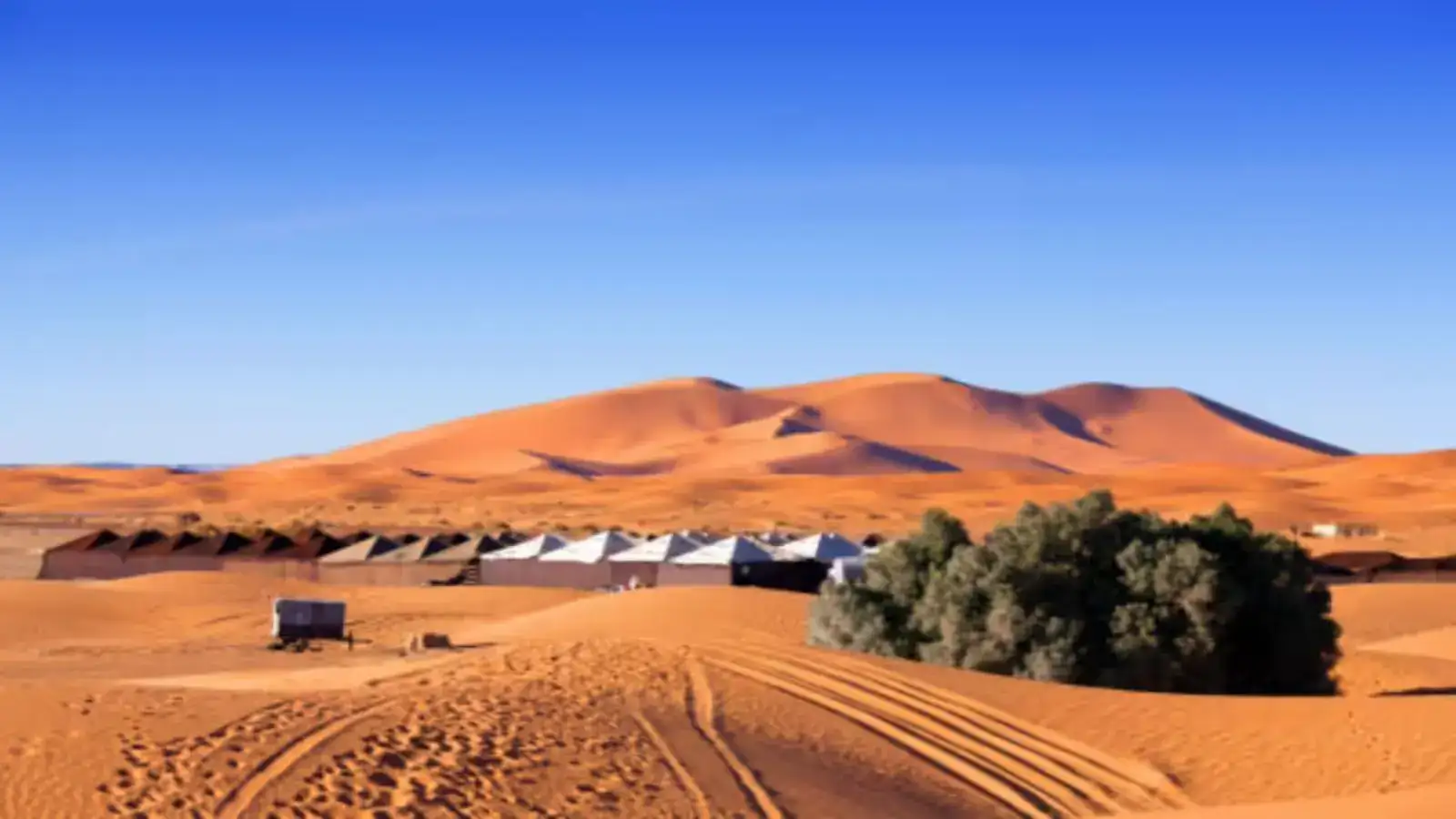
1. Sahara Desert – The Largest Hot Desert on Earth
The Sahara Desert is the biggest hot desert in the world, stretching across North Africa and covering around 9.2 million square kilometres. It spans over 11 countries, including Algeria, Egypt, Libya, Sudan, and Morocco.
Despite its harsh conditions, the Sahara has long been a centre of trade, migration, and ancient civilisation routes.
2. Arabian Desert – The Desert of Endless Dunes
Covering most of the Arabian Peninsula, the Arabian Desert extends across Saudi Arabia, Oman, Yemen, Iraq, Jordan, Kuwait, and the UAE.
This desert played a major role in ancient caravan trade routes.
3. Gobi Desert – A Cold Desert of Extremes
The Gobi Desert lies between northern China and southern Mongolia, covering around 1.3 million square kilometres.
It is also a key region for studying desertification.
4. Kalahari Desert – Africa’s Semi-Arid Wilderness
Spanning Botswana, Namibia, and South Africa, the Kalahari covers around 900,000 square kilometres.
It is one of Africa’s most unique ecosystems.
5. Patagonian Desert – South America’s Largest Desert
The Patagonian Desert stretches across Argentina and Chile, covering about 670,000 square kilometres.
It is the largest desert in South America.
6. Karakum & Kyzylkum Deserts – Central Asia’s Arid Belt
These deserts span Turkmenistan, Uzbekistan, Kazakhstan, and parts of Afghanistan.
Together, they form one of the world’s largest desert systems.
7. Thar Desert – The Great Indian Desert
The Thar Desert stretches across northwestern India and Pakistan, covering around 200,000 square kilometres.
It is a rare example of human adaptation in harsh conditions.
8. Namib Desert – The Oldest Desert on Earth
The Namib Desert runs along Namibia’s Atlantic coast and extends into Angola and South Africa.
Its landscapes are among the most ancient on Earth.
9. Atacama Desert – The Driest Place in the World
Located in northern Chile and southern Peru, the Atacama Desert is the driest non-polar desert on Earth.
Despite its dryness, it supports specialised life forms.
10. Sonoran Desert – A Biodiversity Hotspot
The Sonoran Desert stretches across the southwestern United States and northwestern Mexico.
It is one of the most biologically diverse deserts in the world.
Which Is the Largest Desert Spanning Multiple Countries?
The Sahara Desert is the largest desert that spans multiple countries. Covering about 9.2 million square kilometres and extending across 11 nations, it dominates nearly one-third of Africa and remains the most iconic transboundary desert on Earth.
These Top 10 Deserts That Span Across Multiple Countries highlight how nature ignores political borders. From scorching sands to frozen landscapes, these deserts influence ecosystems, cultures, and human survival strategies across continents. Their vastness and diversity make them some of the most extraordinary natural regions on the planet.
1. Sahara Desert – The Largest Hot Desert on Earth
The Sahara Desert is the biggest hot desert in the world, stretching across North Africa and covering around 9.2 million square kilometres. It spans over 11 countries, including Algeria, Egypt, Libya, Sudan, and Morocco.
- Vast sand dunes and rocky landscapes
- Extreme temperatures, from scorching days to cold nights
- Home to millions of people living near oases and desert towns
Despite its harsh conditions, the Sahara has long been a centre of trade, migration, and ancient civilisation routes.
2. Arabian Desert – The Desert of Endless Dunes
Covering most of the Arabian Peninsula, the Arabian Desert extends across Saudi Arabia, Oman, Yemen, Iraq, Jordan, Kuwait, and the UAE.
- Spans about 2.3 million square kilometres
- Contains Rub’ al Khali (Empty Quarter), the world’s largest sand sea
- Historically inhabited by Bedouin tribes
This desert played a major role in ancient caravan trade routes.
3. Gobi Desert – A Cold Desert of Extremes
The Gobi Desert lies between northern China and southern Mongolia, covering around 1.3 million square kilometres.
- Cold desert with freezing winters and occasional snow
- Rich in dinosaur fossils
- Home to rare wildlife like the snow leopard and Bactrian camel
It is also a key region for studying desertification.
4. Kalahari Desert – Africa’s Semi-Arid Wilderness
Spanning Botswana, Namibia, and South Africa, the Kalahari covers around 900,000 square kilometres.
- Technically a semi-desert with seasonal rainfall
- Rich wildlife including lions, cheetahs, and meerkats
- Inhabited for thousands of years by the San people
It is one of Africa’s most unique ecosystems.
5. Patagonian Desert – South America’s Largest Desert
The Patagonian Desert stretches across Argentina and Chile, covering about 670,000 square kilometres.
- Strong winds and low rainfall
- Created by the rain shadow of the Andes Mountains
- Known for fossils and unique landscapes
It is the largest desert in South America.
6. Karakum & Kyzylkum Deserts – Central Asia’s Arid Belt
These deserts span Turkmenistan, Uzbekistan, Kazakhstan, and parts of Afghanistan.
- Karakum lies mainly in Turkmenistan
- Kyzylkum spreads across Uzbekistan and Kazakhstan
- Known for extreme temperatures and natural gas reserves
Together, they form one of the world’s largest desert systems.
7. Thar Desert – The Great Indian Desert
The Thar Desert stretches across northwestern India and Pakistan, covering around 200,000 square kilometres.
- One of the world’s most populated deserts
- Supports farming and livestock despite dryness
- Rich cultural traditions in Rajasthan and Sindh
It is a rare example of human adaptation in harsh conditions.
8. Namib Desert – The Oldest Desert on Earth
The Namib Desert runs along Namibia’s Atlantic coast and extends into Angola and South Africa.
- Estimated to be over 55 million years old
- Famous for red sand dunes and coastal fog
- Home to desert elephants and oryx
Its landscapes are among the most ancient on Earth.
9. Atacama Desert – The Driest Place in the World
Located in northern Chile and southern Peru, the Atacama Desert is the driest non-polar desert on Earth.
- Some areas receive no rain for decades
- Mars-like terrain used for space research
- Rich in minerals like copper and lithium
Despite its dryness, it supports specialised life forms.
10. Sonoran Desert – A Biodiversity Hotspot
The Sonoran Desert stretches across the southwestern United States and northwestern Mexico.
- Covers about 260,000 square kilometres
- Famous for the giant saguaro cactus
- Experiences two rainy seasons annually
It is one of the most biologically diverse deserts in the world.
Which Is the Largest Desert Spanning Multiple Countries?
The Sahara Desert is the largest desert that spans multiple countries. Covering about 9.2 million square kilometres and extending across 11 nations, it dominates nearly one-third of Africa and remains the most iconic transboundary desert on Earth.
These Top 10 Deserts That Span Across Multiple Countries highlight how nature ignores political borders. From scorching sands to frozen landscapes, these deserts influence ecosystems, cultures, and human survival strategies across continents. Their vastness and diversity make them some of the most extraordinary natural regions on the planet.
Next Story