
Family opens water tank and finds 27 baby snakes inside: The Haridwar discovery that left an entire neighbourhood stunned


It began as an ordinary household check. A family in Haridwar's Sarai village in Uttarakhand had noticed something unusual around their water supply. Curious, they lifted the lid of a water tank, expecting to find a blockage, debris or perhaps a maintenance issue.
Instead, they found movement. Not one snake. Not two. Dozens of tiny snakes were wriggling through the water.
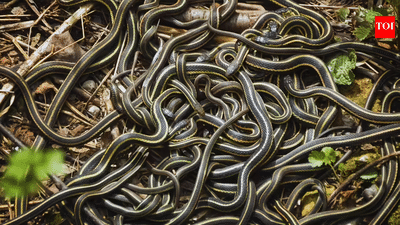
Within minutes, the alarm spread through the house. Family members stepped back in disbelief as neighbours gathered to see what had caused the commotion. Hidden inside a tank used for daily household water were 27 baby snakes, a discovery so unusual that videos of the rescue would soon spread across social media.
What rescuers found inside the Haridwar water tank
As news of the discovery spread through the village, the family contacted forest officials for help. A Quick Response Team from the Forest Department arrived at the property along with experienced snake rescuers. Working carefully around the tank, the team began removing the reptiles one by one. What initially appeared to be a handful of snakes soon turned into a much larger operation.
As per The Tribune, by the end of the rescue, officials had counted 27 baby snakes inside the tank . Every snake was safely removed without injury to either the animals or the residents. The rescue brought relief to a household that had moments earlier been confronted with an unexpected wildlife encounter inside its own water supply.
Videos recorded during the operation show rescuers carefully collecting the hatchlings as curious onlookers watched from a distance. The footage quickly attracted attention online, where many viewers questioned how so many snakes could have ended up in a household water tank.
Why were 27 snakes living inside a household water tank
According to forest officials, the most likely explanation begins with a single female snake. Officials said the tank contained water and may have provided a cool, protected environment suitable for laying eggs. Officials believe a female snake could have deposited eggs inside the structure some time ago, allowing the hatchlings to remain hidden there for days or even weeks before being discovered.
Summer conditions may also have played a role. As temperatures rise, snakes and other wildlife often seek cooler, moisture-rich shelters. Water tanks, drains and shaded structures can sometimes provide the conditions reptiles are looking for, particularly in areas close to natural habitats.
While the exact sequence of events remains uncertain, officials say the presence of eggs inside the tank is the most plausible explanation for the large number of hatchlings found together.
The snakes were identified as harmless checkered keelbacks
Fortunately for the family, the young reptiles were identified as checkered keelbacks, a species commonly known as the Asiatic water snake.
The species is non-venomous and is frequently found near rivers, ponds, wetlands and canals throughout the Indian subcontinent.
Recognisable by its distinctive chequered markings, the snake typically feeds on fish, frogs and other aquatic prey. Wildlife experts note that although it may behave defensively when disturbed, it is generally not considered dangerous to humans.
The discovery nevertheless serves as a reminder of how closely human settlements and wildlife habitats can overlap, especially during the warmer months.
For one Haridwar family, a routine look inside a water tank turned into a scene few people would ever expect to witness. By the time rescuers finished their work, 27 tiny snakes had been removed safely, leaving behind a story that has fascinated people far beyond the village where it happened.
Instead, they found movement. Not one snake. Not two. Dozens of tiny snakes were wriggling through the water.
Within minutes, the alarm spread through the house. Family members stepped back in disbelief as neighbours gathered to see what had caused the commotion. Hidden inside a tank used for daily household water were 27 baby snakes, a discovery so unusual that videos of the rescue would soon spread across social media.
What rescuers found inside the Haridwar water tank
As news of the discovery spread through the village, the family contacted forest officials for help. A Quick Response Team from the Forest Department arrived at the property along with experienced snake rescuers. Working carefully around the tank, the team began removing the reptiles one by one. What initially appeared to be a handful of snakes soon turned into a much larger operation.
As per The Tribune, by the end of the rescue, officials had counted 27 baby snakes inside the tank . Every snake was safely removed without injury to either the animals or the residents. The rescue brought relief to a household that had moments earlier been confronted with an unexpected wildlife encounter inside its own water supply.
Videos recorded during the operation show rescuers carefully collecting the hatchlings as curious onlookers watched from a distance. The footage quickly attracted attention online, where many viewers questioned how so many snakes could have ended up in a household water tank.
Why were 27 snakes living inside a household water tank
According to forest officials, the most likely explanation begins with a single female snake. Officials said the tank contained water and may have provided a cool, protected environment suitable for laying eggs. Officials believe a female snake could have deposited eggs inside the structure some time ago, allowing the hatchlings to remain hidden there for days or even weeks before being discovered.
Summer conditions may also have played a role. As temperatures rise, snakes and other wildlife often seek cooler, moisture-rich shelters. Water tanks, drains and shaded structures can sometimes provide the conditions reptiles are looking for, particularly in areas close to natural habitats.
While the exact sequence of events remains uncertain, officials say the presence of eggs inside the tank is the most plausible explanation for the large number of hatchlings found together.
The snakes were identified as harmless checkered keelbacks
Fortunately for the family, the young reptiles were identified as checkered keelbacks, a species commonly known as the Asiatic water snake.
The species is non-venomous and is frequently found near rivers, ponds, wetlands and canals throughout the Indian subcontinent.
Recognisable by its distinctive chequered markings, the snake typically feeds on fish, frogs and other aquatic prey. Wildlife experts note that although it may behave defensively when disturbed, it is generally not considered dangerous to humans.
The discovery nevertheless serves as a reminder of how closely human settlements and wildlife habitats can overlap, especially during the warmer months.
For one Haridwar family, a routine look inside a water tank turned into a scene few people would ever expect to witness. By the time rescuers finished their work, 27 tiny snakes had been removed safely, leaving behind a story that has fascinated people far beyond the village where it happened.
Next Story