
What Do You Call Kaju Katli in English? Discover the Royal History of India’s Beloved Sweet

Kaju Katli in English is commonly known as Cashew Fudge or Indian Cashew Slices, a term widely used to describe one of India’s most loved festive sweets. Popular during Diwali, weddings, Raksha Bandhan, and gifting seasons, this diamond-shaped delicacy has earned global recognition for its smooth texture and rich cashew flavour. But beyond its taste lies a fascinating royal history that traces back centuries.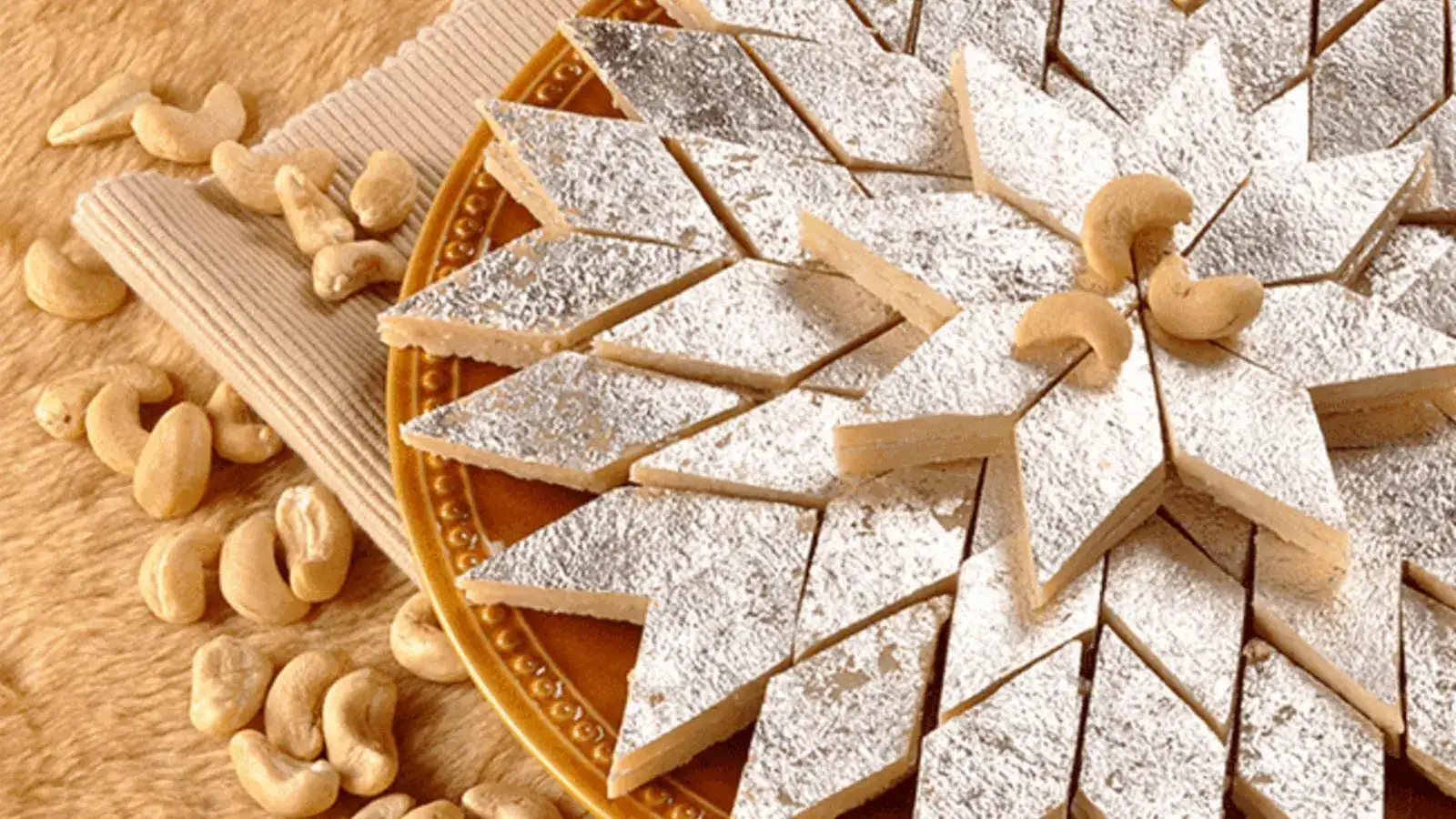
Kaju Katli in English: What Is It Called?
The primary keyword Kaju Katli in English is most commonly translated as:
The name is derived from its ingredients and shape:
Unlike Western fudge, which is typically made using milk, butter, and sugar, Kaju Katli is crafted mainly from finely ground cashews and sugar, giving it a smoother, nutty richness that sets it apart.
The Royal History of Kaju Katli
The story of Kaju Katli begins not in Indian kitchens, but with the arrival of cashew nuts in India.
Cashews are not native to the country. Historical records suggest that Portuguese traders brought cashew trees from Brazil to India’s western coast in the 16th century. These trees were initially planted to prevent soil erosion along coastal regions.
Over time, cashew cultivation flourished across regions such as:
As cashews became more widely available, royal chefs and traditional halwais began experimenting with them. This experimentation eventually led to the creation of Kaju Katli—a luxurious yet simple sweet that quickly became popular in royal households.
A Sweet Once Reserved for Royalty
In earlier centuries, ingredients like cashews, saffron, and edible silver leaf (varak) were expensive and considered luxury items. They were mainly enjoyed by:
Kaju Katli’s smooth texture, delicate flavour, and elegant appearance made it a favourite in royal courts. As cashew production increased and trade expanded, the sweet gradually became more affordable, reaching the general population.
Today, it stands as one of India’s most popular festive sweets, enjoyed across all social classes.
Why Kaju Katli Is Diamond-Shaped
One of the most recognisable features of this sweet is its iconic diamond shape.
Food experts and culinary traditions suggest several reasons behind this design:
Over time, the diamond cut became a signature identity of Kaju Katli, making it instantly recognisable in sweet shops across India.
Global Popularity of Kaju Katli
With Indian cuisine gaining international attention, Kaju Katli has crossed borders and won hearts worldwide. It is now commonly found in:
Its simple ingredients, luxurious feel, and melt-in-the-mouth texture continue to make it a global favourite.
From its Portuguese-linked origins to its royal legacy, Kaju Katli has travelled a remarkable journey to become India’s most iconic cashew sweet. Known in English as Cashew Fudge, it remains a symbol of celebration, tradition, and indulgence - enjoyed in every festive moment across the country and beyond.
Kaju Katli in English: What Is It Called?
The primary keyword Kaju Katli in English is most commonly translated as:
- Cashew Fudge
- Indian Cashew Fudge
- Cashew Slices
The name is derived from its ingredients and shape:
- Kaju means cashew nuts
- Katli refers to thin, sliced pieces
Unlike Western fudge, which is typically made using milk, butter, and sugar, Kaju Katli is crafted mainly from finely ground cashews and sugar, giving it a smoother, nutty richness that sets it apart.
The Royal History of Kaju Katli
The story of Kaju Katli begins not in Indian kitchens, but with the arrival of cashew nuts in India.
Cashews are not native to the country. Historical records suggest that Portuguese traders brought cashew trees from Brazil to India’s western coast in the 16th century. These trees were initially planted to prevent soil erosion along coastal regions.
Over time, cashew cultivation flourished across regions such as:
- Goa
- Maharashtra
- Karnataka
- Kerala
- Tamil Nadu
As cashews became more widely available, royal chefs and traditional halwais began experimenting with them. This experimentation eventually led to the creation of Kaju Katli—a luxurious yet simple sweet that quickly became popular in royal households.
A Sweet Once Reserved for Royalty
In earlier centuries, ingredients like cashews, saffron, and edible silver leaf (varak) were expensive and considered luxury items. They were mainly enjoyed by:
You may also like
- Feeling Emotionally Overwhelmed in Week 3 of Pregnancy? Here's Why
- Meet Tayab Khan: Security guard who has won ₹78 crore lottery in Abu Dhabi but would only get to take ₹15 crore home
- Explore Hyderabad's closest waterfall, just 20 km from LB Nagar
- Looking for new places to eat? 'Map Your Dubai' lets you explore over 100 local restaurants
- From Parliament to Premieres: Kangana Ranaut's saree love is changing fashion conversations
- Royal families
- Wealthy merchants
- Elite households
Kaju Katli’s smooth texture, delicate flavour, and elegant appearance made it a favourite in royal courts. As cashew production increased and trade expanded, the sweet gradually became more affordable, reaching the general population.
Today, it stands as one of India’s most popular festive sweets, enjoyed across all social classes.
Why Kaju Katli Is Diamond-Shaped
One of the most recognisable features of this sweet is its iconic diamond shape.
Food experts and culinary traditions suggest several reasons behind this design:
- It enhances visual appeal
- It allows uniform portion sizes
- It makes storage and serving easier
Over time, the diamond cut became a signature identity of Kaju Katli, making it instantly recognisable in sweet shops across India.
Global Popularity of Kaju Katli
With Indian cuisine gaining international attention, Kaju Katli has crossed borders and won hearts worldwide. It is now commonly found in:
- Indian restaurants abroad
- International sweet shops
- Festive gift hampers
Its simple ingredients, luxurious feel, and melt-in-the-mouth texture continue to make it a global favourite.
From its Portuguese-linked origins to its royal legacy, Kaju Katli has travelled a remarkable journey to become India’s most iconic cashew sweet. Known in English as Cashew Fudge, it remains a symbol of celebration, tradition, and indulgence - enjoyed in every festive moment across the country and beyond.






More from our partners


Loving Newspoint? Download the app now
