Rishab Shetty Breaks Silence on Ranveer Singh’s Daiva Controversy, Calls It 'Uncomfortable'

Weeks after the controversy surrounding Ranveer Singh ’s mimicry of the Daiva sequence from Kantara , Rishab Shetty has finally shared his thoughts, and his response is calm yet clear.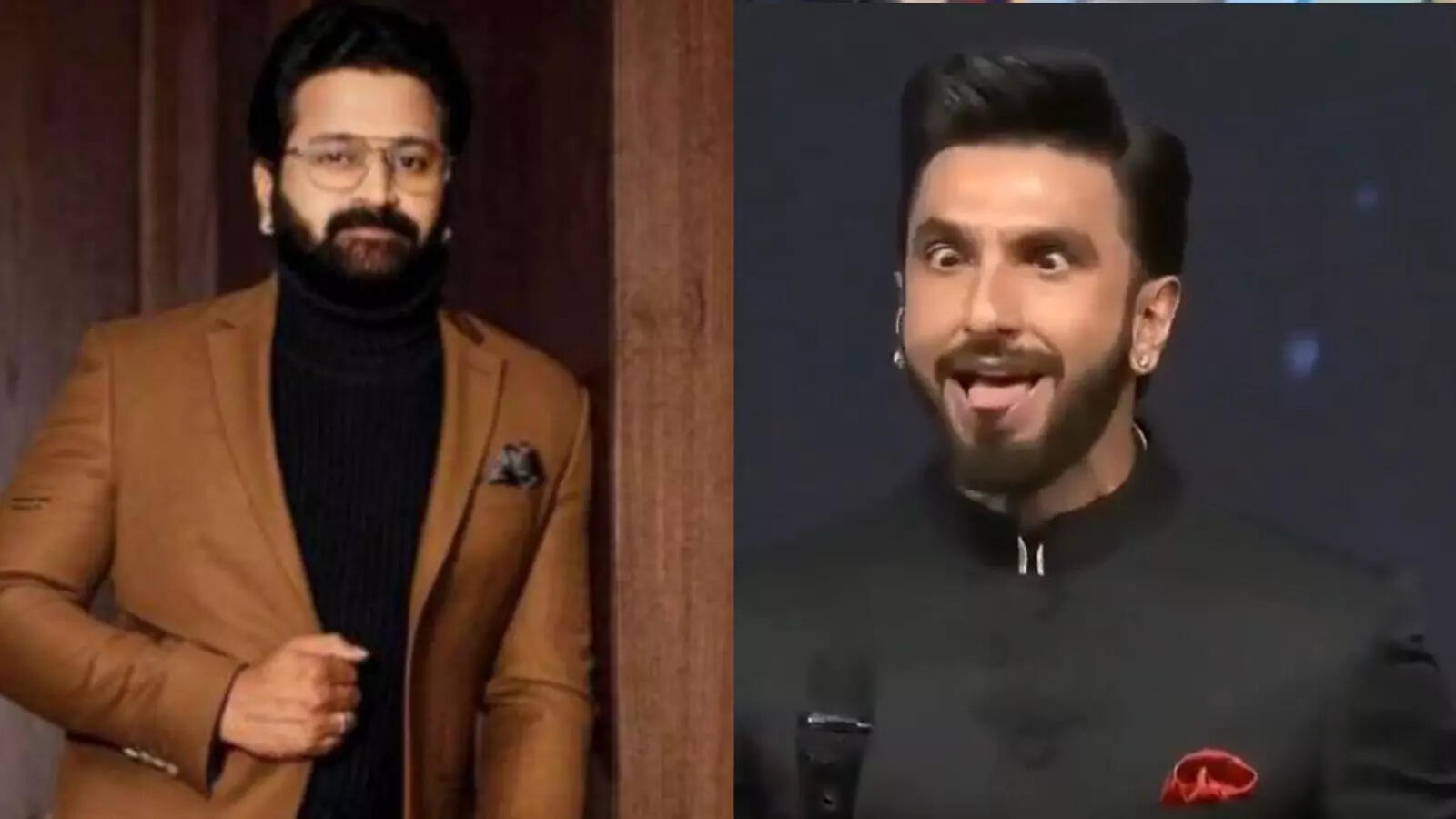
During a recent public appearance, the National Award-winning actor addressed the issue without naming anyone directly. Rishab said he feels “uncomfortable” when people attempt to imitate sacred traditions without understanding their depth. According to him, while much of Kantara is cinematic performance, the Daiva portions are deeply spiritual and emotionally rooted in culture. “It makes me uncomfortable. While most of the film is cinema and performance, the Daiva part is sensitive and sacred. Wherever I go, I request people not to perform it on stage or make fun of it. It is deeply connected to us emotionally,” he explained.
The statement comes in the wake of an incident at IFFI, where Ranveer Singh mimicked the Daiva moment from Kantara on stage, with Rishab Shetty seated beside him. Ranveer’s exaggerated gestures and joking remarks quickly went viral, sparking strong reactions online. Many viewers felt the act crossed a line, given the cultural and spiritual importance of the scene.
As criticism mounted, Ranveer Singh issued an apology, clarifying that his intention was never to mock the tradition. He said he was trying to celebrate Rishab Shetty’s powerful performance and expressed deep respect for India’s diverse cultures and beliefs. Acknowledging that his actions may have hurt sentiments, the actor offered a sincere apology.
Ranveer said, "My intention was to highlight Rishab's brilliant performance in the film.' As an actor, I know how much effort must have gone into performing that scene in that way, for which I greatly admire him. I have always had immense respect for every culture, tradition, and belief of our country. If I have hurt anyone's feelings, I sincerely apologise."
The sensitivity around the issue stems from the portrayal of Chaamundi in Kantara, a spiritually intense sequence rooted in Tulu culture and Bhuta Kola traditions. The character represents divine energy, ancestral spirits, and ritualistic power, making it far more than a dramatic performance. For many, this is why casual imitation feels disrespectful.
Rishab Shetty’s response reinforces one key message: cultural expressions, especially sacred ones, deserve understanding and respect, not imitation without context.
During a recent public appearance, the National Award-winning actor addressed the issue without naming anyone directly. Rishab said he feels “uncomfortable” when people attempt to imitate sacred traditions without understanding their depth. According to him, while much of Kantara is cinematic performance, the Daiva portions are deeply spiritual and emotionally rooted in culture. “It makes me uncomfortable. While most of the film is cinema and performance, the Daiva part is sensitive and sacred. Wherever I go, I request people not to perform it on stage or make fun of it. It is deeply connected to us emotionally,” he explained.
The statement comes in the wake of an incident at IFFI, where Ranveer Singh mimicked the Daiva moment from Kantara on stage, with Rishab Shetty seated beside him. Ranveer’s exaggerated gestures and joking remarks quickly went viral, sparking strong reactions online. Many viewers felt the act crossed a line, given the cultural and spiritual importance of the scene.
As criticism mounted, Ranveer Singh issued an apology, clarifying that his intention was never to mock the tradition. He said he was trying to celebrate Rishab Shetty’s powerful performance and expressed deep respect for India’s diverse cultures and beliefs. Acknowledging that his actions may have hurt sentiments, the actor offered a sincere apology.
Ranveer said, "My intention was to highlight Rishab's brilliant performance in the film.' As an actor, I know how much effort must have gone into performing that scene in that way, for which I greatly admire him. I have always had immense respect for every culture, tradition, and belief of our country. If I have hurt anyone's feelings, I sincerely apologise."
The sensitivity around the issue stems from the portrayal of Chaamundi in Kantara, a spiritually intense sequence rooted in Tulu culture and Bhuta Kola traditions. The character represents divine energy, ancestral spirits, and ritualistic power, making it far more than a dramatic performance. For many, this is why casual imitation feels disrespectful.
Rishab Shetty’s response reinforces one key message: cultural expressions, especially sacred ones, deserve understanding and respect, not imitation without context.
Next Story