Freestyle Chess Grand Slam Finals: Full Lineup for Championship, Third-Place and Placement Matches

The final day of the 2025 Freestyle Chess Grand Slam Finals is set for a blockbuster showdown between Magnus Carlsen and Levon Aronian . On Day 3, after intense and unpredictable semifinal clashes, both grandmasters secured decisive wins to book their places in the championship decider.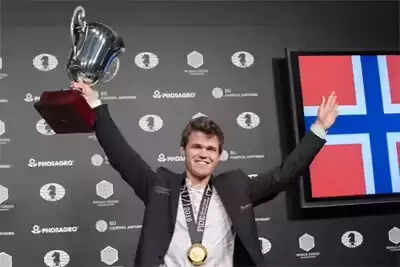
Carlsen vs. Sindarov: In a tightly contested semifinal, Carlsen eventually prevailed over Javokhir Sindarov 2½-1½. After losing the second game, Carlsen regained control and avoided an Armageddon decider even as Sindarov threatened a comeback. The outcome underscores Carlsen’s resilience under pressure and his mastery of freestyle format’s unpredictable dynamic.
Aronian vs. Keymer: The other semifinal showcased Aronian’s poise. After two drawn rapid games, the match went to blitz tiebreaks, where Aronian dominated, winning both blitz games to seal a 3-1 victory over young German prodigy Vincent Keymer .
With Carlsen and Aronian advancing, the finals bracket stands as follows:
Third-Place Match: Sindarov vs. Keymer
Fifth-Place Match: Fabiano Caruana vs. Arjun Erigaisi
Seventh-Place Match: Hans Niemann vs. Parham Maghsoodloo
This structure ensures that every finalist and participant gets a definitive placement from first to eighth, a testament to the “everything matters” ethos of the freestyle format.
The event convened from December 8-11 at the scenic Grootbos Private Nature Reserve in South Africa brought together eight elite grandmasters: Carlsen, Aronian, Sindarov, Keymer, Caruana, Hans Niemann, Parham Maghsoodloo and Arjun Erigaisi.
The final pairing between Carlsen and Aronian - two of the world’s most experienced grandmasters - highlights how veteran understanding of chaotic, randomised opening positions remains a major advantage in freestyle chess . Young talents such as Sindarov and Keymer delivered impressive runs, but experience and adaptability ultimately prevailed.
Freestyle chess, also known as Chess960, removes traditional opening theory and instead rewards creativity, flexibility, and rapid decision-making. As the semifinals showed, even elite classical specialists can struggle under these conditions, but those who excel demonstrate true all-round chess mastery. With top names competing and a $200,000 prize for the champion, the Grand Slam Finals is cementing itself as one of the most exciting modern formats in competitive chess.
Whether Carlsen’s practical resilience or Aronian’s tactical flair triumphs, the unpredictable nature of freestyle chess guarantees a thrilling finish. Strong performances from Sindarov, Keymer, Erigaisi, and others may influence invitations and seeding for the 2026 Tour, potentially reshaping the competitive landscape. With its fast pace, dramatic swings, and star-studded lineup, the event is well-positioned to attract younger audiences and fuel the growth of chess as a dynamic entertainment sport beyond traditional classical formats.
Carlsen vs. Sindarov: In a tightly contested semifinal, Carlsen eventually prevailed over Javokhir Sindarov 2½-1½. After losing the second game, Carlsen regained control and avoided an Armageddon decider even as Sindarov threatened a comeback. The outcome underscores Carlsen’s resilience under pressure and his mastery of freestyle format’s unpredictable dynamic.
Aronian vs. Keymer: The other semifinal showcased Aronian’s poise. After two drawn rapid games, the match went to blitz tiebreaks, where Aronian dominated, winning both blitz games to seal a 3-1 victory over young German prodigy Vincent Keymer .
With Carlsen and Aronian advancing, the finals bracket stands as follows:
- Championship Final: Carlsen vs. Aronian
The event convened from December 8-11 at the scenic Grootbos Private Nature Reserve in South Africa brought together eight elite grandmasters: Carlsen, Aronian, Sindarov, Keymer, Caruana, Hans Niemann, Parham Maghsoodloo and Arjun Erigaisi.
The final pairing between Carlsen and Aronian - two of the world’s most experienced grandmasters - highlights how veteran understanding of chaotic, randomised opening positions remains a major advantage in freestyle chess . Young talents such as Sindarov and Keymer delivered impressive runs, but experience and adaptability ultimately prevailed.
Freestyle chess, also known as Chess960, removes traditional opening theory and instead rewards creativity, flexibility, and rapid decision-making. As the semifinals showed, even elite classical specialists can struggle under these conditions, but those who excel demonstrate true all-round chess mastery. With top names competing and a $200,000 prize for the champion, the Grand Slam Finals is cementing itself as one of the most exciting modern formats in competitive chess.
Whether Carlsen’s practical resilience or Aronian’s tactical flair triumphs, the unpredictable nature of freestyle chess guarantees a thrilling finish. Strong performances from Sindarov, Keymer, Erigaisi, and others may influence invitations and seeding for the 2026 Tour, potentially reshaping the competitive landscape. With its fast pace, dramatic swings, and star-studded lineup, the event is well-positioned to attract younger audiences and fuel the growth of chess as a dynamic entertainment sport beyond traditional classical formats.
Next Story