
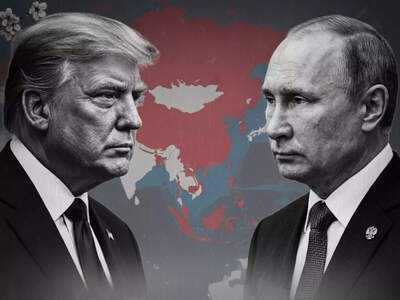
Despite Trump's discomfort, Russia still anchors India's defence arsenal


While US President Donald Trump has repeatedly signalled disapproval of India’s closeness with Russia, the ground reality tells a different story. Moscow remains a linchpin in New Delhi’s defence strategy, even as India diversifies its suppliers and ramps up indigenous production.
According to the latest report from the Stockholm International Peace Research Institute (SIPRI), India ranked as the world’s second-largest arms importer in 2021–25, accounting for 8.2 per cent of global imports.
Also Read: India emerges as world's second largest arms importer: SIPRI
Russia remains India’s dominant supplier
While India’s overall arms imports fell marginally by 4 per cent between 2016–20 and 2021–25, Russia continued to dominate the supply, accounting for 40 per cent of imports—down from 70 per cent in 2011–15 but still far ahead of any other country.
"India was the world’s second largest recipient of major arms in 2021–25 with an 8.2 per cent share of total global arms imports," the SIPRI report noted. "These imports are largely driven by tensions with both China and Pakistan. These tensions have regularly led to armed conflict, as they did briefly between India and Pakistan in May 2025, with both sides using imported major arms."
Nearly three-quarters (74 per cent) of Russian arms exports in 2021–25 went to just three countries: India (48 per cent), China (13 per cent), and Belarus (13 per cent).
SIPRI researcher Siemon Wezeman highlighted the regional dynamics: "Fears over China’s intentions and its growing military capabilities continue to influence armament efforts in other parts of Asia and Oceania, which often still depend on imported arms. For example, in South Asia, the high volume of arms that India imports is largely due to the perceived threat from China and to India’s long-running conflict with the main recipient of Chinese arms exports, Pakistan."
Diversifying but not replacing
Over the past decade, India has sought to diversify its defence suppliers. Moscow’s share of Indian arms imports fell from 70 per cent in 2011–15 to 51 per cent in 2016–20 and then to 40 per cent in 2021–25. Western suppliers—France, Israel, the United States, and Germany—have gained ground.
Recent contracts include a 2025 Inter-Governmental Agreement with France for 26 Rafale-Marine jets for the Navy, along with simulators, weapons, and performance-based logistics.
The Ministry of Defence also signed a deal with US-based Metrea Management for wet leasing a KC-135 refuelling aircraft for training IAF and Navy pilots.
India has also pursued joint production and technology transfers: Safran and HAL are developing the Indian Multi-Role Helicopter (IMRH) and an MRO facility for M-88 engines; the HAMMER missile is being co-produced in India via a Safran-Bharat Electronics joint venture; and Airbus has set up an H125 final assembly line with ATA Advanced Systems.
Indigenous manufacturing on the rise
India is pushing domestic defence production aggressively. The 2026–27 budget has allocated Rs 7.85 lakh crore to defence—a 15.19 per cent increase over FY25–26 and the highest share among all ministries. Of this, Rs 1.39 lakh crore is earmarked for domestic procurement, with around 75 per cent of the capital acquisition budget reserved for local industries.
Platforms like the T-90 tank and Su-30MKI fighter aircraft are produced under licence in India, while the BrahMos cruise missile represents a successful joint development with Russia. The country’s focus on indigenisation is central to its “Aatmanirbhar Bharat” initiative.
Next-generation capabilities
Despite diversifying suppliers, India continues to rely on Russian platforms for critical capabilities. Over 200 Russian fighter jets, several S-400 air defence batteries, T-90 tanks, MiG aircraft, submarines, and frigates remain operational.
The S-400 system, with a range of 400 km and the ability to track 80 targets simultaneously, reportedly shot down multiple Pakistani aircraft during Operation Sindoor. Discussions are ongoing for remaining units and potential S-500 systems.
Also Read: India-Russia ties continue to grow across trade, defence and cultural sectors: MEA
Bloomberg reported in December 2025 that the IAF is considering acquiring the Su-57 fifth-generation stealth fighter. Officials noted that Indian pilots are familiar with Russian systems, and HAL can maintain and service an expanded fleet.
Russia has offered unrestricted technology transfer, including licensed production of air weapons and integration of Indian systems.
Strategic logistics and operational integration
The December 2025 visit of Russian President Vladimir Putin coincided with the ratification of the Reciprocal Exchange of Logistics Agreement (RELOS), which allows mutual access to military formations, naval docking, airfields, and logistics support.
Russian Ambassador Denis Alipov told SolovievLive, "India is extremely important to us as an economic and political partner. It views Russia as one of the key poles in the multipolar world order, as its strategic partner, which has and will continue to have a decisive impact on global development."
Joint exercises reinforce this integration. The 14th INDRA exercise in Bikaner (October 2025) and participation in Zapad-2025 at Nizhny Novgorod highlight operational interoperability. India commissioned stealth frigates INS Tushil and INS Tama from Russia, with further vessels planned for domestic production.
Multi-aligned strategy amid geopolitics
Defence Secretary Rajesh Kumar Singh emphasised in February 2026 that US trade agreements do not impede India-Russia cooperation. "We continue to procure from Russians and will continue to do so from the French, Americans — what is required," he told News18 Rising Bharat 2026, underscoring that operational needs guide procurement, not external pressure.
Even amid the Ukraine conflict and sanctions on Russia, India continues to source critical systems from Moscow while boosting local manufacturing. Platforms like the BrahMos missile, S-400 systems, T-90 tanks, Su-30MKI fighters, and AK-203 rifles illustrate a sophisticated, multi-layered partnership beyond the traditional buyer-seller model.
Beyond procurement
The India-Russia partnership now emphasises joint research, development, and production. Rosoboronexport’s recent offer for Su-57 jets includes phased licensed production, integration of Indian weapons, and technology transfer in engines, radar, AI systems, and low-signature technologies.
The relationship also covers submarines, including Akula-class nuclear-powered vessels, enabling India to train crews and finalize designs for its own SSNs. Joint initiatives include BrahMos exports and next-generation naval and air platforms, blending operational readiness with domestic industrial growth.
Maj Gen Jagatbir Singh (Retd), writing for the Sunday Guardian observes, "The India-Russia relationship is unique. Beyond procurement, it involves technology sharing, co-production, and mutual support for operational readiness."
While US pressure and global geopolitics have complicated the landscape, the India-Russia defence partnership has remained resilient. Long-standing contracts, ongoing technology transfer, joint production, and operational integration demonstrate that Moscow remains indispensable to India’s strategic and operational requirements.
According to the latest report from the Stockholm International Peace Research Institute (SIPRI), India ranked as the world’s second-largest arms importer in 2021–25, accounting for 8.2 per cent of global imports.
Also Read: India emerges as world's second largest arms importer: SIPRI
Russia remains India’s dominant supplier
While India’s overall arms imports fell marginally by 4 per cent between 2016–20 and 2021–25, Russia continued to dominate the supply, accounting for 40 per cent of imports—down from 70 per cent in 2011–15 but still far ahead of any other country.
"India was the world’s second largest recipient of major arms in 2021–25 with an 8.2 per cent share of total global arms imports," the SIPRI report noted. "These imports are largely driven by tensions with both China and Pakistan. These tensions have regularly led to armed conflict, as they did briefly between India and Pakistan in May 2025, with both sides using imported major arms."
Nearly three-quarters (74 per cent) of Russian arms exports in 2021–25 went to just three countries: India (48 per cent), China (13 per cent), and Belarus (13 per cent).
SIPRI researcher Siemon Wezeman highlighted the regional dynamics: "Fears over China’s intentions and its growing military capabilities continue to influence armament efforts in other parts of Asia and Oceania, which often still depend on imported arms. For example, in South Asia, the high volume of arms that India imports is largely due to the perceived threat from China and to India’s long-running conflict with the main recipient of Chinese arms exports, Pakistan."
Diversifying but not replacing
Over the past decade, India has sought to diversify its defence suppliers. Moscow’s share of Indian arms imports fell from 70 per cent in 2011–15 to 51 per cent in 2016–20 and then to 40 per cent in 2021–25. Western suppliers—France, Israel, the United States, and Germany—have gained ground.
Recent contracts include a 2025 Inter-Governmental Agreement with France for 26 Rafale-Marine jets for the Navy, along with simulators, weapons, and performance-based logistics.
The Ministry of Defence also signed a deal with US-based Metrea Management for wet leasing a KC-135 refuelling aircraft for training IAF and Navy pilots.
India has also pursued joint production and technology transfers: Safran and HAL are developing the Indian Multi-Role Helicopter (IMRH) and an MRO facility for M-88 engines; the HAMMER missile is being co-produced in India via a Safran-Bharat Electronics joint venture; and Airbus has set up an H125 final assembly line with ATA Advanced Systems.
Indigenous manufacturing on the rise
India is pushing domestic defence production aggressively. The 2026–27 budget has allocated Rs 7.85 lakh crore to defence—a 15.19 per cent increase over FY25–26 and the highest share among all ministries. Of this, Rs 1.39 lakh crore is earmarked for domestic procurement, with around 75 per cent of the capital acquisition budget reserved for local industries.
Platforms like the T-90 tank and Su-30MKI fighter aircraft are produced under licence in India, while the BrahMos cruise missile represents a successful joint development with Russia. The country’s focus on indigenisation is central to its “Aatmanirbhar Bharat” initiative.
Next-generation capabilities
Despite diversifying suppliers, India continues to rely on Russian platforms for critical capabilities. Over 200 Russian fighter jets, several S-400 air defence batteries, T-90 tanks, MiG aircraft, submarines, and frigates remain operational.
The S-400 system, with a range of 400 km and the ability to track 80 targets simultaneously, reportedly shot down multiple Pakistani aircraft during Operation Sindoor. Discussions are ongoing for remaining units and potential S-500 systems.
Also Read: India-Russia ties continue to grow across trade, defence and cultural sectors: MEA
Bloomberg reported in December 2025 that the IAF is considering acquiring the Su-57 fifth-generation stealth fighter. Officials noted that Indian pilots are familiar with Russian systems, and HAL can maintain and service an expanded fleet.
Russia has offered unrestricted technology transfer, including licensed production of air weapons and integration of Indian systems.
Strategic logistics and operational integration
The December 2025 visit of Russian President Vladimir Putin coincided with the ratification of the Reciprocal Exchange of Logistics Agreement (RELOS), which allows mutual access to military formations, naval docking, airfields, and logistics support.
Russian Ambassador Denis Alipov told SolovievLive, "India is extremely important to us as an economic and political partner. It views Russia as one of the key poles in the multipolar world order, as its strategic partner, which has and will continue to have a decisive impact on global development."
Joint exercises reinforce this integration. The 14th INDRA exercise in Bikaner (October 2025) and participation in Zapad-2025 at Nizhny Novgorod highlight operational interoperability. India commissioned stealth frigates INS Tushil and INS Tama from Russia, with further vessels planned for domestic production.
Multi-aligned strategy amid geopolitics
Defence Secretary Rajesh Kumar Singh emphasised in February 2026 that US trade agreements do not impede India-Russia cooperation. "We continue to procure from Russians and will continue to do so from the French, Americans — what is required," he told News18 Rising Bharat 2026, underscoring that operational needs guide procurement, not external pressure.
Even amid the Ukraine conflict and sanctions on Russia, India continues to source critical systems from Moscow while boosting local manufacturing. Platforms like the BrahMos missile, S-400 systems, T-90 tanks, Su-30MKI fighters, and AK-203 rifles illustrate a sophisticated, multi-layered partnership beyond the traditional buyer-seller model.
Beyond procurement
The relationship also covers submarines, including Akula-class nuclear-powered vessels, enabling India to train crews and finalize designs for its own SSNs. Joint initiatives include BrahMos exports and next-generation naval and air platforms, blending operational readiness with domestic industrial growth.
Maj Gen Jagatbir Singh (Retd), writing for the Sunday Guardian observes, "The India-Russia relationship is unique. Beyond procurement, it involves technology sharing, co-production, and mutual support for operational readiness."
While US pressure and global geopolitics have complicated the landscape, the India-Russia defence partnership has remained resilient. Long-standing contracts, ongoing technology transfer, joint production, and operational integration demonstrate that Moscow remains indispensable to India’s strategic and operational requirements.
Next Story