Viral Video Captures Dramatic Fall of Statue of Liberty Replica Amid 90 kmph Winds

A powerful storm system sweeping through southern Brazil on Monday, December 15 created dramatic scenes in Guaiba, Rio Grande do Sul, after a 24 metre Statue of Liberty replica collapsed outside a Havan megastore. The Statue of Liberty replica collapse was captured in multiple videos that quickly went viral on social media. The clips showed the towering structure slowly leaning forward before crashing into an empty parking lot during the intense Brazil storm.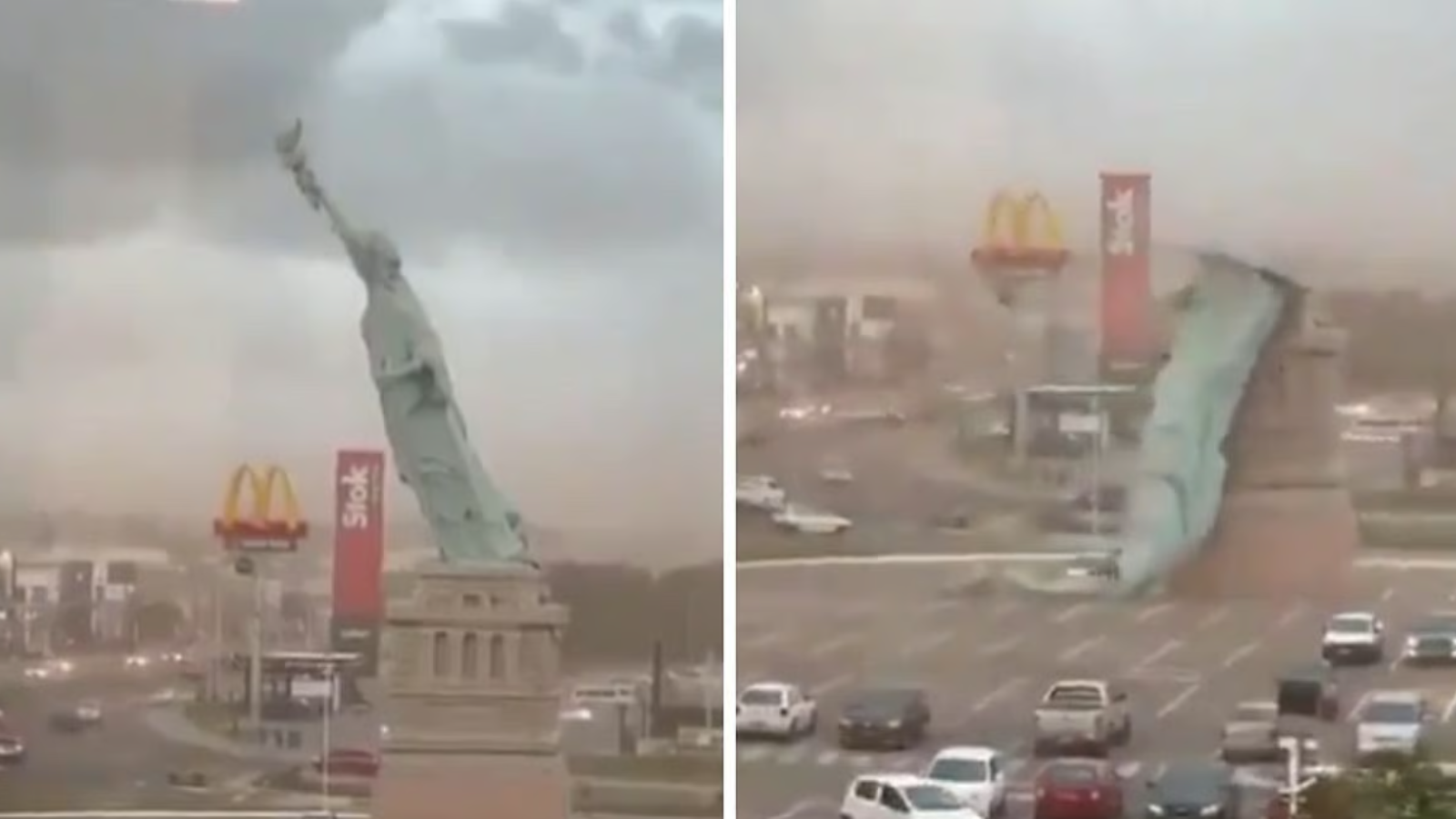
High-Speed Winds Trigger Statue of Liberty Replica Collapse
According to Brazil’s civil defence agency Defesa Civil, wind gusts during the Brazil storm exceeded 90 kmph across the metropolitan region. The Statue of Liberty replica collapse occurred despite the structure being installed in 2020 and certified by engineers. The statue was mounted on an 11 metre concrete base, which remained intact after the fall. Thanks to quick thinking by staff and bystanders who moved nearby vehicles moments before the incident, there were no injuries or property damage linked to the Statue of Liberty replica collapse.Guaiba Mayor Confirms Details of Brazil Storm Incident
Guaiba Mayor Marcelo Maranata shared an update online confirming the Statue of Liberty replica collapse and stating that winds reached between 80 and 90 kmph during the Brazil storm. He credited rapid safety actions for preventing casualties. Havan also issued a statement explaining that the area was immediately isolated by store staff following safety protocols. Debris removal began within hours, and store operations were not interrupted, as reported by Times Now, despite the Statue of Liberty replica collapse.Havan Orders Internal Probe After Statue of Liberty Replica Collapse
Following the Brazil storm, Havan emphasised that all of its Statue of Liberty replicas across Brazil comply with technical and engineering standards and carry mandatory professional certifications. Even so, the company announced an internal investigation to understand why the Statue of Liberty replica collapse happened under such extreme weather conditions. The retailer said it is committed to reviewing safety measures to prevent similar incidents in the future.Emergency Alerts Issued During Southern Brazil Storm
The Brazil storm developed after intense heat collided with an advancing cold front, creating dense cloud cover and isolated but violent wind gusts across Rio Grande do Sul from mid afternoon. Defesa Civil used a cell broadcast system to send emergency alerts directly to residents’ mobile phones, even those on silent mode. The alerts warned people about strong winds, falling structures and the need to avoid open areas, which proved crucial during the Statue of Liberty replica collapse.Widespread Storm Damage Reported Across Rio Grande do Sul
The impact of the Brazil storm extended beyond Guaiba. Hail was reported in Tio Hugo, while roof damage affected Passo Fundo, Santa Cruz do Sul and Vera Cruz. Heavy rainfall caused localised flooding in Lajeado. Municipal teams worked to clear debris, and authorities confirmed there were no widespread power or service outages in the metropolitan area, even as attention remained on the Statue of Liberty replica collapse.Past Incidents Raise Questions About Extreme Weather Risks
Havan’s oversized Statue of Liberty replicas are a defining feature of its stores nationwide. While they are designed to withstand normal weather conditions, extreme events have caused issues before. In 2021, another Statue of Liberty replica collapsed in Capao da Canoa during a cyclone with winds of 70 to 80 kmph, resulting only in material damage. That earlier Brazil storm incident has now resurfaced in discussions following the Guaiba collapse.Engineering Inspections Begin After Guaiba Statue Collapse
After the Statue of Liberty replica collapse in Guaiba, engineering teams began technical inspections to identify any possible structural vulnerabilities. Officials once again stressed the importance of staying cautious around tall structures during severe weather events. Authorities noted that early warnings, emergency alerts and rapid responses played a major role in preventing a far worse outcome during the powerful Brazil storm.Next Story