
‘I Messed Up’: Air Canada Jet Crashes Into Fire Truck at New York Airport, Video Surfaces

A chilling video circulating online has revealed the terrifying moments leading up to the deadly collision between an Air Canada Express jet and a fire truck at New York’s LaGuardia Airport.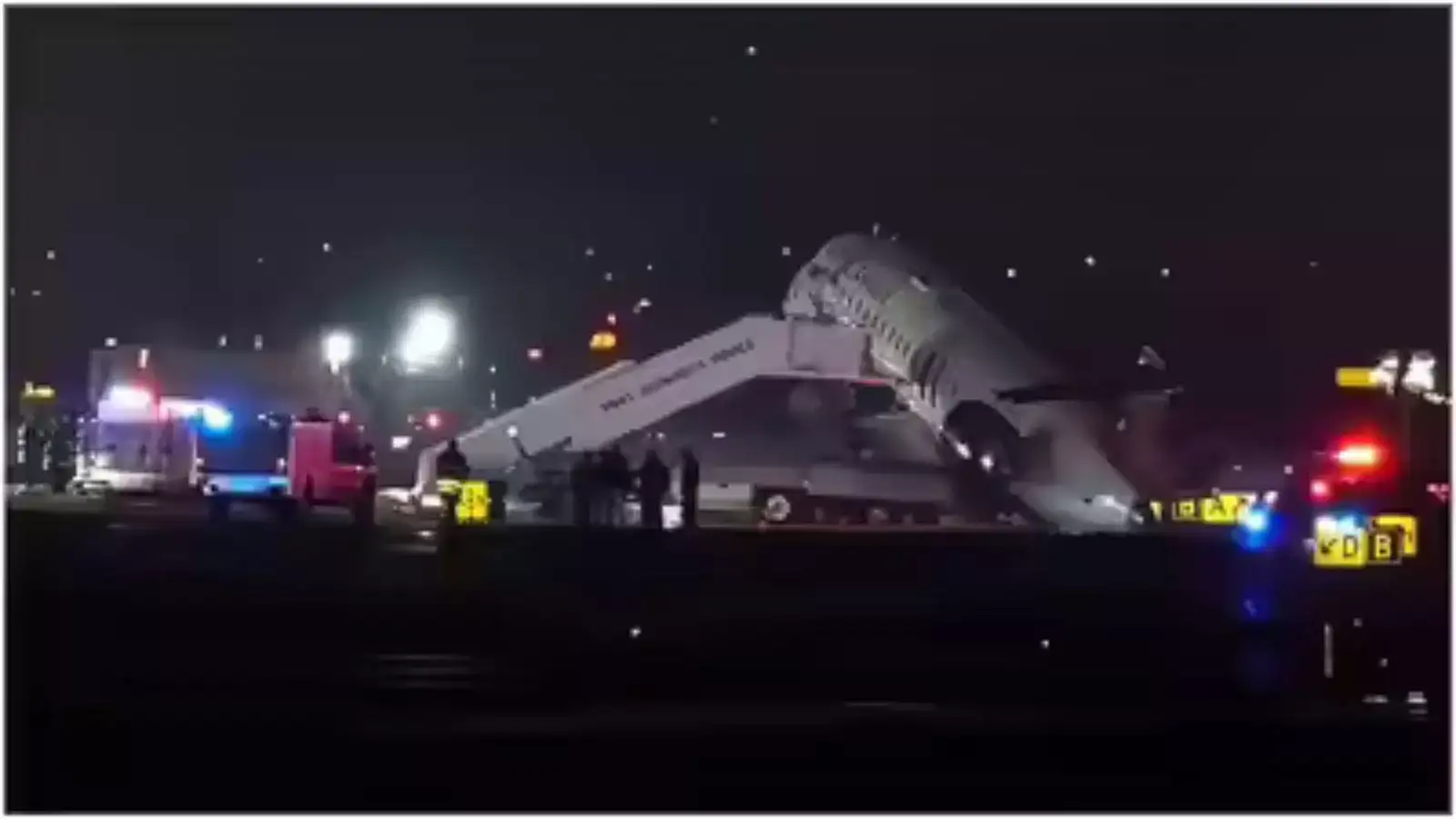
The incident took place on the night of March 22, when the aircraft, arriving from Montreal, struck an airport fire truck that was crossing the runway in response to a separate emergency.
Audio recordings from air traffic control have since gone viral, capturing the urgency and panic in the final seconds before impact. A controller can be heard repeatedly shouting, “Stop, stop, stop,” trying to halt the fire truck as it moved onto the runway.
Despite the warnings, the truck continued forward, and the aircraft, already cleared to land, collided with it. The crash resulted in the deaths of both pilots, while passengers and other crew members survived, many with injuries.
In the aftermath, another disturbing detail emerged from the audio. A controller, clearly shaken, admitted responsibility, saying, “I messed up,” highlighting the chaos and pressure in the control tower during the incident.
Reports indicate that the fire truck had been granted permission to cross the runway to attend to another aircraft that had reported an issue. However, the Air Canada jet had also been cleared to land on the same runway, pointing to a critical communication failure.
The collision caused significant disruption, forcing the temporary shutdown of LaGuardia Airport and leading to multiple flight cancellations and diversions.
Authorities, including the Federal Aviation Administration (FAA) and the National Transportation Safety Board (NTSB), have launched an investigation into the incident. The probe is expected to focus on air traffic control procedures, coordination with ground vehicles, and possible systemic lapses.
The haunting video and audio recordings have intensified scrutiny on aviation safety, offering a stark reminder of how seconds, and small errors, can lead to devastating consequences.
The incident took place on the night of March 22, when the aircraft, arriving from Montreal, struck an airport fire truck that was crossing the runway in response to a separate emergency.
Audio recordings from air traffic control have since gone viral, capturing the urgency and panic in the final seconds before impact. A controller can be heard repeatedly shouting, “Stop, stop, stop,” trying to halt the fire truck as it moved onto the runway.
Despite the warnings, the truck continued forward, and the aircraft, already cleared to land, collided with it. The crash resulted in the deaths of both pilots, while passengers and other crew members survived, many with injuries.
In the aftermath, another disturbing detail emerged from the audio. A controller, clearly shaken, admitted responsibility, saying, “I messed up,” highlighting the chaos and pressure in the control tower during the incident.
Reports indicate that the fire truck had been granted permission to cross the runway to attend to another aircraft that had reported an issue. However, the Air Canada jet had also been cleared to land on the same runway, pointing to a critical communication failure.
The collision caused significant disruption, forcing the temporary shutdown of LaGuardia Airport and leading to multiple flight cancellations and diversions.
Authorities, including the Federal Aviation Administration (FAA) and the National Transportation Safety Board (NTSB), have launched an investigation into the incident. The probe is expected to focus on air traffic control procedures, coordination with ground vehicles, and possible systemic lapses.
The haunting video and audio recordings have intensified scrutiny on aviation safety, offering a stark reminder of how seconds, and small errors, can lead to devastating consequences.
Next Story