Why this temple, known as Dakshina Kashi in South India, is known for curing and healing any diseases; Know how


For centuries, the Nanjundeshwara Temple , where Lord Shiva is venerated as Nanjundeshwara, the Lord who consumed poison, has attracted countless devotees. More than just a site of worship, the temple is also considered a powerful healing centre, which is why its deity is affectionately known as 'Hakim Nanjunda,' or Doctor Nanjunda.
People arrive with unwavering faith, seeking relief from ailments ranging from skin and eye issues to more serious, long-term illnesses. It is believed by the devotees that offering prayers here, after taking a sacred dip in the Kapila River , can cure their any kind of diseases and help recover their health.
Legend has it that during the cosmic churning, Samudra Manthan, Lord Shiva drank the lethal Halahala poison . He became Vishakanta, the one who destroys poison, also known as Nanjundeshwara. With this incident, it is believed to have granted the god remarkable healing powers .
Historical accounts further reinforced this beliefAfter the temple's prayers, Mysore's Tipu Sultan reportedly witnessed the miraculous recovery of Hyder Ali's ailing royal elephant. This event moved him, and he subsequently became a benefactor of the shrine. He is said to have gifted the temple an emerald linga, a striking instance of royal patronage that transcended religious boundaries.
Once called Garalapuri, the temple town is also known as a papa vinashini kshetra, a place where sins are absolved. After visiting the temple, devotees bathe in the Kapila river which is one of the tributeroes of river Cauvery. Following this ritual is reportedly believed to wash away sins and purify soul.
Mythological referenceOn the other hand, mythology has it saying that when sage Parushurama performed intense penance at this place to seek forgiveness for his past sins, which is why devotees belive that this particular place has the power to cleanse sins and hail diseases. Given its significant Shaivite heritage, the monument is occasionally referred to as Dakshina Kashi , the southern counterpart to Varanasi.
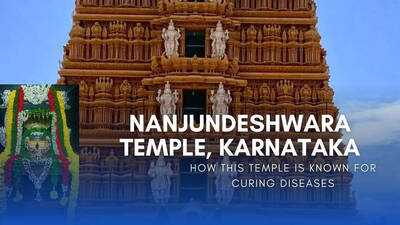
HistoryThe temple, a product of centuries of royal patronage, reflects the impact of the Cholas, Hoysalas, Vijayanagara kings , and the Mysore Wodeyars . Its soaring gopurams and unique Dravidian architecture subtly reinforce a long-standing conviction.
During major festivals such as Maha Shivaratri , Dodda Jathre, and Theppotsava, Nanjangud becomes a magnet for pilgrims. They arrive not only to receive blessings but also to find healing and comfort.
People arrive with unwavering faith, seeking relief from ailments ranging from skin and eye issues to more serious, long-term illnesses. It is believed by the devotees that offering prayers here, after taking a sacred dip in the Kapila River , can cure their any kind of diseases and help recover their health.
Legend has it that during the cosmic churning, Samudra Manthan, Lord Shiva drank the lethal Halahala poison . He became Vishakanta, the one who destroys poison, also known as Nanjundeshwara. With this incident, it is believed to have granted the god remarkable healing powers .
Historical accounts further reinforced this beliefAfter the temple's prayers, Mysore's Tipu Sultan reportedly witnessed the miraculous recovery of Hyder Ali's ailing royal elephant. This event moved him, and he subsequently became a benefactor of the shrine. He is said to have gifted the temple an emerald linga, a striking instance of royal patronage that transcended religious boundaries.
Once called Garalapuri, the temple town is also known as a papa vinashini kshetra, a place where sins are absolved. After visiting the temple, devotees bathe in the Kapila river which is one of the tributeroes of river Cauvery. Following this ritual is reportedly believed to wash away sins and purify soul.
Mythological referenceOn the other hand, mythology has it saying that when sage Parushurama performed intense penance at this place to seek forgiveness for his past sins, which is why devotees belive that this particular place has the power to cleanse sins and hail diseases. Given its significant Shaivite heritage, the monument is occasionally referred to as Dakshina Kashi , the southern counterpart to Varanasi.
HistoryThe temple, a product of centuries of royal patronage, reflects the impact of the Cholas, Hoysalas, Vijayanagara kings , and the Mysore Wodeyars . Its soaring gopurams and unique Dravidian architecture subtly reinforce a long-standing conviction.
During major festivals such as Maha Shivaratri , Dodda Jathre, and Theppotsava, Nanjangud becomes a magnet for pilgrims. They arrive not only to receive blessings but also to find healing and comfort.
Next Story