
Budget 2026: How the Red Bahi-Khata Replaced the Traditional Budget Briefcase

As Budget 2026 approaches, attention isn’t only on tax slabs, allocations, or policy surprises. Once again, the spotlight turns to Union Finance Minister Nirmala Sitharaman ’s iconic red bahi khata , a symbol that has quietly reshaped how India presents its most important financial document.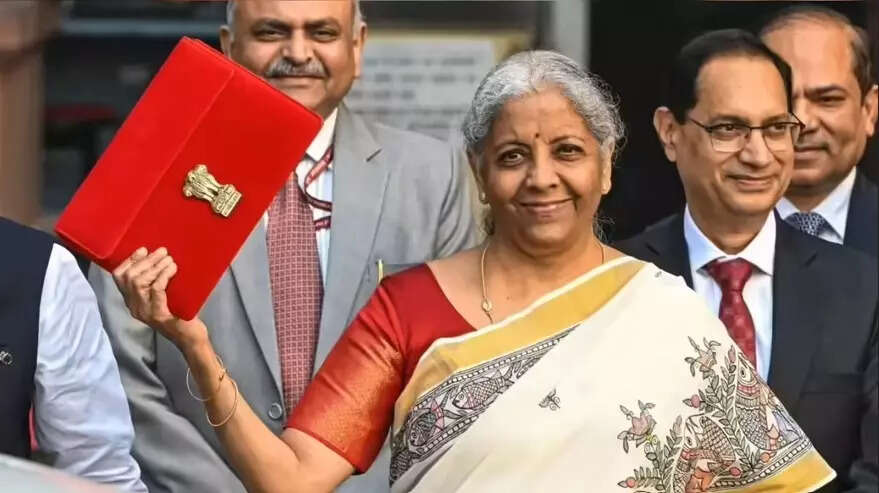
Introduced in 2019, the traditional red ledger marked a clear break from the colonial-era leather briefcase that had accompanied every Budget since Independence. More than a change of accessory, the bahi khata reflected a conscious move toward Indian tradition, identity, and symbolism in governance.
The switch to the bahi khata continued that journey. Sitharaman’s decision replaced a briefcase long associated with British administrative legacy with an object rooted in Indian accounting culture.
She later explained that she didn’t want to carry a symbol reflecting a British hangover. Instead, she felt it was time India embraced its own traditions while presenting something as significant as the Union Budget.
She said, "During my days in Britain, the chancellor used to carry a bag with an emblem EIIR, Elizabeth-II Regina. That memory is very strong and I didn’t want to carry a bag which didn’t have EIIR, but had a British hangover. It’s high time we adopted our own thing."
Today, the red bahi khata is no longer just a Budget accessory. It has become a visual reminder of India reclaiming its cultural identity in public institutions, quietly, confidently, and with purpose.
As Budget 2026 draws near, the ledger may once again be closed, but its symbolism remains wide open.
Introduced in 2019, the traditional red ledger marked a clear break from the colonial-era leather briefcase that had accompanied every Budget since Independence. More than a change of accessory, the bahi khata reflected a conscious move toward Indian tradition, identity, and symbolism in governance.
Breaking Away From Colonial Customs
India’s Budget presentation once followed British conventions down to the clock. For decades, it was presented in the evening to align with the London Stock Exchange’s opening hours. That changed during the Atal Bihari Vajpayee government, when the timing shifted to morning, an early signal of India stepping out of colonial shadows.The switch to the bahi khata continued that journey. Sitharaman’s decision replaced a briefcase long associated with British administrative legacy with an object rooted in Indian accounting culture.
The Thought Behind the Red Ledger
The idea for the bahi khata came from Sitharaman’s time in the United Kingdom. She recalled seeing the British Chancellor carry a budget bag embossed with “EIIR, Elizabeth II Regina.” That image stayed with her, but not in the way one might expect.She later explained that she didn’t want to carry a symbol reflecting a British hangover. Instead, she felt it was time India embraced its own traditions while presenting something as significant as the Union Budget.
She said, "During my days in Britain, the chancellor used to carry a bag with an emblem EIIR, Elizabeth-II Regina. That memory is very strong and I didn’t want to carry a bag which didn’t have EIIR, but had a British hangover. It’s high time we adopted our own thing."
A Personal Touch
What makes the bahi khata even more special is who made it. The ledger was designed and crafted by Sitharaman’s aunt, adding a deeply personal layer to the historic shift. Sitharaman shared, "My maami (aunt) made this. She had this official emblem embossed on it. This bag was taken to Siddhivinayak and Mahalaxmi temples (in Mumbai) yesterday. She went there, performed puja, and gave it to me. She came to Parliament and watched the Budget speech." Sitharaman’s aunt even attended the Budget session in Parliament, witnessing the moment her creation became part of history.Tradition Meets Statecraft
The traditional bahi khata is made from cotton cloth, bound with thread, and filled with pages of handmade paper, elements long associated with Indian bookkeeping. Its simple yet dignified design stands in sharp contrast to the leather briefcases once carried by finance ministers from R K Shanmukham Chetty to Arun Jaitley and Piyush Goyal.Today, the red bahi khata is no longer just a Budget accessory. It has become a visual reminder of India reclaiming its cultural identity in public institutions, quietly, confidently, and with purpose.
As Budget 2026 draws near, the ledger may once again be closed, but its symbolism remains wide open.
Next Story