
Budget 2026: Nirmala Sitharaman’s Kanjeevaram Saree Highlights Tamil Nadu Heritage

Union Finance Minister Nirmala Sitharaman presented the Union Budget for the 2026–27 financial year in the Lok Sabha on Sunday. As with every Budget Day, her sartorial choices have drawn attention, with her sarees becoming a quiet tradition over the years.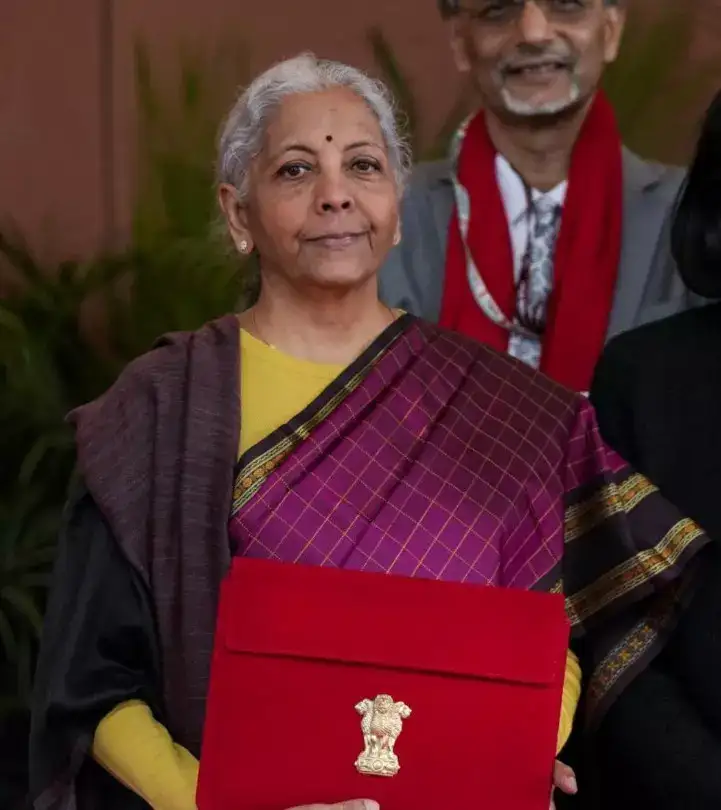
For Budget 2026–27, Sitharaman chose a handwoven Kancheevaram silk saree, paying tribute to Tamil Nadu’s centuries-old weaving heritage. She was seen in a purple kattam Kancheevaram featuring light golden-brown checks and a coffee-brown border highlighted with delicate thread work. Notably, the choice comes in a year when Tamil Nadu is headed for Assembly elections.
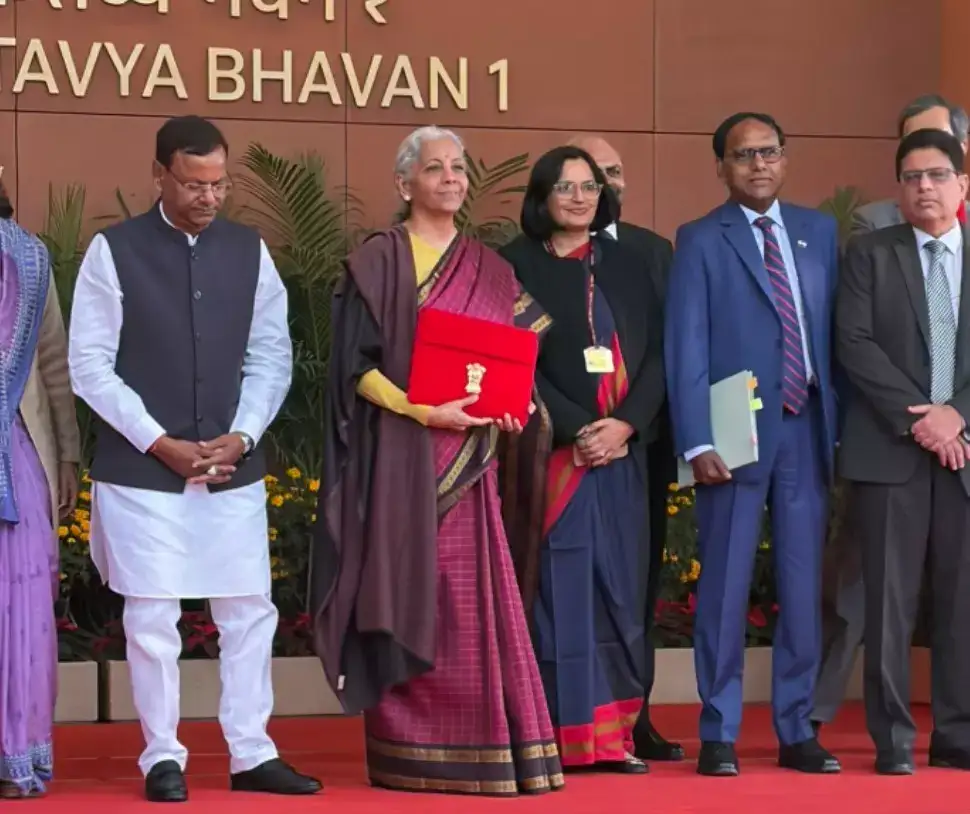
Ahead of the Budget presentation, Sitharaman posed with her team outside her office at Kartavya Bhavan, a customary pre-Budget moment that often becomes symbolic in its own right. This year, she chose a magenta Kanjeevaram saree from Tamil Nadu, paired with a bright yellow blouse and a woollen shawl. Known for their durability and intricate weaving techniques, Kanjeevaram sarees represent centuries-old craftsmanship, making the choice a quiet tribute to India’s handloom legacy.
In her hands was a tablet encased in a red pouch bearing the national emblem, underscoring the continued move towards a paperless Budget. Accompanied by the minister of state and six senior officials from the finance ministry, the image reflected how tradition and modern governance now coexist seamlessly, heritage handlooms on one hand, digital efficiency on the other.
Sitharaman’s sartorial choices have often carried regional stories with them. Last year, she wore an off-white saree adorned with Madhubani fish embroidery, paired with a red blouse. The saree was gifted by Padma Shri awardee Dulari Devi and brought national attention to Bihar’s vibrant folk art tradition. The moment served as a reminder of how regional crafts, often confined to local markets, can gain wider recognition when showcased on a national platform.
Over successive Budgets, these carefully chosen sarees have evolved into a soft but powerful tradition. Without distracting from the seriousness of Budget Day, they shine a light on India’s diverse handloom traditions and the artisans who sustain them. In doing so, Sitharaman’s Budget Day appearance has come to represent not just fiscal planning, but also a quiet celebration of India’s cultural fabric woven into the country’s most important economic event.
For Budget 2026–27, Sitharaman chose a handwoven Kancheevaram silk saree, paying tribute to Tamil Nadu’s centuries-old weaving heritage. She was seen in a purple kattam Kancheevaram featuring light golden-brown checks and a coffee-brown border highlighted with delicate thread work. Notably, the choice comes in a year when Tamil Nadu is headed for Assembly elections.
Ahead of the Budget presentation, Sitharaman posed with her team outside her office at Kartavya Bhavan, a customary pre-Budget moment that often becomes symbolic in its own right. This year, she chose a magenta Kanjeevaram saree from Tamil Nadu, paired with a bright yellow blouse and a woollen shawl. Known for their durability and intricate weaving techniques, Kanjeevaram sarees represent centuries-old craftsmanship, making the choice a quiet tribute to India’s handloom legacy.
You may also like
- Adani Group plans to invest Rs 2 lakh crore annually in greenfield infrastructure over next five years: Karan Adani
- IDBI stake sale likely to be cancelled as bids fall short of reserve price
- Gujarat receives 'ad-hoc' 1,452 KL kerosene supply amid global energy concerns
- Global supply chain disruptions highlight need for resilient infrastructure: Karan Adani
- Door opens for Nepal to buy extra 350 MW of power from bordering Indian states
In her hands was a tablet encased in a red pouch bearing the national emblem, underscoring the continued move towards a paperless Budget. Accompanied by the minister of state and six senior officials from the finance ministry, the image reflected how tradition and modern governance now coexist seamlessly, heritage handlooms on one hand, digital efficiency on the other.
Sitharaman’s sartorial choices have often carried regional stories with them. Last year, she wore an off-white saree adorned with Madhubani fish embroidery, paired with a red blouse. The saree was gifted by Padma Shri awardee Dulari Devi and brought national attention to Bihar’s vibrant folk art tradition. The moment served as a reminder of how regional crafts, often confined to local markets, can gain wider recognition when showcased on a national platform.
Over successive Budgets, these carefully chosen sarees have evolved into a soft but powerful tradition. Without distracting from the seriousness of Budget Day, they shine a light on India’s diverse handloom traditions and the artisans who sustain them. In doing so, Sitharaman’s Budget Day appearance has come to represent not just fiscal planning, but also a quiet celebration of India’s cultural fabric woven into the country’s most important economic event.






More from our partners


Loving Newspoint? Download the app now
