
Union Budget 2026: From Red Bahi Khata to Halwa Ceremony - 5 Facts You Didn’t Know

As Finance Minister Nirmala Sitharaman rises to present the Union Budget 2026-27 on Sunday, February 1, all eyes will be on her ninth consecutive Budget speech. Beyond the numbers and policy signals, the Budget carries a rich legacy, one shaped by shifting traditions, guarded secrets, and symbolic rituals that reflect India’s evolving governance.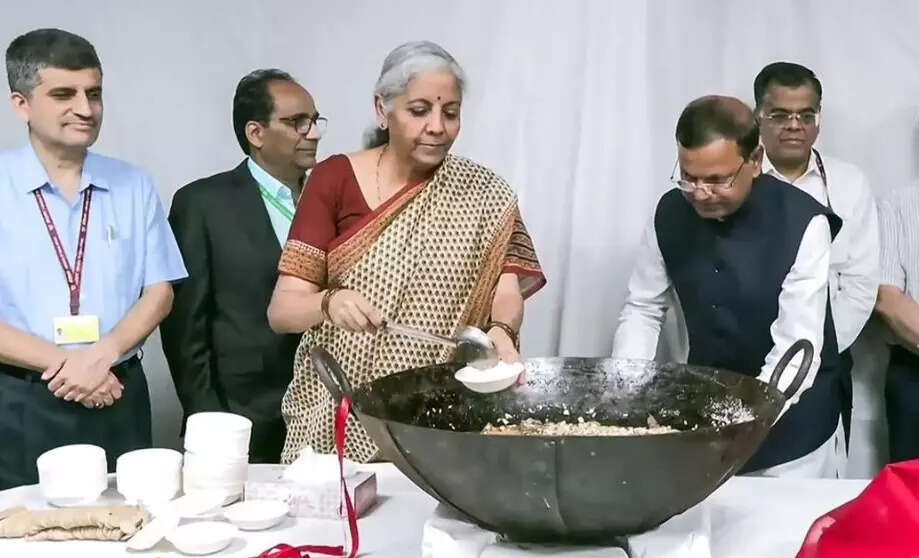
When the Union Budget 2026-27 is presented on February 1, it will once again set off days of debate, analysis, and projections. But behind the headlines lies a process steeped in tradition, symbolism, and tightly guarded precision, making the Budget far more than just an annual financial statement.
From London clocks to Indian mornings
For decades, India’s Budget was presented at 5 pm on the last working day of February, a timing chosen to suit British officials in London during the colonial era. This changed in 1999 when then finance minister Yashwant Sinha moved the speech to 11 am, allowing Indian officials and markets to respond within the same business day. Another major shift came in 2017, when Arun Jaitley advanced Budget Day to February 1. The change gave ministries enough time to complete approvals before the new financial year begins on April 1.From briefcase to bahi-khata
The iconic red briefcase, inspired by British parliamentary tradition, carried Budget documents for over 70 years. In 2019, Sitharaman replaced it with a bahi-khata, a traditional Indian ledger, marking a symbolic break from colonial customs. Even when the Budget went paperless during the COVID-19 pandemic in 2021, the tablet was still wrapped in a bahi-khata-style cover, blending tradition with technology.Speeches: long, longer, and lightning-fast
Budget speeches have varied wildly in length. Sitharaman holds the record for the longest speech by duration, 2 hours and 42 minutes in 2020, before stopping due to exhaustion. The longest speech by word count belongs to Manmohan Singh, whose landmark 1991 Budget ran into 18,650 words. At the other end of the spectrum is Morarji Desai, who delivered India’s shortest Budget speech in 1977, clocking in at just 800 words.The halwa ritual and the great lock-in
Just before the Budget is unveiled, the North Block hosts the traditional halwa ceremony . The finance minister stirs the dessert and serves it to officials as a gesture of appreciation. But the ritual also marks the start of a strict “lock-in” period, once the halwa is served, officials involved in preparing the Budget are cut off from the outside world until the speech is delivered in Parliament.The mystery of the blue sheet
Perhaps the most secretive element of Budget-making is the “blue sheet.” Coded in blue, this master document distils the entire Budget into a single snapshot of key calculations. It is so confidential that it never leaves the North Block, not even with the finance minister. Finalising the blue sheet formally triggers the lock-in, ensuring absolute secrecy.When the Union Budget 2026-27 is presented on February 1, it will once again set off days of debate, analysis, and projections. But behind the headlines lies a process steeped in tradition, symbolism, and tightly guarded precision, making the Budget far more than just an annual financial statement.
Next Story