
‘Three Kartavya’: Nirmala Sitharaman Outlines Core Theme Of Union Budget 2026

Union Budget 2026 : Presenting the Union Budget 2026 on a Sunday, Finance Minister Nirmala Sitharaman set out a three-pronged framework that will guide the government’s economic planning in the coming year. Describing these priorities as three kartavya, or duties, she said the Budget focuses on accelerating growth, fulfilling the aspirations of citizens and ensuring equitable access to opportunities across regions and communities. The approach, she said, aims to strengthen India’s resilience amid global uncertainty while sustaining long-term economic momentum.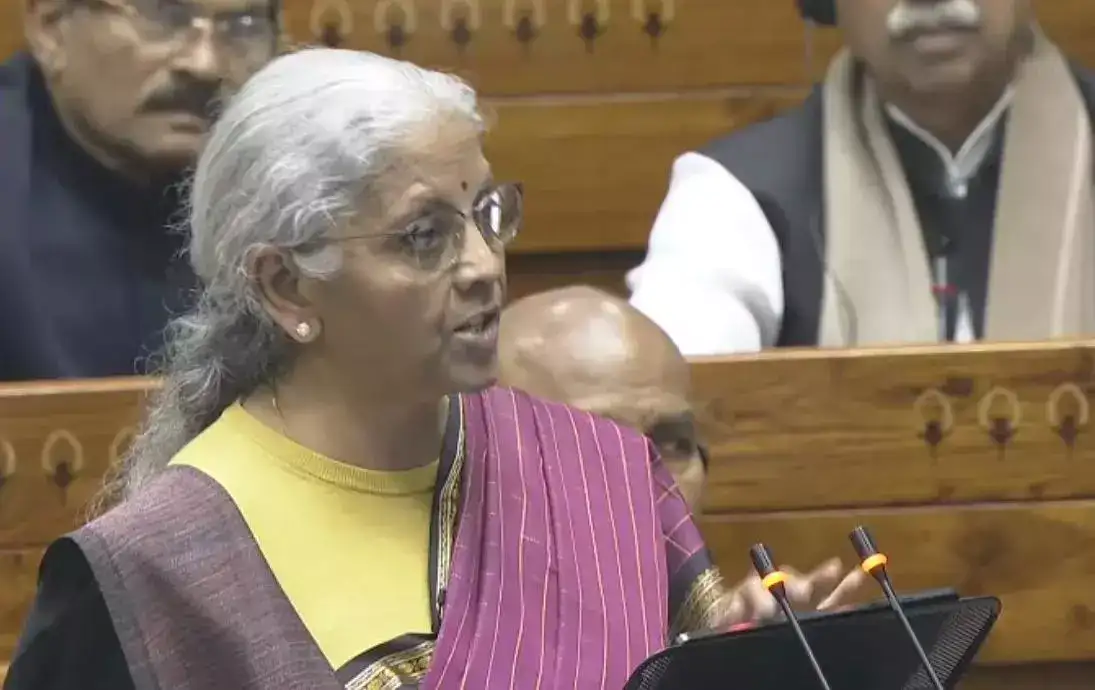
This Budget marks Sitharaman’s ninth consecutive financial statement, underscoring continuity in policymaking and reform. She emphasised that the government’s planning is rooted in responsibility, inclusivity and competitiveness, with a special focus on youth-driven growth.
To achieve this, the government plans targeted action across six broad areas, including scaling up manufacturing in seven strategic sectors, reviving traditional industries and creating globally competitive MSMEs. Infrastructure development will remain a key growth driver, alongside efforts to ensure long-term economic stability and security. The Finance Minister stressed that safeguarding financial stability and mobilising domestic savings are essential to maintaining growth momentum.
She also reaffirmed the government’s commitment to structural reforms, stating that consistent policy execution is critical for sustaining investor confidence and economic expansion.
She reiterated that growth dividends should reach every segment of society, particularly farmers, youth, Scheduled Castes and Scheduled Tribes. According to the Finance Minister, empowering these groups is central to building a more balanced and resilient economy. She described the Budget as a yuva shakti-driven exercise, signalling continued emphasis on youth participation, skill development and employment generation.
The approach, she said, ensures that economic planning remains people-centric rather than growth-driven alone.
She said the government will work to deepen participation across sectors and geographies, ensuring that development reaches both urban and rural areas. Developing city economic regions and improving connectivity were cited as important steps towards balanced regional growth.
The Finance Minister emphasised that inclusion is not limited to welfare alone but also involves creating pathways for economic participation and entrepreneurship.
Innovation and technology will play a critical role in this journey. The Budget underscores the use of cutting-edge technologies, including artificial intelligence, as force multipliers for governance, productivity and service delivery. According to Sitharaman, technology-led systems can improve efficiency, transparency and policy outcomes across sectors.
She also reaffirmed self-reliance as a guiding principle of policymaking, noting that strengthening domestic capabilities is vital for navigating global economic pressures.
As India moves into the next financial year, this structured approach signals a continued emphasis on reforms, innovation and broad-based development, positioning the economy to remain resilient and forward-looking.
This Budget marks Sitharaman’s ninth consecutive financial statement, underscoring continuity in policymaking and reform. She emphasised that the government’s planning is rooted in responsibility, inclusivity and competitiveness, with a special focus on youth-driven growth.
Driving Faster And Sustainable Economic Growth
The first kartavya highlighted in the Budget centres on accelerating and sustaining economic growth by enhancing productivity and competitiveness. Sitharaman said India’s economic roadmap will prioritise interventions that help the country remain globally competitive while strengthening domestic capabilities.To achieve this, the government plans targeted action across six broad areas, including scaling up manufacturing in seven strategic sectors, reviving traditional industries and creating globally competitive MSMEs. Infrastructure development will remain a key growth driver, alongside efforts to ensure long-term economic stability and security. The Finance Minister stressed that safeguarding financial stability and mobilising domestic savings are essential to maintaining growth momentum.
She also reaffirmed the government’s commitment to structural reforms, stating that consistent policy execution is critical for sustaining investor confidence and economic expansion.
Fulfilling Aspirations Through Inclusive Development
The second kartavya focuses on meeting the aspirations of people by positioning economic growth as the foundation of national progress. Sitharaman noted that development policies must translate into tangible improvements in living standards, employment prospects and social mobility.She reiterated that growth dividends should reach every segment of society, particularly farmers, youth, Scheduled Castes and Scheduled Tribes. According to the Finance Minister, empowering these groups is central to building a more balanced and resilient economy. She described the Budget as a yuva shakti-driven exercise, signalling continued emphasis on youth participation, skill development and employment generation.
The approach, she said, ensures that economic planning remains people-centric rather than growth-driven alone.
Ensuring Access To Opportunities For All Regions And Communities
The third kartavya outlined in the Budget aims to ensure that every family, community and region has access to resources, amenities and opportunities. Sitharaman linked this objective to the broader vision of inclusive development, where growth is widely shared and regional imbalances are addressed.She said the government will work to deepen participation across sectors and geographies, ensuring that development reaches both urban and rural areas. Developing city economic regions and improving connectivity were cited as important steps towards balanced regional growth.
The Finance Minister emphasised that inclusion is not limited to welfare alone but also involves creating pathways for economic participation and entrepreneurship.
Reform Express And Technology-Led Governance
Highlighting continuity in reforms, Sitharaman said the “reform express” is firmly on track and will maintain its momentum in the coming years. She described reforms as essential to fulfilling the government’s kartavya, particularly in a rapidly changing global economic environment.Innovation and technology will play a critical role in this journey. The Budget underscores the use of cutting-edge technologies, including artificial intelligence, as force multipliers for governance, productivity and service delivery. According to Sitharaman, technology-led systems can improve efficiency, transparency and policy outcomes across sectors.
She also reaffirmed self-reliance as a guiding principle of policymaking, noting that strengthening domestic capabilities is vital for navigating global economic pressures.
A Framework For Long-Term Economic Direction
The three-kartavya framework presented in Union Budget 2026 offers a clear lens into the government’s long-term economic priorities. By combining growth acceleration, aspiration fulfilment and inclusive access, the Budget seeks to balance competitiveness with equity.As India moves into the next financial year, this structured approach signals a continued emphasis on reforms, innovation and broad-based development, positioning the economy to remain resilient and forward-looking.
Next Story