
Waaree Energies Sinks 14%, Vikram Solar Under Pressure After US Slaps 126% Duty on Indian Solar Imports

The selling began almost immediately.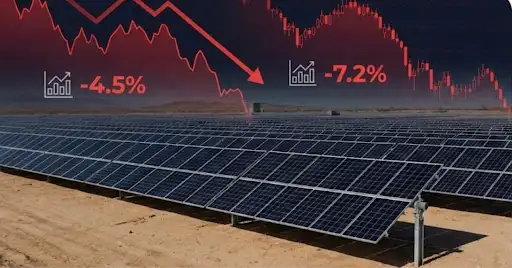
Within minutes of opening trade, Waaree Energies was down nearly 14%. Vikram Solar slid over 7%. Even Premier Energies , which doesn’t depend heavily on the US market, couldn’t escape the drag.
The reason was blunt: the US administration has set preliminary duties of up to 126% on solar imports from India, citing concerns over manufacturing subsidies. For exporters, that number changes everything.
When trade barriers jump this sharply, margins compress fast. Contracts that made sense last quarter may not make sense now. That’s what investors reacted to.
Premier Energies saw declines too, even though its US exposure is limited. That tells you something about sentiment. When policy risk surfaces, the market doesn’t always distinguish carefully. It sells the theme.
But solar supply chains are deeply interconnected. Over the past two years, developers in the US shifted sourcing patterns after earlier tariffs targeted other Southeast Asian suppliers. India became part of that rebalancing.
In 2024 alone, solar imports from India into the US were valued at roughly $793 million — a dramatic jump from 2022 levels. That growth is precisely why the latest move stings.
Indian manufacturers may have to rethink pricing and allocation strategies. US project developers could face higher procurement costs. Financing assumptions for large installations may need recalibration.
And until there’s clarity on whether these rates hold, uncertainty becomes the dominant variable.
Vikram Solar combines PV module production with engineering and maintenance services, giving it exposure across the project lifecycle.
Premier Energies remains an integrated cell and module manufacturer with EPC operations, though its export footprint differs from peers.
Markets tend to move before policy outcomes become final. Wednesday’s price action was less about today’s shipments and more about tomorrow’s assumptions.
For now, solar stocks are adjusting to a new trade reality. Whether this becomes a temporary setback or a structural shift will depend on what happens next in Washington - and how quickly companies adapt.
Within minutes of opening trade, Waaree Energies was down nearly 14%. Vikram Solar slid over 7%. Even Premier Energies , which doesn’t depend heavily on the US market, couldn’t escape the drag.
The reason was blunt: the US administration has set preliminary duties of up to 126% on solar imports from India, citing concerns over manufacturing subsidies. For exporters, that number changes everything.
Export Exposure Suddenly Matters More
Waaree and Vikram Solar aren’t purely domestic stories. A meaningful share of their revenue comes from overseas shipments, particularly the US - one of the fastest-growing solar markets in recent years.When trade barriers jump this sharply, margins compress fast. Contracts that made sense last quarter may not make sense now. That’s what investors reacted to.
Premier Energies saw declines too, even though its US exposure is limited. That tells you something about sentiment. When policy risk surfaces, the market doesn’t always distinguish carefully. It sells the theme.
This Isn’t Happening in Isolation
The US Commerce Department’s action reportedly extends beyond India. Indonesia and Laos have also been hit with steep preliminary duties. The argument from Washington is straightforward: protect domestic manufacturers from subsidised imports.But solar supply chains are deeply interconnected. Over the past two years, developers in the US shifted sourcing patterns after earlier tariffs targeted other Southeast Asian suppliers. India became part of that rebalancing.
In 2024 alone, solar imports from India into the US were valued at roughly $793 million — a dramatic jump from 2022 levels. That growth is precisely why the latest move stings.
Cost Pressures Could Travel Both Ways
Duties at this scale don’t just hit exporters. They ripple outward.Indian manufacturers may have to rethink pricing and allocation strategies. US project developers could face higher procurement costs. Financing assumptions for large installations may need recalibration.
And until there’s clarity on whether these rates hold, uncertainty becomes the dominant variable.
The Companies in Focus
Waaree Energies operates across module manufacturing, EPC contracts and power generation, with facilities concentrated in Gujarat. It has positioned itself as more than just a module exporter - branching into storage and green hydrogen solutions.Vikram Solar combines PV module production with engineering and maintenance services, giving it exposure across the project lifecycle.
Premier Energies remains an integrated cell and module manufacturer with EPC operations, though its export footprint differs from peers.
A Sector at an Inflection Point
India’s solar manufacturing story has accelerated in recent years, helped by global demand and domestic incentives. The US decision doesn’t erase that momentum - but it complicates it.Markets tend to move before policy outcomes become final. Wednesday’s price action was less about today’s shipments and more about tomorrow’s assumptions.
For now, solar stocks are adjusting to a new trade reality. Whether this becomes a temporary setback or a structural shift will depend on what happens next in Washington - and how quickly companies adapt.






Loving Newspoint? Download the app now
