Asian stocks advance at open, gold tops $4,500


Asian stocks rose at the open after Wall Street shares rallied to a record after data showed the US economy grew at its fastest pace in two years.
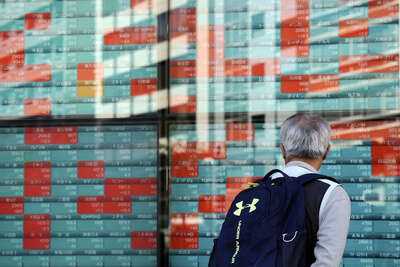
MSCI’s regional stocks gauge extended gains into a fourth day, rising 0.2%, with benchmarks in Japan and South Korea advancing. Australian shares edged lower in a shortened trading session. That came after the S&P 500 rose for a fourth day, with a gauge of big tech climbing almost 1% amid low volume ahead of the Christmas holiday. Short-dated bonds underperformed. The dollar fell.
Attention was on the commodities market with gold rallying to a new record of more than $4,500 an ounce. Gold’s haven appeal has been amplified in the last week by Washington’s blockade of oil tankers linked to Venezuela. Silver also reached an all-time high, while copper prices topped $12,000 a ton for the first time.
The geopolitical tensions extended oil’s rally into a sixth straight session, with West Texas Intermediate crude trading above $58.50 a barrel.
Risk appetite has remained firm heading into year-end, with technology stocks in demand even as strong US growth data scaled back bets on near-term Federal Reserve easing. After earlier concerns over high valuations and the billions pouring into artificial intelligence, traders are regaining confidence that companies will deliver solid earnings growth in 2026.
“If consumers remain resilient through the holiday and the fourth quarter, it should bode well for US GDP and corporate earnings,” said Bret Kenwell at eToro. “Earnings have continued to surprise to the upside. Bulls are hoping to see this trend continue in 2026.”
Elsewhere in South Korea, the won jumped after authorities warned against excessive weakness in the currency, saying they had held a number of meetings over the last one-to-two weeks to discuss the won’s recent weakness.
Meanwhile, US inflation-adjusted gross domestic product increased at a 4.3% annualized pace. That was higher than all but one estimate in a Bloomberg survey and followed 3.8% growth in the prior period.
Treasury two-year yields, which are more sensitive to imminent Fed moves, remained above 3.5%.
Donald Trump said he expects his Fed chair to lower rates if the market is doing well, the latest signal that the president is eager for a nominee committed to borrowing cost cuts as he nears an announcement of his choice to replace Jerome Powell.
Meanwhile, Treasury Secretary Scott Bessent backed the idea of reconsidering the Fed’s 2% inflation target once the US has sustainably brought price increases back down to that pace.
Money markets see a less than 20% chance of a Fed reduction in January.
“The economy is demonstrating a Goldilocks scenario with above-potential US economic growth, and declining but elevated inflation and a less robust labor market,” said Eric Teal at Comerica Wealth Management. “The Fed will likely maintain a dovish bias, which will only increase with a new Fed Chair next year.”
Separately, the US is declining to impose additional tariffs on chip imports until at least mid-2027 in signs that the Trump administration is seeking to stabilize ties with Beijing.
Elsewhere in Asia, India’s central bank announced fresh measures aimed at boosting banking liquidity with government bond purchases and foreign-exchange swaps looking to support a weakening rupee, which has emerged as Asia’s worst-performing currency this year.
MSCI’s regional stocks gauge extended gains into a fourth day, rising 0.2%, with benchmarks in Japan and South Korea advancing. Australian shares edged lower in a shortened trading session. That came after the S&P 500 rose for a fourth day, with a gauge of big tech climbing almost 1% amid low volume ahead of the Christmas holiday. Short-dated bonds underperformed. The dollar fell.
Attention was on the commodities market with gold rallying to a new record of more than $4,500 an ounce. Gold’s haven appeal has been amplified in the last week by Washington’s blockade of oil tankers linked to Venezuela. Silver also reached an all-time high, while copper prices topped $12,000 a ton for the first time.
The geopolitical tensions extended oil’s rally into a sixth straight session, with West Texas Intermediate crude trading above $58.50 a barrel.
Risk appetite has remained firm heading into year-end, with technology stocks in demand even as strong US growth data scaled back bets on near-term Federal Reserve easing. After earlier concerns over high valuations and the billions pouring into artificial intelligence, traders are regaining confidence that companies will deliver solid earnings growth in 2026.
“If consumers remain resilient through the holiday and the fourth quarter, it should bode well for US GDP and corporate earnings,” said Bret Kenwell at eToro. “Earnings have continued to surprise to the upside. Bulls are hoping to see this trend continue in 2026.”
Elsewhere in South Korea, the won jumped after authorities warned against excessive weakness in the currency, saying they had held a number of meetings over the last one-to-two weeks to discuss the won’s recent weakness.
Meanwhile, US inflation-adjusted gross domestic product increased at a 4.3% annualized pace. That was higher than all but one estimate in a Bloomberg survey and followed 3.8% growth in the prior period.
Treasury two-year yields, which are more sensitive to imminent Fed moves, remained above 3.5%.
Donald Trump said he expects his Fed chair to lower rates if the market is doing well, the latest signal that the president is eager for a nominee committed to borrowing cost cuts as he nears an announcement of his choice to replace Jerome Powell.
Meanwhile, Treasury Secretary Scott Bessent backed the idea of reconsidering the Fed’s 2% inflation target once the US has sustainably brought price increases back down to that pace.
Money markets see a less than 20% chance of a Fed reduction in January.
“The economy is demonstrating a Goldilocks scenario with above-potential US economic growth, and declining but elevated inflation and a less robust labor market,” said Eric Teal at Comerica Wealth Management. “The Fed will likely maintain a dovish bias, which will only increase with a new Fed Chair next year.”
Separately, the US is declining to impose additional tariffs on chip imports until at least mid-2027 in signs that the Trump administration is seeking to stabilize ties with Beijing.
Elsewhere in Asia, India’s central bank announced fresh measures aimed at boosting banking liquidity with government bond purchases and foreign-exchange swaps looking to support a weakening rupee, which has emerged as Asia’s worst-performing currency this year.
Next Story