
D-St needs a rally first; Samir Arora on DIIs, FIIs and what you should buy next


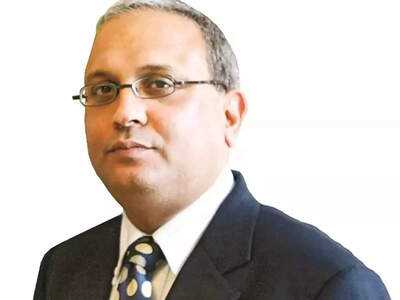
Samir Arora, Founder of Helios Capital, believes India’s equity markets should welcome strong domestic institutional investor (DII) flows rather than worry about a lack of investment options, arguing that concerns around “too much money chasing too few stocks” are premature ahead of a broader market rally in 2026.
Speaking to ET Now as part of an Outlook 2026 interaction, Arora said investors should worry only after markets have delivered meaningful gains. “We worry about weak markets, not strong markets. Strong markets are meant to be enjoyed,” he said, adding that equity investing is inherently cyclical, with phases of inflows and pauses repeating over time.
Markets need a rally before allocation concerns arise
Arora dismissed the idea that sustained DII inflows could become problematic if foreign institutional investor (FII) selling tapers. He said market performance must be viewed as a continuum rather than through selective timeframes. Periods of underperformance are often followed by renewed optimism and inflows, only to cool off again as valuations rise.
“Equities are not fixed deposits. There will be phases where markets outperform and phases where they consolidate. We need a rally first—allocation worries can come much later,” he noted.
Caution on long-duration ‘decadal themes’
On sectors such as railways and defence, Arora expressed skepticism about investment narratives built around long-duration government programmes. He said Helios Capital prefers businesses with year-to-year earnings visibility rather than companies dependent on multi-decade execution cycles.
While defence offers some visibility due to government-led localisation, Arora said the firm avoids companies tied to 10- or 15-year projects with uncertain execution timelines. Among defence names, Helios holds Bharat Electronics, citing its diversified, recurring order flow rather than dependence on a single large programme.
New-age platforms offer a better way to play consumption
Arora said consumption growth in India is best captured through new-age platform companies rather than traditional consumer staples, where end-demand growth typically remains capped at high single digits.
He highlighted quick commerce, digital payments and online insurance distribution as examples where growth is driven by channel shift rather than overall consumption expansion. Platforms benefit as consumers migrate from offline to digital channels, enabling much faster penetration-led growth.
“These companies don’t grow because the consumer is growing at 20%. They grow because the consumer is choosing a new channel. That penetration can rise sharply for years,” he said, pointing to digital payment platforms such as PhonePe and Paytm as examples of this trend.
Financials have already delivered, NBFCs lead
Addressing perceptions that financials have underperformed, Arora said non-bank lenders have delivered strong returns in 2025. Stocks such as Bajaj Finance, Cholamandalam Investment, and Shriram Finance have significantly outperformed, supported by rate cuts that favour NBFC margins.
Among banks, he noted that State Bank of India, HDFC Bank, and Axis Bank have performed reasonably well, while ICICI Bank has seen relative underperformance due to management succession concerns rather than fundamentals.
Auto exposure via ancillaries, not OEMs
On automobiles, Arora said Helios is currently avoiding original equipment manufacturers and instead prefers auto ancillary plays. The firm was an anchor investor in Ather Energy, reflecting its preference for selective exposure rather than broad bets on passenger or commercial vehicle cycles.
Outlook for 2026
Arora remains constructive on Indian equities for 2026, especially if FII selling stabilises and earnings visibility improves. He believes platform-led consumption, select financials, and businesses with clear year-to-year growth drivers offer better risk-reward than theme-based or execution-heavy sectors.
“We want visibility, scalability and changing consumer behaviour—not 15-year promises,” he said.
Speaking to ET Now as part of an Outlook 2026 interaction, Arora said investors should worry only after markets have delivered meaningful gains. “We worry about weak markets, not strong markets. Strong markets are meant to be enjoyed,” he said, adding that equity investing is inherently cyclical, with phases of inflows and pauses repeating over time.
Markets need a rally before allocation concerns arise
Arora dismissed the idea that sustained DII inflows could become problematic if foreign institutional investor (FII) selling tapers. He said market performance must be viewed as a continuum rather than through selective timeframes. Periods of underperformance are often followed by renewed optimism and inflows, only to cool off again as valuations rise.
“Equities are not fixed deposits. There will be phases where markets outperform and phases where they consolidate. We need a rally first—allocation worries can come much later,” he noted.
Caution on long-duration ‘decadal themes’
On sectors such as railways and defence, Arora expressed skepticism about investment narratives built around long-duration government programmes. He said Helios Capital prefers businesses with year-to-year earnings visibility rather than companies dependent on multi-decade execution cycles.
While defence offers some visibility due to government-led localisation, Arora said the firm avoids companies tied to 10- or 15-year projects with uncertain execution timelines. Among defence names, Helios holds Bharat Electronics, citing its diversified, recurring order flow rather than dependence on a single large programme.
New-age platforms offer a better way to play consumption
Arora said consumption growth in India is best captured through new-age platform companies rather than traditional consumer staples, where end-demand growth typically remains capped at high single digits.
He highlighted quick commerce, digital payments and online insurance distribution as examples where growth is driven by channel shift rather than overall consumption expansion. Platforms benefit as consumers migrate from offline to digital channels, enabling much faster penetration-led growth.
“These companies don’t grow because the consumer is growing at 20%. They grow because the consumer is choosing a new channel. That penetration can rise sharply for years,” he said, pointing to digital payment platforms such as PhonePe and Paytm as examples of this trend.
Financials have already delivered, NBFCs lead
Addressing perceptions that financials have underperformed, Arora said non-bank lenders have delivered strong returns in 2025. Stocks such as Bajaj Finance, Cholamandalam Investment, and Shriram Finance have significantly outperformed, supported by rate cuts that favour NBFC margins.
Among banks, he noted that State Bank of India, HDFC Bank, and Axis Bank have performed reasonably well, while ICICI Bank has seen relative underperformance due to management succession concerns rather than fundamentals.
Auto exposure via ancillaries, not OEMs
On automobiles, Arora said Helios is currently avoiding original equipment manufacturers and instead prefers auto ancillary plays. The firm was an anchor investor in Ather Energy, reflecting its preference for selective exposure rather than broad bets on passenger or commercial vehicle cycles.
Outlook for 2026
Arora remains constructive on Indian equities for 2026, especially if FII selling stabilises and earnings visibility improves. He believes platform-led consumption, select financials, and businesses with clear year-to-year growth drivers offer better risk-reward than theme-based or execution-heavy sectors.
“We want visibility, scalability and changing consumer behaviour—not 15-year promises,” he said.
Next Story