IndiGo chaos Day 5: Over 800 flights cancelled even as airline claims 95% network connectivity restored - top developments


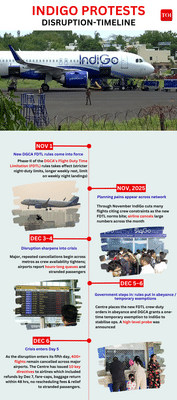
NEW DELHI: IndiGo ’s nationwide operational crisis entered its fifth day on Satuday, with the airline cancelling over 800 flights, even as the government tightened oversight, imposed fare caps, ordered immediate refunds and warned of regulatory action for any non-compliance.
While the disruptions continued to affect thousands of passengers across the country, the airline, in a statement, said that it had restored more than 95% of its network connectivity and was gradually stabilizing operations.
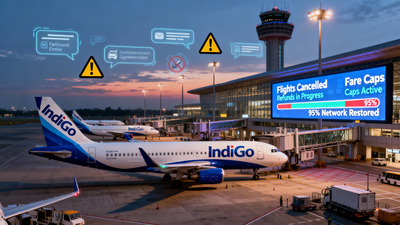
IndiGo says 95% connectivity restored
In its latest statement, IndiGo said it deliberately scaled down operations to reboot rosters and systems and was seeing early signs of recovery.
“With regards to destinations, over 95% of network connectivity has already been re-established as we are able to operate to 135 out of the existing 138 destinations in operations,” an IndiGo spokesperson in a statement said.
In its statement, the airlines added that it expected to operate over 1,500 flights by the end of Sunday.
The carrier said that the teams were focused on stabilizing schedules, reducing delays and supporting customers. It added that the refund issues were being handled on a priority basis.
The airline thanked government agencies, airport partners, staff and customers for their support and patience and apologized again for the disruption.
Fifth day of disruptions, cancellations continue
After cancelling over 1,000 flights on Friday, IndiGo grounded more than 800 flights on Saturday. The airline’s on-time performance at six major metro airports plunged to 3.7% on Friday, according to civil aviation ministry data, highlighting the scale of operational breakdown.
IndiGo, which normally operates over 2,200 flights per day, was forced to sharply cut services as crew shortages and scheduling issues persisted under the new regulatory framework.
Government orders refunds, baggage return and passenger support
In response to mounting passenger distress, the civil aviation ministry directed IndiGo to complete all refunds for cancelled and disrupted flights by 8 pm on Sunday. Airlines were also instructed not to levy any rescheduling charges for passengers affected by cancellations or long delays.
The ministry further ordered the airline to trace and deliver all baggage separated from travellers within the next 48 hours and to maintain constant communication with passengers on delivery timelines.
IndiGo has also been directed to operate dedicated passenger support and refund facilitation cells to proactively reach out to impacted travellers. The ministry said the automatic refund system must remain active until operations fully stabilize.
Routes up to 500 km: Rs 7,500 500–1,000 km: Rs 12,000 1,000–1,500 km: Rs 15,000 Above 1,500 km: Rs 18,000 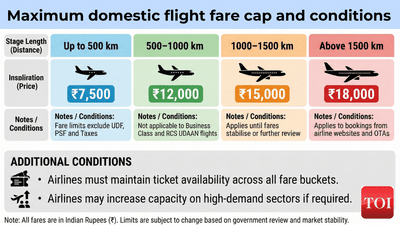
These caps exclude User Development Fee, Passenger Service Fee and applicable taxes and are not applicable to Business Class or UDAN flights.
The ministry said the caps would remain in force until the situation stabilises and directed airlines to avoid any unusual upward fare revisions on affected routes. It also clarified that the caps would apply across all ticketing platforms, including airline websites and online travel agents.
The intervention followed reports of extreme fare spikes, with fares for some routes shooting up to as high as Rs 90,000, triggering widespread outrage.
10 key directives issued by the Centre
The Central government ordered IndiGo to clear all pending passenger refunds without delay. The ministry of civil aviation said the intervention was essential to safeguard passengers grappling with uncertainty, soaring ticket prices and prolonged delays.
The government directed that IndiGo must complete all pending passenger refunds for cancelled or disrupted flights by 8pm on Sunday, December 7. Airlines, including IndiGo, have also been instructed not to levy any rescheduling fees for passengers affected by cancellations or major delays. IndiGo must ensure that all baggage separated from passengers during cancellation or delays is traced and delivered to the passenger’s residential or chosen address within the next 48 hours. Airlines have been told to maintain clear communication with passengers regarding tracking and delivery timelines, and to provide compensation where required under existing passenger rights regulations. ` To stop surge pricing during the nationwide crisis, the government has imposed fare caps across affected routes. These must be followed strictly. The airfare caps will remain in place until operations return to normal. Any violations will attract regulatory action. The DGCA's Flight Duty Time Limitations (FDTL) norms have been placed in abeyance to help airlines deploy more cockpit crew without compromising safety. The ministry of civil aviation expects schedules to begin normalising within 24 hours and fully stabilising within the next three days. The ministry said that if a flight is cancelled, airlines must issue full refunds automatically, no passenger requests required. Airlines must offer hotel accommodation, refreshments and essential services for passengers stranded due to long delays. Special support, including lounge access, faster processing and dedicated help, must be provided to vulnerable travellers. To ensure real-time monitoring, the government has opened a 24×7 control room (011-24610843, 011-24693963, 096503-91859) to coordinate swift action.
Industry bodies welcome government action
Tourism and travel industry bodies backed the move. Indian Association of Tour Operators President Ravi Gosain said unpredictable fare spikes damage consumer confidence and disrupt tour planning.
FAITH board member Anil Kalsi said the fare cap was essential to protect passenger rights and called for a permanent policy mechanism to prevent such shocks in the future.
FDTL norms at the root of the crisis
The current crisis was triggered by the implementation of the revised Flight Duty Time Limitation (FDTL) norms, which mandated longer weekly rest periods, extended night hours and fewer permitted night landings. These changes required airlines to deploy significantly more crew.
IndiGo had opposed the norms when they were first notified in January 2024, arguing that airlines needed more time to build adequate crew strength. Other domestic carriers, including Air India, had also expressed initial reservations.
To help restore services, the DGCA provided temporary relief to IndiGo by rolling back the night-duty definition to 12 am–5 am from 12 am–6 am and allowing pilots more night landings, among other relaxations.
The move is intended to enable a faster deployment of cockpit crew and speed up recovery. The Airlines’ Pilots Association (ALPA) India, however, has strongly objected to what it called “selective and unsafe” relief, warning that any dilution of fatigue-mitigation standards could endanger safety and contravene court directions.
While the disruptions continued to affect thousands of passengers across the country, the airline, in a statement, said that it had restored more than 95% of its network connectivity and was gradually stabilizing operations.
IndiGo says 95% connectivity restored
In its latest statement, IndiGo said it deliberately scaled down operations to reboot rosters and systems and was seeing early signs of recovery.
“With regards to destinations, over 95% of network connectivity has already been re-established as we are able to operate to 135 out of the existing 138 destinations in operations,” an IndiGo spokesperson in a statement said.
In its statement, the airlines added that it expected to operate over 1,500 flights by the end of Sunday.
The carrier said that the teams were focused on stabilizing schedules, reducing delays and supporting customers. It added that the refund issues were being handled on a priority basis.
The airline thanked government agencies, airport partners, staff and customers for their support and patience and apologized again for the disruption.
Fifth day of disruptions, cancellations continue
After cancelling over 1,000 flights on Friday, IndiGo grounded more than 800 flights on Saturday. The airline’s on-time performance at six major metro airports plunged to 3.7% on Friday, according to civil aviation ministry data, highlighting the scale of operational breakdown.
IndiGo, which normally operates over 2,200 flights per day, was forced to sharply cut services as crew shortages and scheduling issues persisted under the new regulatory framework.
Government orders refunds, baggage return and passenger support
In response to mounting passenger distress, the civil aviation ministry directed IndiGo to complete all refunds for cancelled and disrupted flights by 8 pm on Sunday. Airlines were also instructed not to levy any rescheduling charges for passengers affected by cancellations or long delays.
The ministry further ordered the airline to trace and deliver all baggage separated from travellers within the next 48 hours and to maintain constant communication with passengers on delivery timelines.
IndiGo has also been directed to operate dedicated passenger support and refund facilitation cells to proactively reach out to impacted travellers. The ministry said the automatic refund system must remain active until operations fully stabilize.
These caps exclude User Development Fee, Passenger Service Fee and applicable taxes and are not applicable to Business Class or UDAN flights.
The ministry said the caps would remain in force until the situation stabilises and directed airlines to avoid any unusual upward fare revisions on affected routes. It also clarified that the caps would apply across all ticketing platforms, including airline websites and online travel agents.
The intervention followed reports of extreme fare spikes, with fares for some routes shooting up to as high as Rs 90,000, triggering widespread outrage.
10 key directives issued by the Centre
The Central government ordered IndiGo to clear all pending passenger refunds without delay. The ministry of civil aviation said the intervention was essential to safeguard passengers grappling with uncertainty, soaring ticket prices and prolonged delays.
Tourism and travel industry bodies backed the move. Indian Association of Tour Operators President Ravi Gosain said unpredictable fare spikes damage consumer confidence and disrupt tour planning.
FAITH board member Anil Kalsi said the fare cap was essential to protect passenger rights and called for a permanent policy mechanism to prevent such shocks in the future.
FDTL norms at the root of the crisis
The current crisis was triggered by the implementation of the revised Flight Duty Time Limitation (FDTL) norms, which mandated longer weekly rest periods, extended night hours and fewer permitted night landings. These changes required airlines to deploy significantly more crew.
IndiGo had opposed the norms when they were first notified in January 2024, arguing that airlines needed more time to build adequate crew strength. Other domestic carriers, including Air India, had also expressed initial reservations.
To help restore services, the DGCA provided temporary relief to IndiGo by rolling back the night-duty definition to 12 am–5 am from 12 am–6 am and allowing pilots more night landings, among other relaxations.
The move is intended to enable a faster deployment of cockpit crew and speed up recovery. The Airlines’ Pilots Association (ALPA) India, however, has strongly objected to what it called “selective and unsafe” relief, warning that any dilution of fatigue-mitigation standards could endanger safety and contravene court directions.
Next Story