
Plan to pay upto 25% higher health insurance premium?


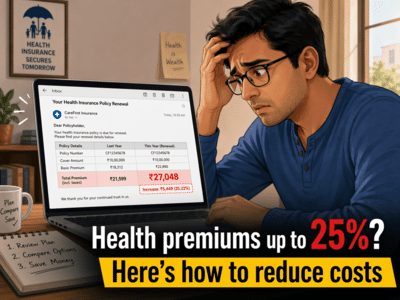
Don’t be surprised if your next health insurance premium jumps by as much as 25% this year. Many policyholders across India are noticing their premiums going up, often more than they anticipated. What’s behind this sudden spike and more importantly, what can you do about it?
Experts say this is not a one-off change but part of a broader trend driven by rising healthcare costs, more claims being filed, and changing risk profiles.
How much are health insurance premiums expected to rise?
Premium hikes are not uniform and depend on multiple factors such as age, location, coverage and claims history.
“Health insurance premiums are likely to increase by around 10 to 25%. The rise involves several factors like age, city, claim history and type of policy. Senior citizens and those with higher coverage may see sharper hikes,” says Sarita Joshi, Head of health and life insurance, Probus.
The increase in health insurance premiums also varies significantly across age groups.
“People aged less than 35 years will experience an increase of approximately 5-10% due to medical inflation and repricing of products. Premiums of those between 35-50 years are likely to increase by 10-15% while those in age brackets of 46, 51, 56 or 61 years may see an actual increase of 20-30% because of the addition of age-related risk pricing to overall inflation,” says Arun Ramamurthy, Co-founder, Staywell.Health.
However, there is a regulatory safeguard in place for senior citizens as IRDAI caps senior hikes at 10% without approval.
“Historically, seniors have experienced the largest increases; however, premiums for senior citizens cannot exceed an annual increase of 10% without prior regulatory approval, “ he adds.
Family floater plans will be less impacted than individual plans for older members; comprehensive plans that include maternity, outpatient & hospital benefits are likely to experience larger increases than basic indemnity plans, Ramamurthy explains.
Why are health insurance premiums rising in 2026?
The rise in premiums is largely linked to the increasing cost of healthcare and higher utilisation of insurance. Experts highlight that hospitalisation costs have risen sharply in recent years.
“The cost of hospitalisation has gone up significantly. This cost includes room rents, doctor consultation fees, diagnostic tests and surgical procedures. Advanced medical technologies and treatments are also adding to overall healthcare costs, which directly impacts premiums,” says Joshi.
The key reasons include rising medical inflation, higher claim volumes post-COVID and increased use of advanced treatments, she adds.
Another important factor contributing to rising costs is the growing burden of chronic diseases.
According to G Srinivasan, MD and CEO, Galaxy Health Insurance Company, conditions such as diabetes, heart disease and cancer are becoming more common. These illnesses often require long-term treatment and repeated medical care, making healthcare expenses ongoing rather than one-time.
Even insurers are communicating this trend to customers.
In an email to customers, HDFC Ergo claimed that medical inflation in India (~12-14%) is almost 3 times the annualised consumer price inflation index (~4.60%), which actually reflects the cost of everyday goods and services we use.
To continue with seamless services and to keep up with the projected medical inflation, there will be a revision in the premium of your Optima Secure Insurance policy (UIN: XX), which may result in a change in your renewal premium, said the letter from HDFC Ergo.
What should you do if your health insurance premiums jump sharply?
If your premium has increased significantly, experts suggest taking a structured approach rather than making impulsive decisions. Policyholders can start by reviewing their current policy and understanding what they are paying for.
“In addition, compare similar plans in the market. You can consider increasing deductibles, opting for top-up plans or porting to a more cost-effective policy. Most importantly, avoid lapsing your policy and ensure continuous coverage,” says Joshi.
The first thing that policyholders must do when there is a substantial increase in renewal premiums is to avoid immediate cancellation of policy, as this will ensure that they do not lose any accumulated benefits related to continuity, such as no-claims bonuses or waiting-period accruals, explains Ramamurthy.
Policyholders should also seek a clear explanation from their insurer or agent for any premium increase, such as shifts in age bracket, revised pricing, or enhanced coverage and benefits, he adds.
Experts say this is not a one-off change but part of a broader trend driven by rising healthcare costs, more claims being filed, and changing risk profiles.
How much are health insurance premiums expected to rise?
Premium hikes are not uniform and depend on multiple factors such as age, location, coverage and claims history.
“Health insurance premiums are likely to increase by around 10 to 25%. The rise involves several factors like age, city, claim history and type of policy. Senior citizens and those with higher coverage may see sharper hikes,” says Sarita Joshi, Head of health and life insurance, Probus.
The increase in health insurance premiums also varies significantly across age groups.
“People aged less than 35 years will experience an increase of approximately 5-10% due to medical inflation and repricing of products. Premiums of those between 35-50 years are likely to increase by 10-15% while those in age brackets of 46, 51, 56 or 61 years may see an actual increase of 20-30% because of the addition of age-related risk pricing to overall inflation,” says Arun Ramamurthy, Co-founder, Staywell.Health.
However, there is a regulatory safeguard in place for senior citizens as IRDAI caps senior hikes at 10% without approval.
“Historically, seniors have experienced the largest increases; however, premiums for senior citizens cannot exceed an annual increase of 10% without prior regulatory approval, “ he adds.
Family floater plans will be less impacted than individual plans for older members; comprehensive plans that include maternity, outpatient & hospital benefits are likely to experience larger increases than basic indemnity plans, Ramamurthy explains.
Why are health insurance premiums rising in 2026?
The rise in premiums is largely linked to the increasing cost of healthcare and higher utilisation of insurance. Experts highlight that hospitalisation costs have risen sharply in recent years.
“The cost of hospitalisation has gone up significantly. This cost includes room rents, doctor consultation fees, diagnostic tests and surgical procedures. Advanced medical technologies and treatments are also adding to overall healthcare costs, which directly impacts premiums,” says Joshi.
The key reasons include rising medical inflation, higher claim volumes post-COVID and increased use of advanced treatments, she adds.
Another important factor contributing to rising costs is the growing burden of chronic diseases.
According to G Srinivasan, MD and CEO, Galaxy Health Insurance Company, conditions such as diabetes, heart disease and cancer are becoming more common. These illnesses often require long-term treatment and repeated medical care, making healthcare expenses ongoing rather than one-time.
Even insurers are communicating this trend to customers.
In an email to customers, HDFC Ergo claimed that medical inflation in India (~12-14%) is almost 3 times the annualised consumer price inflation index (~4.60%), which actually reflects the cost of everyday goods and services we use.
To continue with seamless services and to keep up with the projected medical inflation, there will be a revision in the premium of your Optima Secure Insurance policy (UIN: XX), which may result in a change in your renewal premium, said the letter from HDFC Ergo.
What should you do if your health insurance premiums jump sharply?
If your premium has increased significantly, experts suggest taking a structured approach rather than making impulsive decisions. Policyholders can start by reviewing their current policy and understanding what they are paying for.
“In addition, compare similar plans in the market. You can consider increasing deductibles, opting for top-up plans or porting to a more cost-effective policy. Most importantly, avoid lapsing your policy and ensure continuous coverage,” says Joshi.
The first thing that policyholders must do when there is a substantial increase in renewal premiums is to avoid immediate cancellation of policy, as this will ensure that they do not lose any accumulated benefits related to continuity, such as no-claims bonuses or waiting-period accruals, explains Ramamurthy.
Policyholders should also seek a clear explanation from their insurer or agent for any premium increase, such as shifts in age bracket, revised pricing, or enhanced coverage and benefits, he adds.
Next Story