
Rs 12L crore rout! 7 key factors behind today's D-St bloodbath


Indian stock markets sharply crashed on Monday, with Sensex and Nifty plunging 3% each and extending losses from last week as the raging war between Iran and Israel-US further escalated during the weekend, spiking crude oil prices and raising concerns over India’s rupee and macroeconomics.
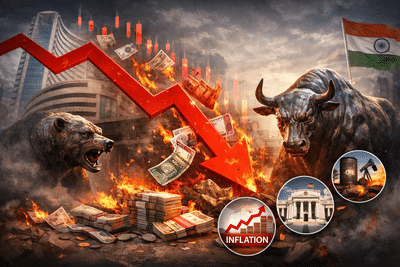
Sensex crashed nearly 2,400 points to 76,424, while Nifty 50 tumbled over 700 points to 23,750. The sharp selloff wiped off more than Rs 12.39 lakh crore from the total market capitalisation of all companies listed on BSE within less than 10 minutes of opening, dragging it down to Rs 437 lakh crore, as seen at 9.20 am.
All constituents of Sensex were in the red, with IndiGo shares leading losses, falling nearly 8%. Tata Steel, L&T, SBI, Maruti Suzuki and Eternal shares followed, dropping around 5% each.
Among the sectoral indices on NSE, the Nifty PSU Bank index crashed more than 5% to emerge as the top sectoral loser. Nifty Auto plunged around 4%, while Nifty Realty and Nifty Private Bank indices were down over 3% each.
Here are the key factors impacting markets today:
1) Crude prices soar above $100-mark
Crude oil prices surged to multi-month highs as the war between Iran and the US further escalated over the weekend, triggering concerns over the prolonged closure of the Strait of Hormuz and the resulting supply disruptions.
West Texas Intermediate (WTI) rallied 30% to $118.21 per barrel on Monday morning, while Brent Crude gained 27% to $118.22 per barrel. Notably, this marks the first time since Russia attacked Ukraine in 2022 that oil prices crossed the key $100 per barrel mark.
The Strait of Hormuz continues to remain effectively shut for regular traffic after several tankers were bombed in the area. More than 20% of the world’s oil supply passes through the Strait of Hormuz, which connects the Persian Gulf with the Gulf of Oman and the Arabian Sea.
While US President Donald Trump-led US administration claims that the Strait remains open and has offered to insure vessels transiting the narrow waterway, the market doesn’t seem to be convinced that Iran won't attack any ship attempting passage.
2) The Middle East war worsens
The war between Iran and Israel-US entered its 10th day today, after escalating further during the weekend. Iran today named Mojtaba Khamenei to succeed his father, Ali Khamenei as the country’s supreme leader, signalling that Tehran remains in charge amid the conflict. Israel has threatened to kill Khamenei’s successor, while US President Donald Trump said that the war may only end when Iran’s military and rules have been wiped out.
US and Israel attacked several oil depots in Iran. Videos from the attacked areas showed plumes of smoke and fire lighting up the night sky in Tehran late at night. Iran meanwhile targeted several other Gulf nations, with drone attacks injuring many civilians.
The raging war began during the previous weekend after the US and Israel conducted military strikes against Iran, reportedly killing its Supreme Leader, Ayatollah Ali Khamenei. Iran subsequently launched retaliatory attacks across several parts of the oil-rich region. No sign of diplomatic resolution to the war has been spooking global investors this week.
More to come...
Sensex crashed nearly 2,400 points to 76,424, while Nifty 50 tumbled over 700 points to 23,750. The sharp selloff wiped off more than Rs 12.39 lakh crore from the total market capitalisation of all companies listed on BSE within less than 10 minutes of opening, dragging it down to Rs 437 lakh crore, as seen at 9.20 am.
All constituents of Sensex were in the red, with IndiGo shares leading losses, falling nearly 8%. Tata Steel, L&T, SBI, Maruti Suzuki and Eternal shares followed, dropping around 5% each.
Among the sectoral indices on NSE, the Nifty PSU Bank index crashed more than 5% to emerge as the top sectoral loser. Nifty Auto plunged around 4%, while Nifty Realty and Nifty Private Bank indices were down over 3% each.
Here are the key factors impacting markets today:
1) Crude prices soar above $100-mark
Crude oil prices surged to multi-month highs as the war between Iran and the US further escalated over the weekend, triggering concerns over the prolonged closure of the Strait of Hormuz and the resulting supply disruptions.
West Texas Intermediate (WTI) rallied 30% to $118.21 per barrel on Monday morning, while Brent Crude gained 27% to $118.22 per barrel. Notably, this marks the first time since Russia attacked Ukraine in 2022 that oil prices crossed the key $100 per barrel mark.
The Strait of Hormuz continues to remain effectively shut for regular traffic after several tankers were bombed in the area. More than 20% of the world’s oil supply passes through the Strait of Hormuz, which connects the Persian Gulf with the Gulf of Oman and the Arabian Sea.
While US President Donald Trump-led US administration claims that the Strait remains open and has offered to insure vessels transiting the narrow waterway, the market doesn’t seem to be convinced that Iran won't attack any ship attempting passage.
2) The Middle East war worsens
The war between Iran and Israel-US entered its 10th day today, after escalating further during the weekend. Iran today named Mojtaba Khamenei to succeed his father, Ali Khamenei as the country’s supreme leader, signalling that Tehran remains in charge amid the conflict. Israel has threatened to kill Khamenei’s successor, while US President Donald Trump said that the war may only end when Iran’s military and rules have been wiped out.
US and Israel attacked several oil depots in Iran. Videos from the attacked areas showed plumes of smoke and fire lighting up the night sky in Tehran late at night. Iran meanwhile targeted several other Gulf nations, with drone attacks injuring many civilians.
The raging war began during the previous weekend after the US and Israel conducted military strikes against Iran, reportedly killing its Supreme Leader, Ayatollah Ali Khamenei. Iran subsequently launched retaliatory attacks across several parts of the oil-rich region. No sign of diplomatic resolution to the war has been spooking global investors this week.
More to come...
Next Story