US sanctions: Washington eases curbs on Lukoil outlets outside Russia; exemption valid till April 2026


The United States has temporarily lifted some restrictions on Lukoil-branded fuel stations operating outside Russia, allowing them to continue running despite sanctions placed on the parent company.
The treasury department confirmed on Thursday that these stations — including those in the US — can keep serving customers without enabling revenue to move back to Russia, which remains under extensive American and European sanctions over its actions in Ukraine.
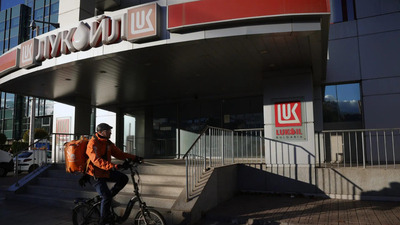
The exemption will stay in force until 29 April 2026, reported Reuters.
The relaxation marks a partial suspension of measures introduced by US President Donald Trump in October.
The announcement comes in the same week US officials met Russian President Vladimir Putin in Moscow as part of efforts to advance a Washington-backed plan to end the conflict.
Lukoil ’s footprint outside Russia is substantial. The company operates around 200 stations across New Jersey, Pennsylvania and New York.
Its Finnish subsidiary Teboil, which runs roughly 430 fuel stations, has already begun winding down operations as supplies diminish, with expectations that Lukoil will eventually sell the chain.
Beyond this, the firm remains a dominant retail player in Moldova and Bulgaria and manages about 600 outlets in Turkey and over 300 in Romania.
The decision to soften restrictions comes against the backdrop of wider sanctions imposed by Washington.
The US placed its first major penalties on Lukoil and Rosneft, freezing all American-based assets and banning US firms from engaging with them.
Both companies — which together contribute around 55% of Russia’s petroleum output — were added to the Specially Designated Nationals (SDN) list.
Businesses were given until 21 November to cut ties or risk secondary sanctions that could limit access to US banking, shipping and insurance services.
India’s energy sector is also feeling the impact. New US sanctions on Rosneft and Lukoil have turned their crude into a “sanctioned molecule,” analysts said, as per PTI.
Although India imported an average of 1.7 million barrels per day of Russian crude this year — with November expected to touch 1.8–1.9 million bpd — inflows are forecast to drop sharply to about 4,00,000 bpd in December and January.
Several refiners, including Reliance Industries and HPCL-Mittal Energy, have paused purchases, with only Rosneft-backed Nayara Energy continuing supplies due to its dependence on Russian barrels.
Experts say the restrictions apply specifically to designated companies, not to all Russian crude.
This allows Indian buyers to legally source barrels from non-sanctioned producers such as Gazprom Neft or Surgutneftegaz, provided no blacklisted entity is involved in shipping, banking or trading.
Reliance, which operates one of the world’s largest refining complexes, has already stopped using Russian crude in its export-oriented SEZ refinery to comply with upcoming EU rules.
The treasury department confirmed on Thursday that these stations — including those in the US — can keep serving customers without enabling revenue to move back to Russia, which remains under extensive American and European sanctions over its actions in Ukraine.
The exemption will stay in force until 29 April 2026, reported Reuters.
The relaxation marks a partial suspension of measures introduced by US President Donald Trump in October.
The announcement comes in the same week US officials met Russian President Vladimir Putin in Moscow as part of efforts to advance a Washington-backed plan to end the conflict.
Lukoil ’s footprint outside Russia is substantial. The company operates around 200 stations across New Jersey, Pennsylvania and New York.
Its Finnish subsidiary Teboil, which runs roughly 430 fuel stations, has already begun winding down operations as supplies diminish, with expectations that Lukoil will eventually sell the chain.
Beyond this, the firm remains a dominant retail player in Moldova and Bulgaria and manages about 600 outlets in Turkey and over 300 in Romania.
The decision to soften restrictions comes against the backdrop of wider sanctions imposed by Washington.
The US placed its first major penalties on Lukoil and Rosneft, freezing all American-based assets and banning US firms from engaging with them.
Both companies — which together contribute around 55% of Russia’s petroleum output — were added to the Specially Designated Nationals (SDN) list.
Businesses were given until 21 November to cut ties or risk secondary sanctions that could limit access to US banking, shipping and insurance services.
India’s energy sector is also feeling the impact. New US sanctions on Rosneft and Lukoil have turned their crude into a “sanctioned molecule,” analysts said, as per PTI.
Although India imported an average of 1.7 million barrels per day of Russian crude this year — with November expected to touch 1.8–1.9 million bpd — inflows are forecast to drop sharply to about 4,00,000 bpd in December and January.
Several refiners, including Reliance Industries and HPCL-Mittal Energy, have paused purchases, with only Rosneft-backed Nayara Energy continuing supplies due to its dependence on Russian barrels.
Experts say the restrictions apply specifically to designated companies, not to all Russian crude.
This allows Indian buyers to legally source barrels from non-sanctioned producers such as Gazprom Neft or Surgutneftegaz, provided no blacklisted entity is involved in shipping, banking or trading.
Reliance, which operates one of the world’s largest refining complexes, has already stopped using Russian crude in its export-oriented SEZ refinery to comply with upcoming EU rules.
Next Story