
BMC issues toll-free number to report coconut waste


Bhubaneswar: To tackle heaps of used coconuts that became a visible part of municipal solid waste, the Bhubaneswar Municipal Corporation on Monday issued a toll-free number, urging residents to report littered coconut waste for prompt collection and processing.
The civic body said the move aimed to ensure that discarded coconuts did not remain unattended in markets, residential areas and other public spaces, where they can create environmental and public health risks. Bhubaneswar generates around 5,000 to 6,000 pieces of waste coconut every day, posing a growing challenge for sanitation workers and waste managers.
“The reason why the BMC introduced a toll-free number is that it doesn't want to leave a single used coconut unattended, as that leads to an environmental hazard. The toll-free number will also help our own sanitary workforce during their door-to-door waste collection. Upon seeing a heap of coconuts, they can give a call and ask for the specialised vehicle to come and collect them,” said N Ganesh Babu, BMC deputy commissioner (sanitation).
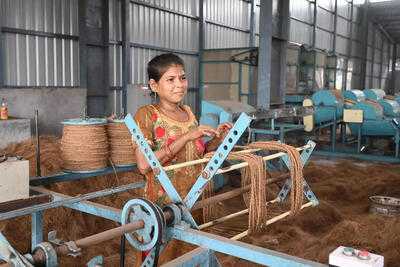
BMC has set up an exclusive coconut processing unit where the discarded shells and peels are converted into coir, rope and coco pots. The corporation processes the waste at its material recovery facility, which has the capacity to handle around 3,000 used coconuts daily.
Officials said the coconut peel is dried before being used to make rope, coir and pots. These products are supplied through a private agency, generating revenue for the civic body while also reducing the burden on landfills.
Experts said used coconuts in municipal waste can trap stagnant water and become breeding grounds for mosquitoes. They warned that such waste, if left uncleared, can add to vector-borne disease risks in the city. “There is other household waste which can act as a container of waste water. So such waste must be shifted from the city’s markets and residential areas to avoid mosquito breeding. Also, a bad smell emanates from the waste because of bacteria,” an expert said.
The toll-free reporting system is expected to strengthen collection efforts by linking residents and sanitation workers directly with specialised vehicles assigned for coconut waste.
The civic body said the move aimed to ensure that discarded coconuts did not remain unattended in markets, residential areas and other public spaces, where they can create environmental and public health risks. Bhubaneswar generates around 5,000 to 6,000 pieces of waste coconut every day, posing a growing challenge for sanitation workers and waste managers.
“The reason why the BMC introduced a toll-free number is that it doesn't want to leave a single used coconut unattended, as that leads to an environmental hazard. The toll-free number will also help our own sanitary workforce during their door-to-door waste collection. Upon seeing a heap of coconuts, they can give a call and ask for the specialised vehicle to come and collect them,” said N Ganesh Babu, BMC deputy commissioner (sanitation).
BMC has set up an exclusive coconut processing unit where the discarded shells and peels are converted into coir, rope and coco pots. The corporation processes the waste at its material recovery facility, which has the capacity to handle around 3,000 used coconuts daily.
Officials said the coconut peel is dried before being used to make rope, coir and pots. These products are supplied through a private agency, generating revenue for the civic body while also reducing the burden on landfills.
Experts said used coconuts in municipal waste can trap stagnant water and become breeding grounds for mosquitoes. They warned that such waste, if left uncleared, can add to vector-borne disease risks in the city. “There is other household waste which can act as a container of waste water. So such waste must be shifted from the city’s markets and residential areas to avoid mosquito breeding. Also, a bad smell emanates from the waste because of bacteria,” an expert said.
The toll-free reporting system is expected to strengthen collection efforts by linking residents and sanitation workers directly with specialised vehicles assigned for coconut waste.
Next Story