
CAG-empanelled auditors to scrutinise ULBs in Bihar: Deputy CM


Patna: The state govt has decided to carry out the audit of all urban local bodies (ULBs) through Comptroller and Auditor General of India (CAG)-empanelled auditors in the state. The development comes in the light of the govt’s policy of “zero tolerance towards corruption”.
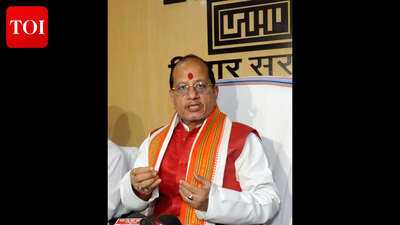
“Currently, auditing of all the urban local bodies is being carried out by the chartered accountants, but now, for the first time, CAG-empanelled auditors will carry out auditing of all the ULBs of the state. The decision was taken keeping in view the state govt’s policy of zero tolerance towards corruption ,” deputy CM Vijay Kumar Sinha told reporters on Tuesday.
He said the CAG has been urged to bring more ULBs under the ambit of its auditing exercise every year, adding that the auditing will be carried out in accordance with National Municipal Accounts Manual provisions.
The CAG-empanelled auditors will conduct auditing of all the ULBs, which include municipal corporations, municipal councils and nagar panchayats. There are 19 municipal corporations, 89 municipal councils and 154 nagar panchayats in the state.
Sinha, who also holds the urban development and housing department portfolio, said the govt has set the target of rapid urbanisation. “The state currently has 15.6% of urban population against the national average of 36%,” he said.
“We have to catch up with the national average urbanisation of 36%, for which we are committed. We have taken a resolve to provide the people ‘clean city, green city’,” said Sinha, adding the state cabinet has already given a go-ahead for developing 11 new townships that include nine divisional headquarters towns apart from Sitamarhi and Sonepur (in Saran district), besides redeveloping the old towns and cities. Asserting that “planned city development” is the govt’s priority, the deputy chief minister said that a “master plan” will be prepared for all the towns of the state within a year.
He said the municipal corporations will provide all sorts of citizens’ services online through a single platform. “The move will be made applicable in the next seven-eight months,” he said, adding that all types of services — be it redressal of complaints, depositing tax, waste disposal or getting one’s map passed — will be provided online.
Setting a deadline for completion of four smart city projects, Sinha said the remaining work is likely to be completed by Oct this year. Four cities of Bihar that include Patna, Bhagalpur, Bihar Sharif and Muzaffarpur were selected under the Smart Cities Mission. These cities are undergoing development to improve infrastructure, including intelligent traffic management, waste management and improved public services to boost sustainability and quality of life.
The deputy CM said the metro’s both corridors — blue line (priority corridor) and red line — will be made operational by the end of 2030. Patna Metro project comprises two main corridors totalling approximately 31.39 km, designed to connect Danapur with Mithapur and Patna Junction with New ISBT, Patna. The project aims to improve urban transit with a mix of elevated (15.4 km) and underground (15.9 km) stretches, featuring a common depot at Bairiya Chak.
“Currently, auditing of all the urban local bodies is being carried out by the chartered accountants, but now, for the first time, CAG-empanelled auditors will carry out auditing of all the ULBs of the state. The decision was taken keeping in view the state govt’s policy of zero tolerance towards corruption ,” deputy CM Vijay Kumar Sinha told reporters on Tuesday.
He said the CAG has been urged to bring more ULBs under the ambit of its auditing exercise every year, adding that the auditing will be carried out in accordance with National Municipal Accounts Manual provisions.
The CAG-empanelled auditors will conduct auditing of all the ULBs, which include municipal corporations, municipal councils and nagar panchayats. There are 19 municipal corporations, 89 municipal councils and 154 nagar panchayats in the state.
Sinha, who also holds the urban development and housing department portfolio, said the govt has set the target of rapid urbanisation. “The state currently has 15.6% of urban population against the national average of 36%,” he said.
“We have to catch up with the national average urbanisation of 36%, for which we are committed. We have taken a resolve to provide the people ‘clean city, green city’,” said Sinha, adding the state cabinet has already given a go-ahead for developing 11 new townships that include nine divisional headquarters towns apart from Sitamarhi and Sonepur (in Saran district), besides redeveloping the old towns and cities. Asserting that “planned city development” is the govt’s priority, the deputy chief minister said that a “master plan” will be prepared for all the towns of the state within a year.
He said the municipal corporations will provide all sorts of citizens’ services online through a single platform. “The move will be made applicable in the next seven-eight months,” he said, adding that all types of services — be it redressal of complaints, depositing tax, waste disposal or getting one’s map passed — will be provided online.
Setting a deadline for completion of four smart city projects, Sinha said the remaining work is likely to be completed by Oct this year. Four cities of Bihar that include Patna, Bhagalpur, Bihar Sharif and Muzaffarpur were selected under the Smart Cities Mission. These cities are undergoing development to improve infrastructure, including intelligent traffic management, waste management and improved public services to boost sustainability and quality of life.
The deputy CM said the metro’s both corridors — blue line (priority corridor) and red line — will be made operational by the end of 2030. Patna Metro project comprises two main corridors totalling approximately 31.39 km, designed to connect Danapur with Mithapur and Patna Junction with New ISBT, Patna. The project aims to improve urban transit with a mix of elevated (15.4 km) and underground (15.9 km) stretches, featuring a common depot at Bairiya Chak.
Next Story