
Crowded platforms tell stories of migrant workers returning home amid LPG crisis


Patna: The platforms at Patna Junction have begun to fill with weary families carrying bags, bedding and small bundles of belongings. As long-distance trains from Delhi, Gujarat and southern cities pull in, men, women and children step down slowly, making their way towards the exits.
Some clutch steel containers and plastic sacks. Others hold the hands of tired children. Their journey back to Bihar has been long, but the decision behind it is painfully simple — they can no longer afford to cook in the cities where they work.
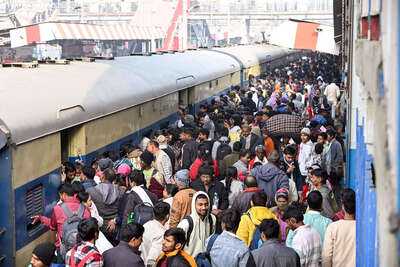
At around 12.30pm, when the Magadh Express from New Delhi arrives, the platform becomes crowded with returning workers. A similar scene is witnessed around 2:20pm with the arrival of the Brahmaputra Mail from Delhi. Trains such as the Azimabad Express from Gujarat and the Ernakulam Express from the south bring more workers back each day, a station master at Patna Junction said on the condition of anonymity.
The same pattern is visible at Danapur railway station, where migrants arrive from Bengaluru on the Sanghamitra Express and from Gujarat on the Udhna Express.
Many of those returning belong to districts such as Siwan, Gopalganj, Madhubani, Darbhanga and Saharsa. Several migrant workers are abandoning jobs in metro cities after struggling to secure LPG cylinders needed for daily cooking.
Bikash, a coolie who has worked at the station for 12 years, said the change in passenger flow is visible. “The rush is not like the pandemic, but workers are coming in higher numbers due to the LPG crisis in the last two weeks, especially from Delhi,” he said.
Among those stepping off the Brahmaputra Mail on Tuesday was Manoj, a resident of Punpun who had been working at a construction site in Delhi. He travelled back with his wife and two children.
“Vendors are charging Rs 500 per kg for LPG, which only lasts us for two days. With our limited salary, it was not possible to continue at this rate,” he said.
For Sonu, a security guard working at a residential complex in Noida, the situation became unbearable when cooking fuel ran out.
“When the cylinder ran out, we ate on the streets for a few days because we were not allowed to cook using coal or wood within the residential area,” he said.
Sonu earns Rs 6,000 a month and also pays for his brother’s education. With rising living costs, he said continuing in the city had become impossible.
Nishi Devi, a househelp returning to Bhojpur with her three children, described the struggle to manage food in the city. “My employer provided for us initially, but when they faced a crisis, we were left to fend for ourselves. We cannot afford cylinders at black-market prices along with rent. At home, I can cook using cow dung cakes to feed my children. It has been four days since we had a proper meal.”
Ramu, a factory worker travelling from Chennai to Saharsa, said buying fuel had become too expensive. “I spent two days' wages just to buy enough gas to cook one meal. It is better to be unemployed at home than to starve in a big city.”
Sunita, who worked as a cook in Mumbai, said the situation had worsened rapidly. “The small shops that used to refill our cylinders have closed or tripled their prices. We have no choice but to go back to the village chulha.”
Meanwhile, a senior official from the labour department said approximately 2,500 migrant workers have returned to Bihar so far, many affected by the LPG crisis. The returning workers come from different occupations, but most are factory labourers or workers employed in dhabas and small hotels.
The official said the department has started a survey over the last two to three days to track returning migrants and understand the reasons behind their return. Information is being collected from the panchayat level.
He added special control rooms have been set up and helpline numbers issued in view of the current geo-political circumstances to assist migrant workers from the state.
“Workers are calling from several places to inquire mostly about the LPG situation, we inform them and increase their awareness regarding the recent govt mandates and also provide them with any other assistance they require,” he said.
According to estimates from the labour resources and migrant workers welfare department, nearly 48 lakh people from Bihar work outside the state in places such as Gujarat, Tamil Nadu, Delhi-NCR, Bengaluru and Mumbai.
Some clutch steel containers and plastic sacks. Others hold the hands of tired children. Their journey back to Bihar has been long, but the decision behind it is painfully simple — they can no longer afford to cook in the cities where they work.
At around 12.30pm, when the Magadh Express from New Delhi arrives, the platform becomes crowded with returning workers. A similar scene is witnessed around 2:20pm with the arrival of the Brahmaputra Mail from Delhi. Trains such as the Azimabad Express from Gujarat and the Ernakulam Express from the south bring more workers back each day, a station master at Patna Junction said on the condition of anonymity.
The same pattern is visible at Danapur railway station, where migrants arrive from Bengaluru on the Sanghamitra Express and from Gujarat on the Udhna Express.
Many of those returning belong to districts such as Siwan, Gopalganj, Madhubani, Darbhanga and Saharsa. Several migrant workers are abandoning jobs in metro cities after struggling to secure LPG cylinders needed for daily cooking.
Bikash, a coolie who has worked at the station for 12 years, said the change in passenger flow is visible. “The rush is not like the pandemic, but workers are coming in higher numbers due to the LPG crisis in the last two weeks, especially from Delhi,” he said.
Among those stepping off the Brahmaputra Mail on Tuesday was Manoj, a resident of Punpun who had been working at a construction site in Delhi. He travelled back with his wife and two children.
“Vendors are charging Rs 500 per kg for LPG, which only lasts us for two days. With our limited salary, it was not possible to continue at this rate,” he said.
For Sonu, a security guard working at a residential complex in Noida, the situation became unbearable when cooking fuel ran out.
“When the cylinder ran out, we ate on the streets for a few days because we were not allowed to cook using coal or wood within the residential area,” he said.
Sonu earns Rs 6,000 a month and also pays for his brother’s education. With rising living costs, he said continuing in the city had become impossible.
Nishi Devi, a househelp returning to Bhojpur with her three children, described the struggle to manage food in the city. “My employer provided for us initially, but when they faced a crisis, we were left to fend for ourselves. We cannot afford cylinders at black-market prices along with rent. At home, I can cook using cow dung cakes to feed my children. It has been four days since we had a proper meal.”
Ramu, a factory worker travelling from Chennai to Saharsa, said buying fuel had become too expensive. “I spent two days' wages just to buy enough gas to cook one meal. It is better to be unemployed at home than to starve in a big city.”
Sunita, who worked as a cook in Mumbai, said the situation had worsened rapidly. “The small shops that used to refill our cylinders have closed or tripled their prices. We have no choice but to go back to the village chulha.”
Meanwhile, a senior official from the labour department said approximately 2,500 migrant workers have returned to Bihar so far, many affected by the LPG crisis. The returning workers come from different occupations, but most are factory labourers or workers employed in dhabas and small hotels.
The official said the department has started a survey over the last two to three days to track returning migrants and understand the reasons behind their return. Information is being collected from the panchayat level.
He added special control rooms have been set up and helpline numbers issued in view of the current geo-political circumstances to assist migrant workers from the state.
“Workers are calling from several places to inquire mostly about the LPG situation, we inform them and increase their awareness regarding the recent govt mandates and also provide them with any other assistance they require,” he said.
According to estimates from the labour resources and migrant workers welfare department, nearly 48 lakh people from Bihar work outside the state in places such as Gujarat, Tamil Nadu, Delhi-NCR, Bengaluru and Mumbai.
Next Story