
Gaya's iconic tilkut gets a 'neera' twist rooted in health & heritage


Gaya: Gaya’s legendary winter sweet, tilkut, known for its crunch, warmth and medicinal value, has reinvented itself without losing its soul. A new variant, prepared using “neera”, the fresh sap of palm and date palm trees, is adding a contemporary, health-focused chapter to the story of this 150-year-old delicacy.
Traditionally made from white “gingili” (sesame seeds) and sugar or jaggery, tilkut has evolved gently over the decades. Condensed milk-stuffed versions have found favour with younger buyers, while jaggery-based tilkut from Dumaria block travels far beyond Bihar, reaching other states and even Gulf countries. Since 2023, however, a new flavour has begun to stand out — neera tilkut .
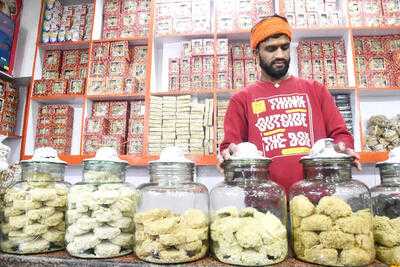
The innovation took shape in 2023 at Ilra village near Bodh Gaya, where local producer Dablu Kumar began experimenting with jaggery prepared from neera instead of conventional sweeteners. The result was a tilkut that retained its familiar taste while adding a layer of perceived health benefits.
“The process of neera tilkut is longer compared to traditional tilkut. Here, we procure Neera and prepare jaggery and then mix sesame seeds in the right proportion,” Dablu said.
He believes the effort is worth it. “Because neera has many medicinal properties including anti-diabetic and multi vitamins, the tilkut made from it is also safe to consume for diabetes patients. Like the traditional tilkut, which too has many medicinal properties, Neera tilkut also has many health benefits, especially during winter,” he said.
The market response has been striking. A stall near the world heritage Mahabodhi Mahavihara in Bodh Gaya draws foreign devotees and tourists alike. “Everyday sale is more than 150kg. During Saras Mela at Gandhi maidan, Patna, more than 100kg per day was sold from a stall,” Dablu said.
Ambitions are growing alongside demand. “This year one lakh litres of Neera has been procured from which about 250 quintals tilkut has to be prepared. In future we aim to increase the production,” he added.
Behind the scenes, JEEViKA has played a key role by training tappers to collect fresh palm and date palm sap before sunlight triggers fermentation, ensuring the extract remains non-alcoholic.
Kautilya Kumar, manager livelihood farm at JEEViKA, said, “After prohibition was enforced in the state, training was imparted to tappers by JEEVIKA as per govt policy to collect Neera so that consumption of toddy can be checked. With about 21.94 lakh litres last year, Gaya topped in neera collection across the state.”
He added, “According to a research by Dr Aftab of Sabour agriculture University, Bhagalpur, neera has anti-diabetic property along with presence of several multi-vitamins, which is good for health.”
“JEEViKA has imparted training to the tappers, who sell Neera through counters set up across the district and also to individuals like Dablu engaged in production of tilkut from the natural extract,” he said.
Traditionally made from white “gingili” (sesame seeds) and sugar or jaggery, tilkut has evolved gently over the decades. Condensed milk-stuffed versions have found favour with younger buyers, while jaggery-based tilkut from Dumaria block travels far beyond Bihar, reaching other states and even Gulf countries. Since 2023, however, a new flavour has begun to stand out — neera tilkut .
The innovation took shape in 2023 at Ilra village near Bodh Gaya, where local producer Dablu Kumar began experimenting with jaggery prepared from neera instead of conventional sweeteners. The result was a tilkut that retained its familiar taste while adding a layer of perceived health benefits.
“The process of neera tilkut is longer compared to traditional tilkut. Here, we procure Neera and prepare jaggery and then mix sesame seeds in the right proportion,” Dablu said.
He believes the effort is worth it. “Because neera has many medicinal properties including anti-diabetic and multi vitamins, the tilkut made from it is also safe to consume for diabetes patients. Like the traditional tilkut, which too has many medicinal properties, Neera tilkut also has many health benefits, especially during winter,” he said.
The market response has been striking. A stall near the world heritage Mahabodhi Mahavihara in Bodh Gaya draws foreign devotees and tourists alike. “Everyday sale is more than 150kg. During Saras Mela at Gandhi maidan, Patna, more than 100kg per day was sold from a stall,” Dablu said.
Ambitions are growing alongside demand. “This year one lakh litres of Neera has been procured from which about 250 quintals tilkut has to be prepared. In future we aim to increase the production,” he added.
Behind the scenes, JEEViKA has played a key role by training tappers to collect fresh palm and date palm sap before sunlight triggers fermentation, ensuring the extract remains non-alcoholic.
Kautilya Kumar, manager livelihood farm at JEEViKA, said, “After prohibition was enforced in the state, training was imparted to tappers by JEEVIKA as per govt policy to collect Neera so that consumption of toddy can be checked. With about 21.94 lakh litres last year, Gaya topped in neera collection across the state.”
He added, “According to a research by Dr Aftab of Sabour agriculture University, Bhagalpur, neera has anti-diabetic property along with presence of several multi-vitamins, which is good for health.”
“JEEViKA has imparted training to the tappers, who sell Neera through counters set up across the district and also to individuals like Dablu engaged in production of tilkut from the natural extract,” he said.
Next Story