
Green Hydrogen project in Anakapalle district moving into active phase, says NTPC Simhadri head Ayaskanta Jena


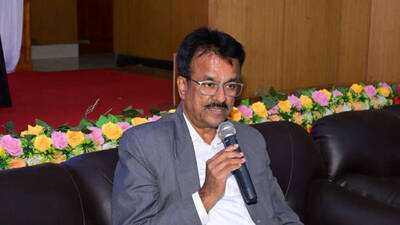
VISAKHAPATNAM: NTPC-Simhadri unit head Ayaskanta Jena said the Rs1.85 lakh crore Green Hydrogen Hub project at Pudimadaka in Anakapalle district is moving into an active execution phase, with several critical work packages nearing finalization.
In the initial phase, carbon dioxide will be transported by tankers for conversion into ethanol and sustainable aviation fuel.
It may be recalled that Prime Minister Narendra Modi laid the foundation stone for the NTPC Green Energy Limited (NGEL) Green Hydrogen Hub project in 2025. The project remains on schedule to establish India’s first integrated Green Hydrogen Hub.
The hub would not only promote clean energy but also generate significant employment and establish a manufacturing ecosystem in Andhra Pradesh.
The green hub facility is designed to leverage 20 GW of renewable energy to produce 1,500 tonnes per day (TPD) of green hydrogen and 7,500 TPD of derivatives, such as green methanol and sustainable aviation fuel (SAF), potentially creating over 57,000 jobs in the region.
NTPC Simhadri , the country’s first coastal-based thermal power station, continued to maintain strong operational performance even as it accelerated its shift towards cleaner and more sustainable operations, officials said.
The 2,000 MW station, along with its 25 MW floating solar project, remained a key contributor to the power needs of southern states, supplying electricity to Andhra Pradesh, Telangana, Tamil Nadu, Karnataka and Kerala. Officials said steady generation played a crucial role in ensuring grid stability amid rising demand.
Ayaskanta Jena said the plant maintained a high plant load factor (PLF), backed by efficient operations, consistent coal supply from Talcher in Odisha, and robust maintenance systems. Of the total power generated, 34.2 per cent was allocated to Andhra Pradesh and 39.6 per cent to Telangana.
The station was also strengthening its environmental compliance. Flue Gas Desulphurisation (FGD) systems were being installed to reduce sulphur dioxide emissions in line with stricter norms., he added.
Maintaining a high PLF in a large coal-based station reflected strong operational discipline and efficient resource management, Jena said, underlining the plant’s focus on balancing performance with sustainability. Water conservation measures significantly reduced freshwater dependence, with over 85 percent of requirements met through seawater. Recycling systems and efficient water management practices were also put in place.
Afforestation efforts under the ‘Green Visakha’ initiative resulted in the planting of lakhs of saplings across Visakhapatnam and Anakapalle districts, while the plant premises were declared plastic-free. Jena said the station would continue to adopt global best practices, expand its renewable energy portfolio, and move towards achieving net-zero emissions.
In the initial phase, carbon dioxide will be transported by tankers for conversion into ethanol and sustainable aviation fuel.
It may be recalled that Prime Minister Narendra Modi laid the foundation stone for the NTPC Green Energy Limited (NGEL) Green Hydrogen Hub project in 2025. The project remains on schedule to establish India’s first integrated Green Hydrogen Hub.
The hub would not only promote clean energy but also generate significant employment and establish a manufacturing ecosystem in Andhra Pradesh.
The green hub facility is designed to leverage 20 GW of renewable energy to produce 1,500 tonnes per day (TPD) of green hydrogen and 7,500 TPD of derivatives, such as green methanol and sustainable aviation fuel (SAF), potentially creating over 57,000 jobs in the region.
NTPC Simhadri , the country’s first coastal-based thermal power station, continued to maintain strong operational performance even as it accelerated its shift towards cleaner and more sustainable operations, officials said.
The 2,000 MW station, along with its 25 MW floating solar project, remained a key contributor to the power needs of southern states, supplying electricity to Andhra Pradesh, Telangana, Tamil Nadu, Karnataka and Kerala. Officials said steady generation played a crucial role in ensuring grid stability amid rising demand.
Ayaskanta Jena said the plant maintained a high plant load factor (PLF), backed by efficient operations, consistent coal supply from Talcher in Odisha, and robust maintenance systems. Of the total power generated, 34.2 per cent was allocated to Andhra Pradesh and 39.6 per cent to Telangana.
The station was also strengthening its environmental compliance. Flue Gas Desulphurisation (FGD) systems were being installed to reduce sulphur dioxide emissions in line with stricter norms., he added.
Maintaining a high PLF in a large coal-based station reflected strong operational discipline and efficient resource management, Jena said, underlining the plant’s focus on balancing performance with sustainability. Water conservation measures significantly reduced freshwater dependence, with over 85 percent of requirements met through seawater. Recycling systems and efficient water management practices were also put in place.
Afforestation efforts under the ‘Green Visakha’ initiative resulted in the planting of lakhs of saplings across Visakhapatnam and Anakapalle districts, while the plant premises were declared plastic-free. Jena said the station would continue to adopt global best practices, expand its renewable energy portfolio, and move towards achieving net-zero emissions.
Next Story