
Dwarka Crash: Juvenile Justice Board Says Teen SUV Driver ‘Showed No Remorse’ After Fatal Crash

The Juvenile Justice Board in Delhi has made a stark observation about the minor accused in a fatal road crash that occurred earlier this month in Dwarka, noting that the teenage driver “did not understand the preciousness of life” and appeared to show no remorse after the incident. The crash, which took place on February 3 near Lal Bahadur Shastri College, resulted in the death of 23-year-old Sahil Dhaneshra and left a taxi driver injured.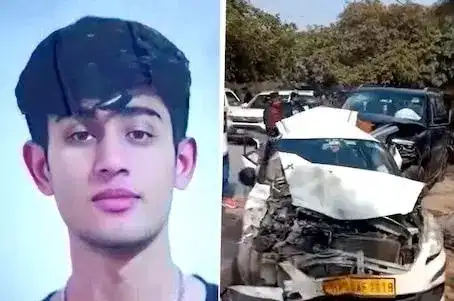
Police say the vehicle involved was a Scorpio SUV driven by a 17-year-old boy who did not have a valid licence. CCTV footage later showed the SUV overspeeding and even narrowly missing a bus before it collided head-on with Sahil’s motorcycle. After that impact, the SUV continued on to strike a parked taxi.
The victim was declared dead at the scene, and post-mortem reports indicate severe head injuries among other trauma, highlighting the severity of the collision. The injured taxi driver, identified as Ajit Singh, was hospitalised and later discharged after receiving medical treatment.
Shortly after the accident, the teen was apprehended and appeared before the Juvenile Justice Board. In its ruling, the JJB said the boy’s responses suggested he did not grasp the value of human life following the incident, an observation that has drawn strong reactions from the public and legal commentators.
Despite the board’s remarks, the minor was granted interim bail on February 10 so that he could sit for his Class 10 board examinations, with the condition that he report back to authorities and comply with the board’s directives going forward. The bail arrangement was described as temporary and based on educational considerations rather than a judgment on the merits of the case.
In the wider investigation, police have also filed an FIR that includes the father of the minor, citing provisions under the Motor Vehicles Act. The SUV had a number of previous challans linked to speeding violations, though authorities are working to confirm whose actions those fines pertained to.
The victim’s mother has publicly expressed her refusal to accept apologies from the accused’s family, saying the loss of her son cannot be diminished by later regret or legal technicalities. Her stance underscores the depth of the emotional pain felt by survivors and families affected by road tragedies.
This case has fuelled ongoing debate about underage driving, road safety and whether minors involved in such serious incidents should be tried as adults. People across the country have reacted strongly to video footage and reports, with many online users arguing that more stringent accountability measures are needed to deter reckless behaviour and prevent similar tragedies.
The Dwarka SUV case highlights the challenges facing authorities in balancing legal protections for juveniles with the need for justice and road safety reform in rapidly growing urban populations.
Police say the vehicle involved was a Scorpio SUV driven by a 17-year-old boy who did not have a valid licence. CCTV footage later showed the SUV overspeeding and even narrowly missing a bus before it collided head-on with Sahil’s motorcycle. After that impact, the SUV continued on to strike a parked taxi.
The victim was declared dead at the scene, and post-mortem reports indicate severe head injuries among other trauma, highlighting the severity of the collision. The injured taxi driver, identified as Ajit Singh, was hospitalised and later discharged after receiving medical treatment.
Shortly after the accident, the teen was apprehended and appeared before the Juvenile Justice Board. In its ruling, the JJB said the boy’s responses suggested he did not grasp the value of human life following the incident, an observation that has drawn strong reactions from the public and legal commentators.
Despite the board’s remarks, the minor was granted interim bail on February 10 so that he could sit for his Class 10 board examinations, with the condition that he report back to authorities and comply with the board’s directives going forward. The bail arrangement was described as temporary and based on educational considerations rather than a judgment on the merits of the case.
In the wider investigation, police have also filed an FIR that includes the father of the minor, citing provisions under the Motor Vehicles Act. The SUV had a number of previous challans linked to speeding violations, though authorities are working to confirm whose actions those fines pertained to.
The victim’s mother has publicly expressed her refusal to accept apologies from the accused’s family, saying the loss of her son cannot be diminished by later regret or legal technicalities. Her stance underscores the depth of the emotional pain felt by survivors and families affected by road tragedies.
This case has fuelled ongoing debate about underage driving, road safety and whether minors involved in such serious incidents should be tried as adults. People across the country have reacted strongly to video footage and reports, with many online users arguing that more stringent accountability measures are needed to deter reckless behaviour and prevent similar tragedies.
The Dwarka SUV case highlights the challenges facing authorities in balancing legal protections for juveniles with the need for justice and road safety reform in rapidly growing urban populations.
Next Story