
How Lodhi Colony Became a Living Gallery in Delhi’s 2026 Art Festival

The Lodhi Art Festival has returned to New Delhi for 2026, commemorating ten years since the transformation of Lodhi Colony into India’s first public art district. What began as a handful of murals has blossomed into a vibrant, open-air gallery where street art, performance and community engagement inhabit public space year round.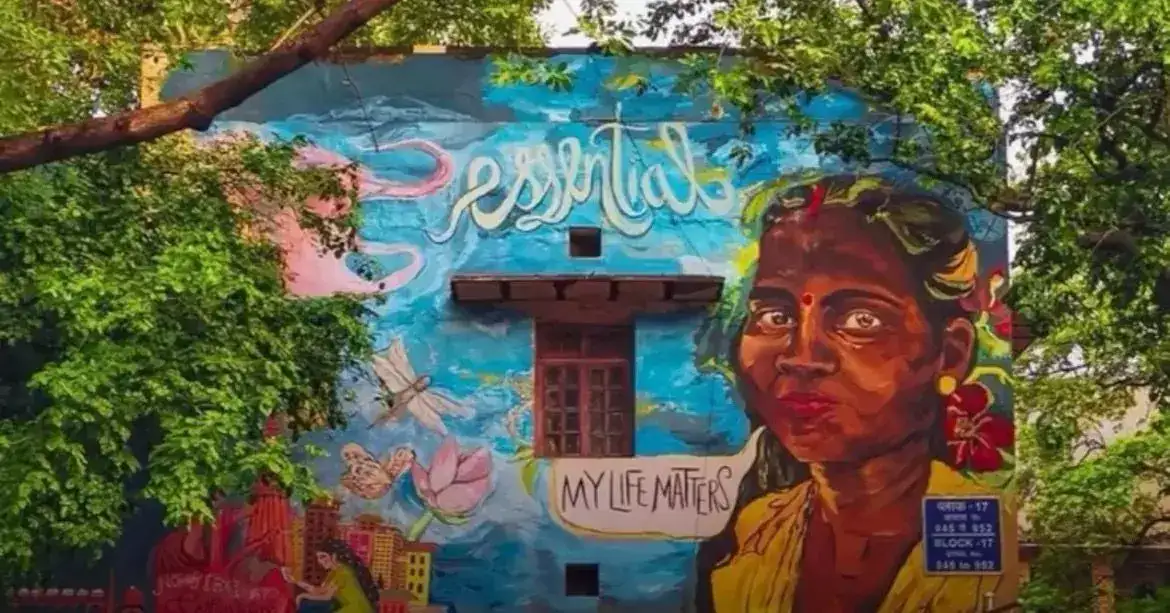
Since its inception in 2016, the Lodhi Art District has evolved into a creative commons that integrates art directly with daily urban life, rather than relegating it to formal galleries. Over the years, the initiative has blossomed from three murals into a richly layered public collection featuring more than 65 works by Indian and international artists.
Under the theme ‘Dilate All Art Spaces,’ this anniversary edition encourages artists and visitors alike to rethink the boundaries of where art belongs. Instead of limiting art to flat walls, the festival invites works that interact with trees, doorways, shadows and architectural quirks, turning the fabric of the neighbourhood itself into an evolving canvas.
Throughout the month, artists from around the globe are adding fresh creations to the landscape. Prominent contributors include JuMu from Germany, Elian Chali from Argentina, Pener from Poland and Raissa Pardini from the United Kingdom, each bringing distinct cultural perspectives to the district’s walls. Indian creatives such as Svabhu Kohli and Ram Sangchoju are also collaborating on new pieces that reflect local themes tied to ecology, memory and lived experience.
Beyond murals, the festival features a mix of workshops, guided walks, panel discussions and performance art, making it possible for audiences to engage with creative practices directly. Visitors can participate in stencil art sessions, photography workshops or simply explore spontaneous installations and pop-up events that blur the line between art and daily routines.
One notable ongoing project is the mobile art rickshaws, where cycle rickshaws have been redesigned as moving artworks that circulate through the district. This initiative echoes the festival’s ethos of integrating art into everyday life and invites even casual passersby to witness artistic expression in motion.
Open from February 1 to February 28, 2026, the festival remains accessible to all with no entry fee, reinforcing its guiding philosophy of art for everyone. Whether through towering murals, interactive sessions, street performances or casual explorations, the Lodhi Art Festival continues to shape how public art is experienced and appreciated in a city setting.
Over ten years, the district has drawn a diverse audience - from local residents and students to photographers, art lovers and international visitors - all of whom see Lodhi Colony’s colourful transformations as an invitation to pause, reflect, engage and rediscover the city.
Since its inception in 2016, the Lodhi Art District has evolved into a creative commons that integrates art directly with daily urban life, rather than relegating it to formal galleries. Over the years, the initiative has blossomed from three murals into a richly layered public collection featuring more than 65 works by Indian and international artists.
Under the theme ‘Dilate All Art Spaces,’ this anniversary edition encourages artists and visitors alike to rethink the boundaries of where art belongs. Instead of limiting art to flat walls, the festival invites works that interact with trees, doorways, shadows and architectural quirks, turning the fabric of the neighbourhood itself into an evolving canvas.
Throughout the month, artists from around the globe are adding fresh creations to the landscape. Prominent contributors include JuMu from Germany, Elian Chali from Argentina, Pener from Poland and Raissa Pardini from the United Kingdom, each bringing distinct cultural perspectives to the district’s walls. Indian creatives such as Svabhu Kohli and Ram Sangchoju are also collaborating on new pieces that reflect local themes tied to ecology, memory and lived experience.
Beyond murals, the festival features a mix of workshops, guided walks, panel discussions and performance art, making it possible for audiences to engage with creative practices directly. Visitors can participate in stencil art sessions, photography workshops or simply explore spontaneous installations and pop-up events that blur the line between art and daily routines.
One notable ongoing project is the mobile art rickshaws, where cycle rickshaws have been redesigned as moving artworks that circulate through the district. This initiative echoes the festival’s ethos of integrating art into everyday life and invites even casual passersby to witness artistic expression in motion.
Open from February 1 to February 28, 2026, the festival remains accessible to all with no entry fee, reinforcing its guiding philosophy of art for everyone. Whether through towering murals, interactive sessions, street performances or casual explorations, the Lodhi Art Festival continues to shape how public art is experienced and appreciated in a city setting.
Over ten years, the district has drawn a diverse audience - from local residents and students to photographers, art lovers and international visitors - all of whom see Lodhi Colony’s colourful transformations as an invitation to pause, reflect, engage and rediscover the city.
Next Story