
Nepal's strict customs duty hits trade in Bihar's border markets


Motihari: Business across nearly 50 rural markets along Bihar’s 378-km porous border with Nepal has been hit during the ongoing wedding season after Nepal enforced a strict customs duty on Indian goods. Traders in these markets, who largely depend on Nepali buyers, said the compulsory duty on goods valued above Rs100, coupled with a sharp decline in footfall, has severely impacted their sales.
For decades, residents of Nepal’s border areas have crossed into Bihar daily to purchase essential items from large and small rural markets. These include medicines, textiles such as saris and dhotis, readymade garments, cement, cosmetics, electrical appliances, utensils, food items like biscuits and cakes, vegetables, spices, fruits and milk.
Traders said Nepal’s new rule has affected buyers from six districts of the Madhesh province . They said both local livelihoods in Bihar and household budgets in Nepal have come under pressure.
Ramesh Poddar, a shopkeeper in Jogbani, said the Rs 100 threshold is impractical. “Even buying a kilo of good tea or a few packets of biscuits crosses the limit. After that, people are forced to stand in long queues for hours to pay duty,” he said.
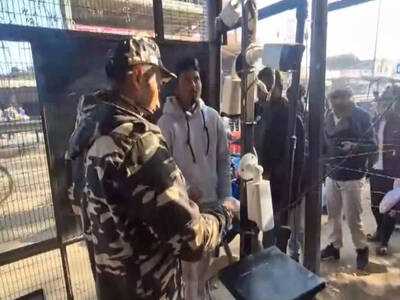
The National Security Force of Nepal has announced the regulation through loudspeakers in border areas, stating that no exemption will be granted to civilians, govt employees or NGO workers. Under the order, customs duty must be paid on Indian goods worth more than Rs 100.
Customs officials said tighter checks had earlier been introduced along the Uttar Pradesh border, where even small household purchases are scrutinised at Nepal’s Bhansar posts. The enforcement has now intensified along the Bihar border as well.
Ashok Agrawal, a trader from Birgunj, said the move by the Nepal’s Balendra Shah-led govt is aimed at promoting domestic products. However, traders on both sides of the border fear that continued enforcement will further dent cross-border trade and hurt small businesses.
For decades, residents of Nepal’s border areas have crossed into Bihar daily to purchase essential items from large and small rural markets. These include medicines, textiles such as saris and dhotis, readymade garments, cement, cosmetics, electrical appliances, utensils, food items like biscuits and cakes, vegetables, spices, fruits and milk.
Traders said Nepal’s new rule has affected buyers from six districts of the Madhesh province . They said both local livelihoods in Bihar and household budgets in Nepal have come under pressure.
Ramesh Poddar, a shopkeeper in Jogbani, said the Rs 100 threshold is impractical. “Even buying a kilo of good tea or a few packets of biscuits crosses the limit. After that, people are forced to stand in long queues for hours to pay duty,” he said.
The National Security Force of Nepal has announced the regulation through loudspeakers in border areas, stating that no exemption will be granted to civilians, govt employees or NGO workers. Under the order, customs duty must be paid on Indian goods worth more than Rs 100.
Customs officials said tighter checks had earlier been introduced along the Uttar Pradesh border, where even small household purchases are scrutinised at Nepal’s Bhansar posts. The enforcement has now intensified along the Bihar border as well.
Ashok Agrawal, a trader from Birgunj, said the move by the Nepal’s Balendra Shah-led govt is aimed at promoting domestic products. However, traders on both sides of the border fear that continued enforcement will further dent cross-border trade and hurt small businesses.
Next Story