
Meet Nisha Mehta, AIIMS Delhi Alumna Now Serving as Nepal’s Health Minister

Nisha Mehta has emerged as a notable figure in South Asian politics after being appointed Nepal’s Minister of Health and Population. Her elevation to the cabinet marks a significant shift, highlighting the growing role of healthcare professionals in leadership and governance.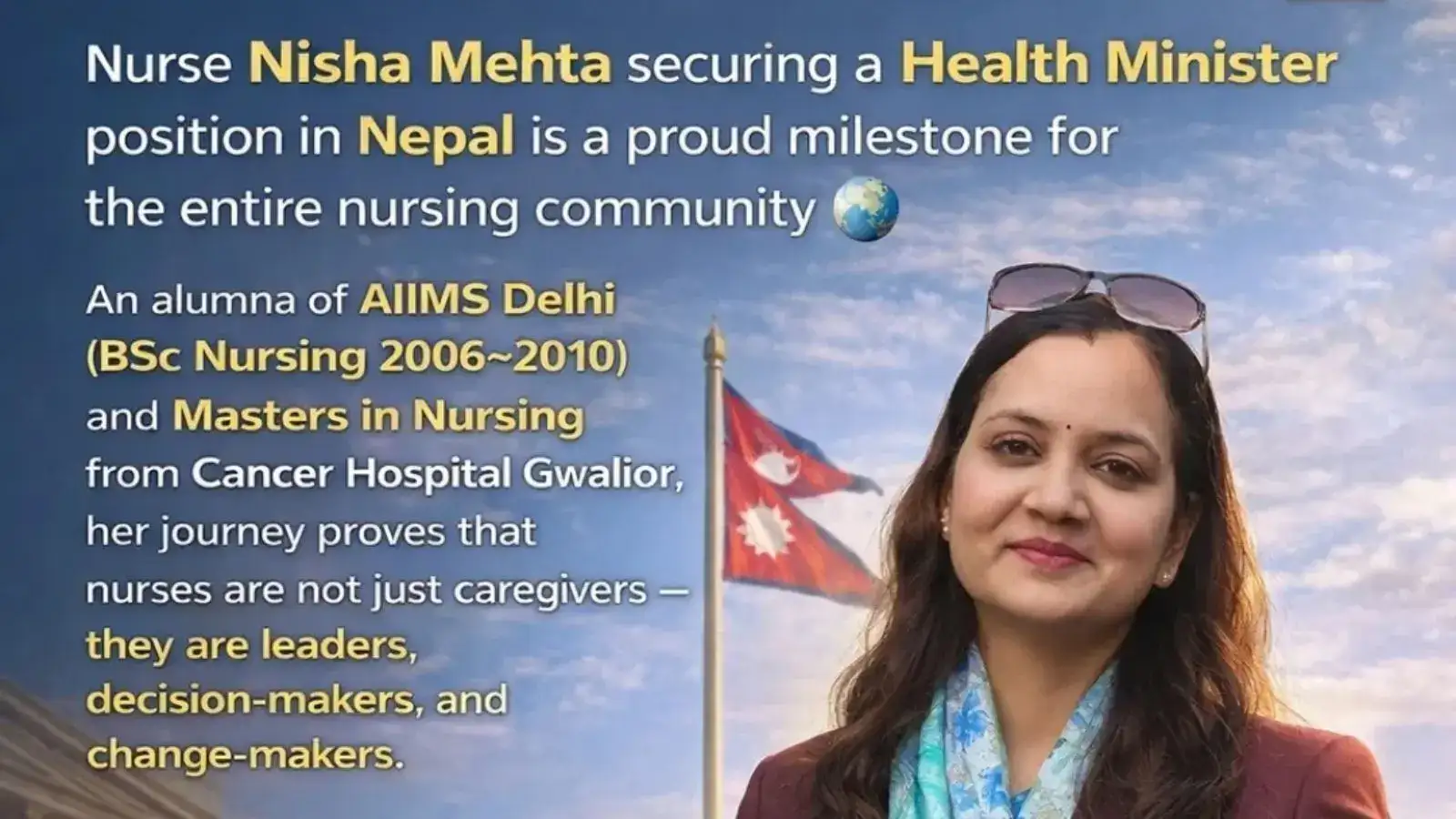
An alumna of All India Institute of Medical Sciences, New Delhi (AIIMS), Mehta completed her Bachelor of Science in Nursing between 2006 and 2010. She later pursued postgraduate studies in nursing from Jiwaji University in India, strengthening her academic and clinical foundation. Her association with one of India’s most prestigious medical institutions has been widely acknowledged, with AIIMS calling her appointment a proud moment for the institute and the nursing community.
Unlike many political leaders who come from traditional political or bureaucratic backgrounds, Mehta began her career in the healthcare sector. She worked as a clinical nurse and later took on roles in teaching and healthcare delivery, gaining hands-on experience in patient care and public health systems. Her transition from frontline healthcare to politics reflects a broader trend of domain experts stepping into policymaking roles.
Her appointment as Health Minister came after her political rise within Nepal. She was elected as a Member of Parliament and is associated with the Rastriya Swatantra Party. Shortly after assuming office, she took oath as the Minister of Health and Population on March 27, 2026, becoming one of the key members of the federal cabinet.
Observers view her appointment as a milestone for the nursing profession, which has traditionally been underrepresented in top decision-making positions. Her background in healthcare delivery is expected to influence policy decisions, particularly at a time when strengthening public health systems remains a priority in Nepal.
Another significant aspect of Mehta’s profile is her cross-border educational journey. Having studied in India, her appointment is seen as a bridge that could strengthen professional and institutional ties between India and Nepal, especially in the healthcare sector.
Her rise also reflects a larger shift in governance, where practical experience in critical sectors like healthcare is increasingly valued in leadership roles. From bedside nursing to cabinet-level responsibility, Mehta’s journey underscores the evolving nature of political leadership in the region.
As she takes charge of Nepal’s health ministry, expectations remain high. With her clinical background and academic training, Mehta is positioned to bring a grounded, experience-driven approach to policymaking, potentially shaping the future of public health in Nepal.
An alumna of All India Institute of Medical Sciences, New Delhi (AIIMS), Mehta completed her Bachelor of Science in Nursing between 2006 and 2010. She later pursued postgraduate studies in nursing from Jiwaji University in India, strengthening her academic and clinical foundation. Her association with one of India’s most prestigious medical institutions has been widely acknowledged, with AIIMS calling her appointment a proud moment for the institute and the nursing community.
Unlike many political leaders who come from traditional political or bureaucratic backgrounds, Mehta began her career in the healthcare sector. She worked as a clinical nurse and later took on roles in teaching and healthcare delivery, gaining hands-on experience in patient care and public health systems. Her transition from frontline healthcare to politics reflects a broader trend of domain experts stepping into policymaking roles.
Her appointment as Health Minister came after her political rise within Nepal. She was elected as a Member of Parliament and is associated with the Rastriya Swatantra Party. Shortly after assuming office, she took oath as the Minister of Health and Population on March 27, 2026, becoming one of the key members of the federal cabinet.
Observers view her appointment as a milestone for the nursing profession, which has traditionally been underrepresented in top decision-making positions. Her background in healthcare delivery is expected to influence policy decisions, particularly at a time when strengthening public health systems remains a priority in Nepal.
Another significant aspect of Mehta’s profile is her cross-border educational journey. Having studied in India, her appointment is seen as a bridge that could strengthen professional and institutional ties between India and Nepal, especially in the healthcare sector.
Her rise also reflects a larger shift in governance, where practical experience in critical sectors like healthcare is increasingly valued in leadership roles. From bedside nursing to cabinet-level responsibility, Mehta’s journey underscores the evolving nature of political leadership in the region.
As she takes charge of Nepal’s health ministry, expectations remain high. With her clinical background and academic training, Mehta is positioned to bring a grounded, experience-driven approach to policymaking, potentially shaping the future of public health in Nepal.
Next Story