
Noida Wages Protest: Flames of Fury Ignite Labor Revolution

In the sweltering heat of Noida's industrial heartlands, a spark of desperation ignited into a blaze of rebellion. Factory workers, toiling for meager wages amid skyrocketing living costs, rose up in April 2026, their cries echoing the stark injustice of regional disparities.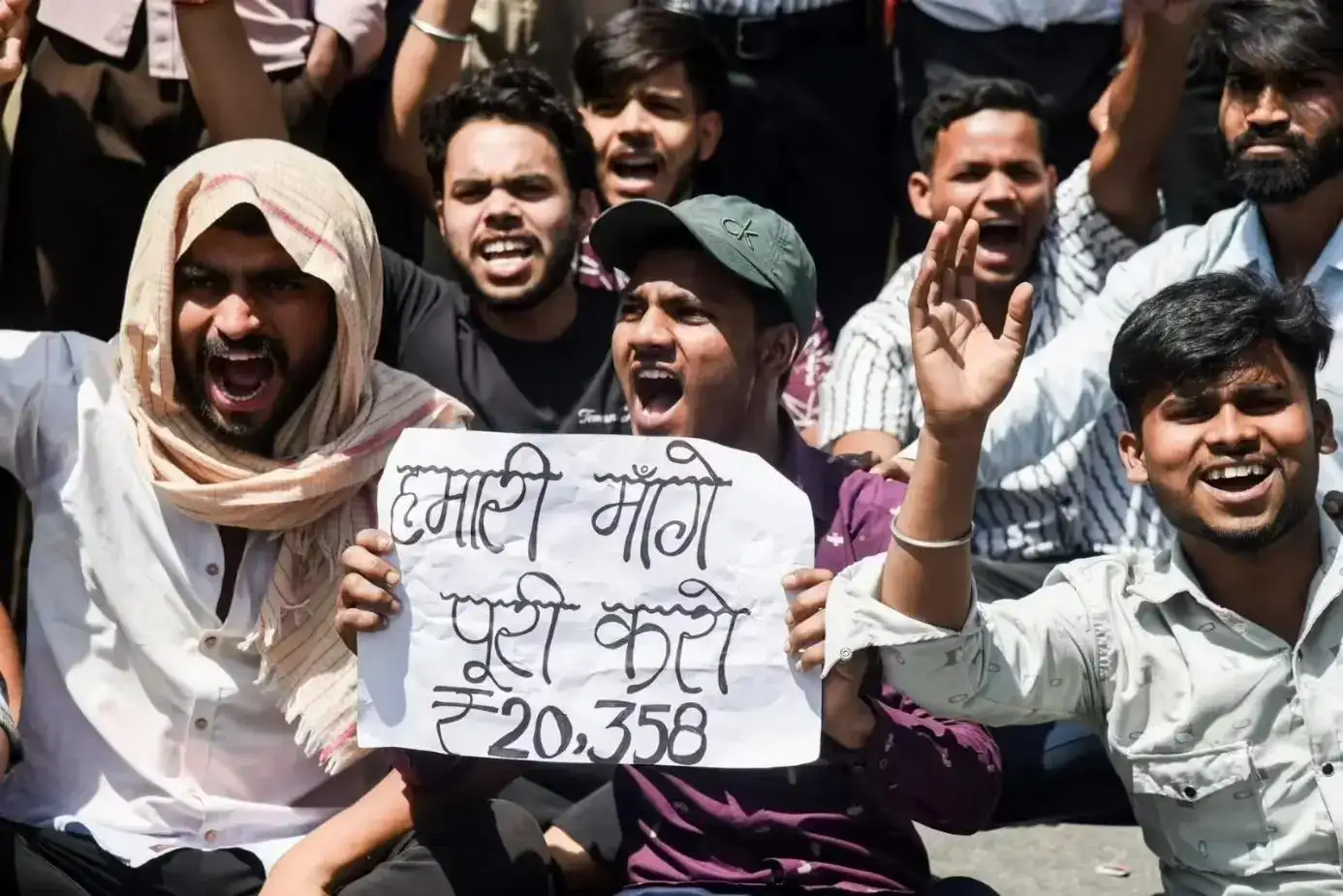
The Powder Keg Ignites
It began peacefully around April 10 in Phase-2's Hosiery Complex, where thousands of garment and factory workers, many women, blocked roads at 9 AM, demanding pay parity. The trigger? Haryana's government, under CM Nayab Singh Saini, had just announced a 35% minimum wage hike effective April 1, boosting unskilled workers from ₹11,200 to ₹15,220 monthly, semi-skilled to ₹16,780, and up to ₹19,000 for others, far outpacing Uttar Pradesh's stagnant ₹11,313-₹13,000.
Inspired by earlier strikes at Honda in Manesar and Gurgaon, Noida laborers fumed: "Why slave for less across the border?" Grievances piled up 12-hour shifts without double overtime, no weekly offs, bonuses delayed, and earnings as low as ₹10,000 barely covering food and rent.
Chaos Erupts in the Streets
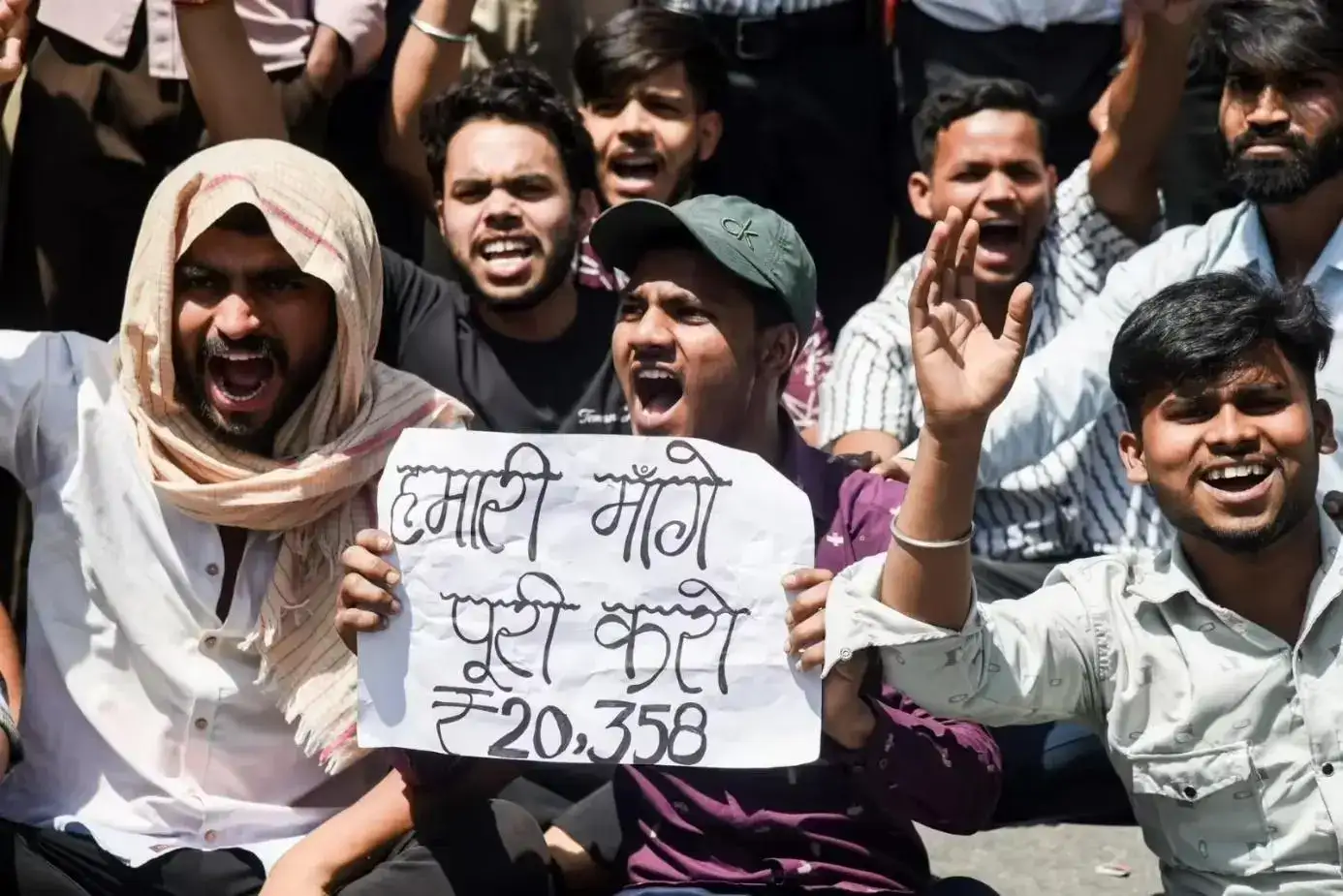
By April 12, protests swelled to Sectors 60, 62, and Phase-2, spilling onto the Delhi-Meerut Expressway, paralyzing traffic. Tensions boiled over when police clashed with crowds, a female worker allegedly lathicharged, unleashing fury. Flames devoured vehicles, stones rained on properties, vandalism gripped the air, arson and anarchy in broad daylight. Tear gas shells burst, heavy police and Rapid Reaction Force deployed, yet workers stood defiant, chanting for ₹20,000 minimum wage, 8-hour days, and dignity. Commuters endured hours-long jams, families feared for loved ones in the melee, the air thick with smoke and rage.
Government Responds Amid the Storm
CM Yogi Adityanath swiftly acted, forming a high-level committee led by the Industrial Development Commissioner, including labour officials and unions, to negotiate within 24 hours. He urged calm, vowing support like during COVID, while slamming ‘conspirators’ inciting unrest. Noida authorities mandated weekly offs, double overtime pay, timely salaries by the 10th, medical cover, and complaint systems. An interim wage hike followed, effective April 1 retrospectively for Noida-Ghaziabad, though not the full ₹20,000 demanded social media rumours of that were debunked. Police regained control, but vigilance persists to prevent spillover.
Noida Protest: Rahul Gandhi Targets Modi Government, Questions Labour Codes
This saga underscores labour's raw power: Haryana's rise exposed UP's lag, birthing a movement that forced change, reminding all that ignored voices can torch the status quo. Workers' fight for fairness resonates, a dramatic call for equity in India's industrial boom.
With protests spreading to sectors 60, 62, and phase 2, blocking the Delhi Meerut Expressway by April 12, tensions reached boiling point. Things spiralled out of control after the clashes between the police and workers where a woman worker allegedly hit another one with a stick, leading to violent outbreaks.
Cars were torched, rocks were thrown at buildings, and there was vandalism, arson, and anarchy during daytime. Tear gas shells were fired, many police and Rapid Response Force troops mobilized, but workers refused to give up, demanding ₹20,000 as the minimum salary, working hours of 8.
Government Steps in to Quell Unrest
On April 15, CM Yogi Adityanath quickly moved to set up a special committee under the headship of the Industrial Development Commissioner consisting of labour representatives and trade unions to reach agreements in 24 hours. He appealed for calm, promising support as in the case of the COVID crisis, while denouncing 'conspiracies behind this lawlessness'. The Noida administration ordered workers weekly offs, two times the pay for overtime, payment on the 10th day, medical coverage, and complaint mechanisms.
An increased wage followed in interim, with effect from April 1 (though not the whole ₹20,000 mentioned in social media reports which turned out to be false). Control was re-established by the police, but caution will be exercised to avert any spill-over.
The above incident brings into focus the sheer power of labourers as a group, The increased pay in Haryana brought to fore the disparity in Uttar Pradesh, sparking off the movement and leading to the desired results.
The Powder Keg Ignites
It began peacefully around April 10 in Phase-2's Hosiery Complex, where thousands of garment and factory workers, many women, blocked roads at 9 AM, demanding pay parity. The trigger? Haryana's government, under CM Nayab Singh Saini, had just announced a 35% minimum wage hike effective April 1, boosting unskilled workers from ₹11,200 to ₹15,220 monthly, semi-skilled to ₹16,780, and up to ₹19,000 for others, far outpacing Uttar Pradesh's stagnant ₹11,313-₹13,000. Inspired by earlier strikes at Honda in Manesar and Gurgaon, Noida laborers fumed: "Why slave for less across the border?" Grievances piled up 12-hour shifts without double overtime, no weekly offs, bonuses delayed, and earnings as low as ₹10,000 barely covering food and rent.
Chaos Erupts in the Streets
By April 12, protests swelled to Sectors 60, 62, and Phase-2, spilling onto the Delhi-Meerut Expressway, paralyzing traffic. Tensions boiled over when police clashed with crowds, a female worker allegedly lathicharged, unleashing fury. Flames devoured vehicles, stones rained on properties, vandalism gripped the air, arson and anarchy in broad daylight. Tear gas shells burst, heavy police and Rapid Reaction Force deployed, yet workers stood defiant, chanting for ₹20,000 minimum wage, 8-hour days, and dignity. Commuters endured hours-long jams, families feared for loved ones in the melee, the air thick with smoke and rage. Government Responds Amid the Storm
CM Yogi Adityanath swiftly acted, forming a high-level committee led by the Industrial Development Commissioner, including labour officials and unions, to negotiate within 24 hours. He urged calm, vowing support like during COVID, while slamming ‘conspirators’ inciting unrest. Noida authorities mandated weekly offs, double overtime pay, timely salaries by the 10th, medical cover, and complaint systems. An interim wage hike followed, effective April 1 retrospectively for Noida-Ghaziabad, though not the full ₹20,000 demanded social media rumours of that were debunked. Police regained control, but vigilance persists to prevent spillover.Noida Protest: Rahul Gandhi Targets Modi Government, Questions Labour Codes
This saga underscores labour's raw power: Haryana's rise exposed UP's lag, birthing a movement that forced change, reminding all that ignored voices can torch the status quo. Workers' fight for fairness resonates, a dramatic call for equity in India's industrial boom.
With protests spreading to sectors 60, 62, and phase 2, blocking the Delhi Meerut Expressway by April 12, tensions reached boiling point. Things spiralled out of control after the clashes between the police and workers where a woman worker allegedly hit another one with a stick, leading to violent outbreaks.
Cars were torched, rocks were thrown at buildings, and there was vandalism, arson, and anarchy during daytime. Tear gas shells were fired, many police and Rapid Response Force troops mobilized, but workers refused to give up, demanding ₹20,000 as the minimum salary, working hours of 8.
Government Steps in to Quell Unrest
On April 15, CM Yogi Adityanath quickly moved to set up a special committee under the headship of the Industrial Development Commissioner consisting of labour representatives and trade unions to reach agreements in 24 hours. He appealed for calm, promising support as in the case of the COVID crisis, while denouncing 'conspiracies behind this lawlessness'. The Noida administration ordered workers weekly offs, two times the pay for overtime, payment on the 10th day, medical coverage, and complaint mechanisms. An increased wage followed in interim, with effect from April 1 (though not the whole ₹20,000 mentioned in social media reports which turned out to be false). Control was re-established by the police, but caution will be exercised to avert any spill-over.
The above incident brings into focus the sheer power of labourers as a group, The increased pay in Haryana brought to fore the disparity in Uttar Pradesh, sparking off the movement and leading to the desired results.
Next Story