
Jaipur ‘Pink’ Elephant from Russian Artist’s Photoshoot Died a Month Earlier: Full Story Explained

A controversial photoshoot featuring a pink-painted elephant in Jaipur has triggered intense debate across social media, with fresh developments adding new layers to the story. The elephant at the centre of the viral images has now been confirmed to have died a month ago, according to local authorities.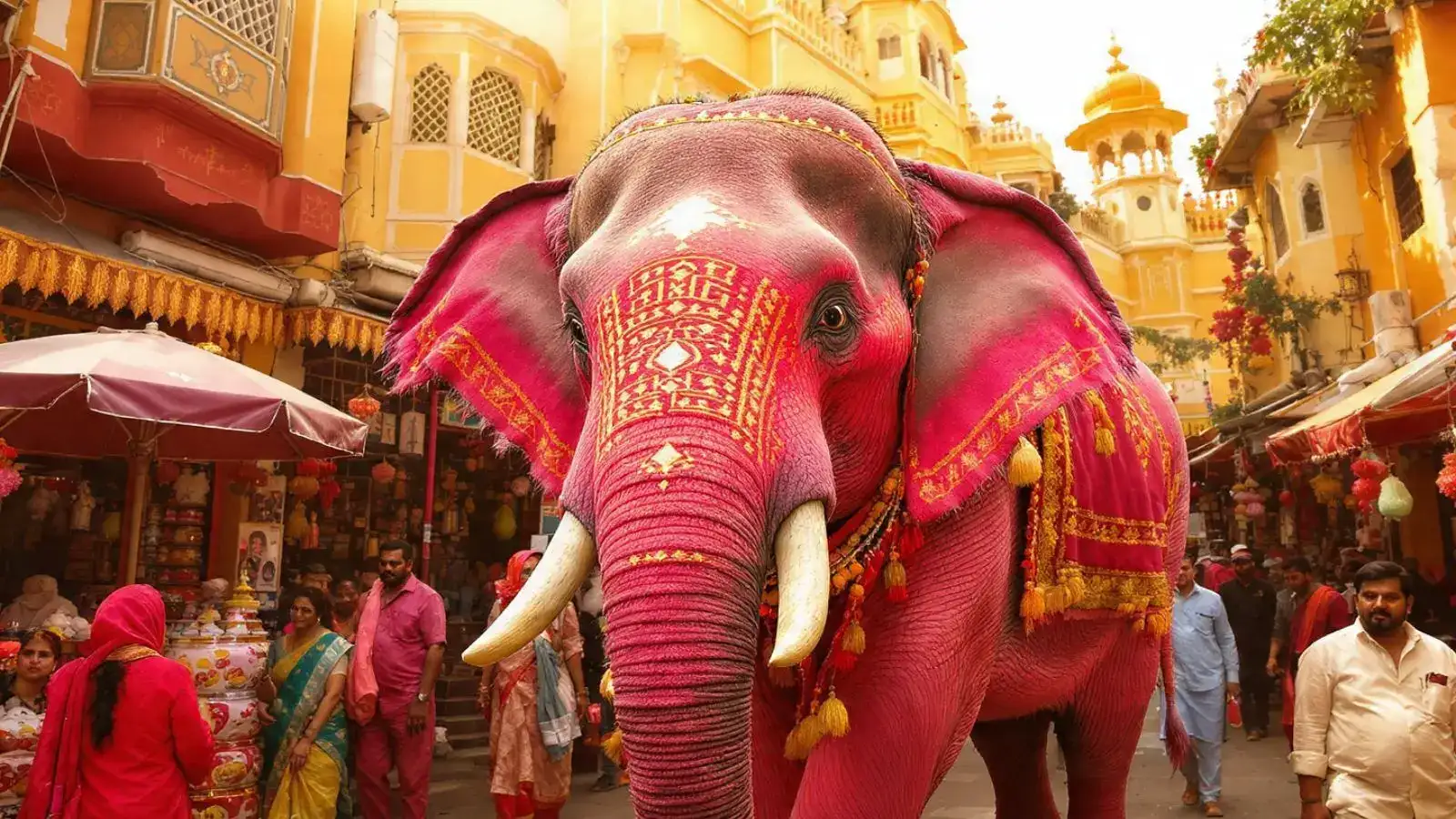
The controversy began when Russian photographer Julia Buruleva shared images from a stylised shoot conducted in Jaipur. The visuals showed a model posing atop an elephant painted entirely in pink, reportedly at an abandoned temple dedicated to Lord Ganesha. The photos quickly went viral, drawing criticism over the use of a live animal for artistic purposes.
The elephant featured in the shoot was identified as a female named Chanchal, who belonged to the Hathi Gaon (Elephant Village) area in Jaipur. According to local officials, Chanchal was around 70 years old at the time of her death, which is considered an advanced age for elephants.
Authorities clarified that the elephant had been painted using gulal (a powder commonly used during festivals), and the colour was removed within approximately 30 minutes after the shoot. Despite this, the visuals sparked backlash, with many questioning whether such practices are ethical, regardless of the materials used.
Importantly, officials and handlers have stated that there is no evidence linking the photoshoot to Chanchal’s death. They confirmed that she died due to natural causes associated with old age. However, the timing of the revelation, coming shortly after the photos went viral, fueled speculation and concern among the public.
The photoshoot itself was conducted in November 2025, but it gained widespread attention only in 2026 after being shared online. As the images circulated, they prompted criticism from animal rights advocates and social media users, many of whom called the act exploitative and insensitive.
The photographer, in response, stated that organic and locally sourced colours were used and maintained that the elephant was not harmed during the process. She also explained that the concept was inspired by Jaipur’s iconic association with the colour pink and the cultural significance of elephants in Rajasthan.
Following the backlash, the incident has reignited discussions around the use of animals in creative industries. Many are now calling for stricter regulations and clearer guidelines to prevent potential misuse or distress to animals in such settings.
While the elephant’s death was unrelated to the shoot, the controversy highlights a broader issue, how artistic expression intersects with ethical responsibility. As the debate continues, the incident serves as a reminder of the need for sensitivity and accountability when involving animals in visual storytelling.
The controversy began when Russian photographer Julia Buruleva shared images from a stylised shoot conducted in Jaipur. The visuals showed a model posing atop an elephant painted entirely in pink, reportedly at an abandoned temple dedicated to Lord Ganesha. The photos quickly went viral, drawing criticism over the use of a live animal for artistic purposes.
The elephant featured in the shoot was identified as a female named Chanchal, who belonged to the Hathi Gaon (Elephant Village) area in Jaipur. According to local officials, Chanchal was around 70 years old at the time of her death, which is considered an advanced age for elephants.
Authorities clarified that the elephant had been painted using gulal (a powder commonly used during festivals), and the colour was removed within approximately 30 minutes after the shoot. Despite this, the visuals sparked backlash, with many questioning whether such practices are ethical, regardless of the materials used.
Importantly, officials and handlers have stated that there is no evidence linking the photoshoot to Chanchal’s death. They confirmed that she died due to natural causes associated with old age. However, the timing of the revelation, coming shortly after the photos went viral, fueled speculation and concern among the public.
The photoshoot itself was conducted in November 2025, but it gained widespread attention only in 2026 after being shared online. As the images circulated, they prompted criticism from animal rights advocates and social media users, many of whom called the act exploitative and insensitive.
The photographer, in response, stated that organic and locally sourced colours were used and maintained that the elephant was not harmed during the process. She also explained that the concept was inspired by Jaipur’s iconic association with the colour pink and the cultural significance of elephants in Rajasthan.
Following the backlash, the incident has reignited discussions around the use of animals in creative industries. Many are now calling for stricter regulations and clearer guidelines to prevent potential misuse or distress to animals in such settings.
While the elephant’s death was unrelated to the shoot, the controversy highlights a broader issue, how artistic expression intersects with ethical responsibility. As the debate continues, the incident serves as a reminder of the need for sensitivity and accountability when involving animals in visual storytelling.
Next Story