
Ranchi eateries embrace coal chulhas: Cheaper fuel, better taste, growing demand


Ranchi: What started as a temporary adjustment is gradually becoming a preferred choice for many eateries across the city. Troubled by disruptions in LPG supply, hundreds of small food joints across Ranchi had shifted to traditional coal-based chulhas to keep their stalls running. But a week later, many of them have now decided to continue with the traditional stoves.
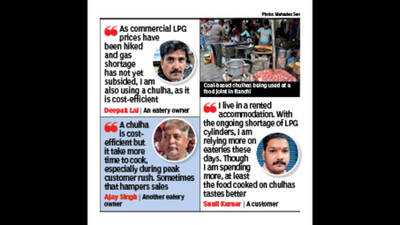
The primary reason is reduced fuel costs to run the eateries. Eatery owners said that coal has proven to be significantly cheaper than LPG, helping them cut operational costs at a time when margins are already under pressure.
“Initially, we had no option but to switch as LPG supply was scarce. I had to close my shop for five days. Then I switched to coal chulha. Now, even after LPG supply normalising to some extent, I am planning to continue with chulha rather than LPG as it is far more affordable,” said Bablu Kumar, an eatery owner at Albert Ekka Chowk .
Bablu said that he had to spend around Rs 1,900 for fuel cost when he was using LPG to prepare food, “but now I can run a day with coal worth just Rs 500, saving Rs 1,400 on fuel daily.”
Another owner Suresh Malakar said that he has replaced the LPG cylinder in his shop with three coal chulhas . “The traditional chulha is a bit time consuming compared to LPG. But the reduction in cost has been of great help. I have compared cost and profit in both options and in my view coal usage is more profitable,” Malakar added.
The shift has not only benefitted the eatery owner, but the customers also found a new flavour and taste in food cooked on coal-fired chulhas. From rotis to curries, the smoky aroma has become a selling point, drawing more customers.
Meanwhile, chulha makers and sellers have reported brisk business due to the growing demand among the customers. From small household stoves to big ones for eateries, chulhas of different sizes going off shelves from the markets.
A chulha seller in Ranchi’s Upper Bazar area, Sunil Khalkho said, “The small chulhas cost around Rs 500 and the big ones usable for eateries cost Rs 1,500. Since the LPG crisis started, I have been selling at least five chulhas a day. Most of the customers are small eatery owners in the city.”
The primary reason is reduced fuel costs to run the eateries. Eatery owners said that coal has proven to be significantly cheaper than LPG, helping them cut operational costs at a time when margins are already under pressure.
“Initially, we had no option but to switch as LPG supply was scarce. I had to close my shop for five days. Then I switched to coal chulha. Now, even after LPG supply normalising to some extent, I am planning to continue with chulha rather than LPG as it is far more affordable,” said Bablu Kumar, an eatery owner at Albert Ekka Chowk .
Bablu said that he had to spend around Rs 1,900 for fuel cost when he was using LPG to prepare food, “but now I can run a day with coal worth just Rs 500, saving Rs 1,400 on fuel daily.”
Another owner Suresh Malakar said that he has replaced the LPG cylinder in his shop with three coal chulhas . “The traditional chulha is a bit time consuming compared to LPG. But the reduction in cost has been of great help. I have compared cost and profit in both options and in my view coal usage is more profitable,” Malakar added.
The shift has not only benefitted the eatery owner, but the customers also found a new flavour and taste in food cooked on coal-fired chulhas. From rotis to curries, the smoky aroma has become a selling point, drawing more customers.
Meanwhile, chulha makers and sellers have reported brisk business due to the growing demand among the customers. From small household stoves to big ones for eateries, chulhas of different sizes going off shelves from the markets.
A chulha seller in Ranchi’s Upper Bazar area, Sunil Khalkho said, “The small chulhas cost around Rs 500 and the big ones usable for eateries cost Rs 1,500. Since the LPG crisis started, I have been selling at least five chulhas a day. Most of the customers are small eatery owners in the city.”
Next Story