
SC flags groundwater contamination, orders crackdown on illegal effluent discharge in Rajasthan river belt


MUMBAI/NEW DELHI: Raising alarm over groundwater contamination , soil toxicity and public health risks in Rajasthan’s industrial belt, the Supreme Court has issued sweeping interim directions to halt untreated effluent discharge into river systems and fix accountability for the ecological damage.
The court said scientific material on record pointed to widespread pollution of groundwater and agricultural land, with potential contamination of food and dairy products, and adverse impacts on human and livestock health. It ordered a comprehensive, time-bound assessment covering groundwater and soil contamination, epidemiological studies, biodiversity loss and livelihood damage, along with a framework for compensation to affected populations.
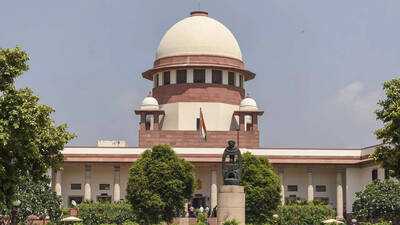
In a detailed order dated March 18, a bench of Justices Vikram Nath and Sandeep Mehta directed authorities to immediately seal or regulate all discharge points—including drains, pipelines and tanker-based disposal—so that no untreated or non-compliant effluent enters rivers or the drainage network.
The court mandated strict enforcement against industries illegally transporting and dumping waste, ordering seizure of tankers, prosecution of violators and confiscation of vehicles. It also called for closure of units and common effluent treatment plants (CETPs) found discharging untreated or partially treated waste, with reopening allowed only after full compliance.
To tackle systemic gaps, the bench asked the Rajasthan State Pollution Control Board (RSPCB) to deploy a technology-driven system for accurate measurement of wastewater generation within two months, replacing estimation-based methods prone to evasion.
Among key infrastructure measures, the court ordered expedited completion of a CETP at Salawas on already allotted land, warning that delays would invite environmental compensation under the ‘polluter pays’ principle. It also set a May 11, 2026 deadline for a 23-km effluent conveyance system, holding officials personally accountable for any slippage.
Sureshkumar Dhoka, groundwater activist said, “The Supreme Court’s directions in the Jojari river case are directly relevant to Mumbai, where illegal groundwater extraction through unauthorised borewells continues unchecked despite years of complaints. The court has underlined administrative apathy, lack of monitoring and accountability, and reaffirmed that access to clean water is a fundamental right under Article 21, with strict enforcement of the ‘polluter pays’ principle. These findings mirror the situation in Mumbai, where groundwater is being commercially exploited without proper regulation or verification of operators.”
“The directives—closure of illegal units, disconnection of utilities, prosecution of violators and recovery of environmental compensation—must now be enforced in Mumbai as well. Unchecked extraction poses a serious threat to long-term water security and sustainability. This judgment offers a crucial opportunity to correct systemic failures and protect groundwater resources, and authorities must act decisively using it as a legal basis for immediate enforcement," he added.
In a significant policy push, the court emphasised a “zero liquid discharge” ecosystem, directing reuse of treated water for agriculture and industry, and exploring CSR funding support from the HPCL Rajasthan Refinery project for treatment infrastructure.
The order bars the pollution board from granting fresh approvals to hazardous industries along riverbanks, mandates adherence to buffer zones and flood-line norms, and calls for mapping and restoration of the natural flow of the Jojari river to prevent stagnation and lateral spread of contaminated water.
To strengthen governance, the court directed the state to designate a nodal agency for CETP oversight, reconstitute a multi-agency joint committee for remediation, and fix responsibility on erring officials through disciplinary action.
Recognising persistent violations despite earlier warnings, the bench proposed setting up special environmental courts in Jodhpur, Pali and Balotra for speedy trial of cases arising from pollution offences.
The court also ordered the state to move away from tanker-based water supply and ensure durable infrastructure for safe drinking water in affected villages, calling access to clean water part of the fundamental right to life under Article 21.
The High-Level Ecosystem Oversight Committee has been asked to file a status report before the next hearing on July 21, detailing compliance, gaps and further action. : Several wells dug at Mumbai Metro construction sites have yielded saline, dirty and non-potable water, raising red flags over groundwater quality and its limited usability, an RTI reply from the BMC’s public health department has revealed. Civic inspection reports note that water from multiple bore and ring wells across Metro Line-3 sites was unfit for consumption, restricting its use largely to construction activity, the reply over an RTI query by groundwater activist Suresh Kumar Dhoka said.
Inspections by the BMC’s insecticide branch at key locations including Wadala, Bandra-Kurla Complex and Grant Road found a mix of unused wells and those operational without robust documentation. The reports, based partly on information shared by site representatives, detail the number of wells, their usage status and permissions, while flagging gaps in compliance with groundwater extraction norms. Several wells were located in casting yards and station work zones, including Bhakti Park.
The findings come amid rising concern over unregulated groundwater use in large infrastructure projects. BMC officials have underscored the need for stricter monitoring and adherence to civic regulations, warning that even non-potable extraction, if unchecked, could have long-term environmental consequences. Follow-up inspections and compliance checks have been indicated.
The court said scientific material on record pointed to widespread pollution of groundwater and agricultural land, with potential contamination of food and dairy products, and adverse impacts on human and livestock health. It ordered a comprehensive, time-bound assessment covering groundwater and soil contamination, epidemiological studies, biodiversity loss and livelihood damage, along with a framework for compensation to affected populations.
In a detailed order dated March 18, a bench of Justices Vikram Nath and Sandeep Mehta directed authorities to immediately seal or regulate all discharge points—including drains, pipelines and tanker-based disposal—so that no untreated or non-compliant effluent enters rivers or the drainage network.
The court mandated strict enforcement against industries illegally transporting and dumping waste, ordering seizure of tankers, prosecution of violators and confiscation of vehicles. It also called for closure of units and common effluent treatment plants (CETPs) found discharging untreated or partially treated waste, with reopening allowed only after full compliance.
To tackle systemic gaps, the bench asked the Rajasthan State Pollution Control Board (RSPCB) to deploy a technology-driven system for accurate measurement of wastewater generation within two months, replacing estimation-based methods prone to evasion.
Among key infrastructure measures, the court ordered expedited completion of a CETP at Salawas on already allotted land, warning that delays would invite environmental compensation under the ‘polluter pays’ principle. It also set a May 11, 2026 deadline for a 23-km effluent conveyance system, holding officials personally accountable for any slippage.
Sureshkumar Dhoka, groundwater activist said, “The Supreme Court’s directions in the Jojari river case are directly relevant to Mumbai, where illegal groundwater extraction through unauthorised borewells continues unchecked despite years of complaints. The court has underlined administrative apathy, lack of monitoring and accountability, and reaffirmed that access to clean water is a fundamental right under Article 21, with strict enforcement of the ‘polluter pays’ principle. These findings mirror the situation in Mumbai, where groundwater is being commercially exploited without proper regulation or verification of operators.”
“The directives—closure of illegal units, disconnection of utilities, prosecution of violators and recovery of environmental compensation—must now be enforced in Mumbai as well. Unchecked extraction poses a serious threat to long-term water security and sustainability. This judgment offers a crucial opportunity to correct systemic failures and protect groundwater resources, and authorities must act decisively using it as a legal basis for immediate enforcement," he added.
In a significant policy push, the court emphasised a “zero liquid discharge” ecosystem, directing reuse of treated water for agriculture and industry, and exploring CSR funding support from the HPCL Rajasthan Refinery project for treatment infrastructure.
The order bars the pollution board from granting fresh approvals to hazardous industries along riverbanks, mandates adherence to buffer zones and flood-line norms, and calls for mapping and restoration of the natural flow of the Jojari river to prevent stagnation and lateral spread of contaminated water.
To strengthen governance, the court directed the state to designate a nodal agency for CETP oversight, reconstitute a multi-agency joint committee for remediation, and fix responsibility on erring officials through disciplinary action.
Recognising persistent violations despite earlier warnings, the bench proposed setting up special environmental courts in Jodhpur, Pali and Balotra for speedy trial of cases arising from pollution offences.
The court also ordered the state to move away from tanker-based water supply and ensure durable infrastructure for safe drinking water in affected villages, calling access to clean water part of the fundamental right to life under Article 21.
The High-Level Ecosystem Oversight Committee has been asked to file a status report before the next hearing on July 21, detailing compliance, gaps and further action. : Several wells dug at Mumbai Metro construction sites have yielded saline, dirty and non-potable water, raising red flags over groundwater quality and its limited usability, an RTI reply from the BMC’s public health department has revealed. Civic inspection reports note that water from multiple bore and ring wells across Metro Line-3 sites was unfit for consumption, restricting its use largely to construction activity, the reply over an RTI query by groundwater activist Suresh Kumar Dhoka said.
Inspections by the BMC’s insecticide branch at key locations including Wadala, Bandra-Kurla Complex and Grant Road found a mix of unused wells and those operational without robust documentation. The reports, based partly on information shared by site representatives, detail the number of wells, their usage status and permissions, while flagging gaps in compliance with groundwater extraction norms. Several wells were located in casting yards and station work zones, including Bhakti Park.
The findings come amid rising concern over unregulated groundwater use in large infrastructure projects. BMC officials have underscored the need for stricter monitoring and adherence to civic regulations, warning that even non-potable extraction, if unchecked, could have long-term environmental consequences. Follow-up inspections and compliance checks have been indicated.
Next Story