
63-Year-Old Unmarried Man in UP Hosts Grand ‘Jinda Bhandara’ for 2,000 Guests

In a unique and emotional incident from Uttar Pradesh, a 63-year-old unmarried man organised his own “jinda bhandara,” a ritual feast traditionally held after a person’s death, while he is still alive. The unusual decision has drawn widespread attention and sparked conversations about loneliness and changing social structures in India.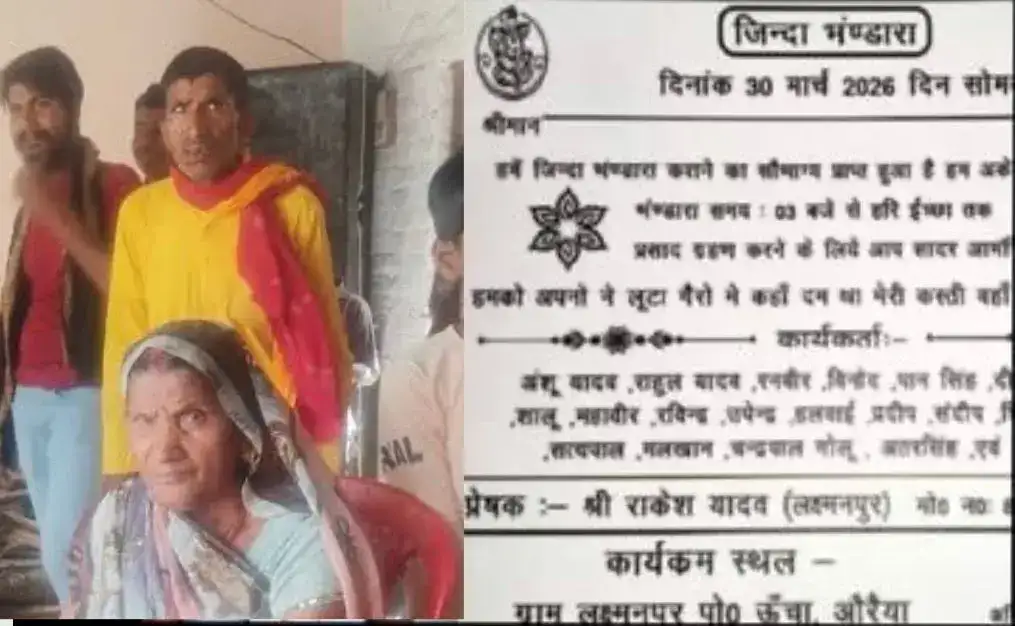
The man, a resident of Auraiya district, reportedly lives alone and has remained unmarried throughout his life. With no immediate family to depend on, he began to worry about what would happen after his death. The thought of not having anyone to perform his last rituals or organise a traditional bhandara deeply troubled him.
To address these fears, he decided to take matters into his own hands and host the ceremony himself. He organised a large-scale feast, inviting nearly 2,000 people from his village and nearby areas. The event, referred to as a “jinda bhandara,” allowed him to witness the rituals and hospitality that would typically take place after his passing.
The preparations for the event were extensive. Food was cooked in large quantities, and guests were served traditional dishes in a community-style gathering. Villagers attended in large numbers, some out of curiosity and others to support the man’s unusual yet heartfelt initiative. The event resembled a typical bhandara in every aspect, except for the fact that the host himself was present and actively participating.
According to reports, the man said that loneliness played a major role in his decision. Living alone for years, he had grown increasingly concerned about being forgotten after his death. By organising the feast himself, he not only ensured that the rituals would be performed but also experienced a sense of belonging and community while he is still alive.
The incident highlights a deeper social issue the growing isolation among elderly individuals, especially those without families. In many parts of India, traditional support systems are weakening as younger generations move to cities for work, leaving older individuals to fend for themselves. This case serves as a poignant reminder of the emotional and social challenges faced by such individuals.
At the same time, the event has sparked mixed reactions online and within the community. While some people praised the man for his practical and forward-thinking approach, others found the idea unusual or even unsettling, given the cultural significance of death rituals.
Despite the varied opinions, the man’s story has resonated with many, bringing attention to the importance of companionship and social support in later life. His decision to celebrate his own “after-life ritual” while alive may seem unconventional, but it reflects a deeply human desire to be remembered, valued and surrounded by people.
Ultimately, the “jinda bhandara” is not just about ritual but about reclaiming dignity and agency in the face of loneliness. By turning a traditionally somber custom into a living celebration, the man has sparked a conversation that goes far beyond the event itself one about community, care and the need to ensure that no one feels alone in their final years.
The man, a resident of Auraiya district, reportedly lives alone and has remained unmarried throughout his life. With no immediate family to depend on, he began to worry about what would happen after his death. The thought of not having anyone to perform his last rituals or organise a traditional bhandara deeply troubled him.
To address these fears, he decided to take matters into his own hands and host the ceremony himself. He organised a large-scale feast, inviting nearly 2,000 people from his village and nearby areas. The event, referred to as a “jinda bhandara,” allowed him to witness the rituals and hospitality that would typically take place after his passing.
The preparations for the event were extensive. Food was cooked in large quantities, and guests were served traditional dishes in a community-style gathering. Villagers attended in large numbers, some out of curiosity and others to support the man’s unusual yet heartfelt initiative. The event resembled a typical bhandara in every aspect, except for the fact that the host himself was present and actively participating.
According to reports, the man said that loneliness played a major role in his decision. Living alone for years, he had grown increasingly concerned about being forgotten after his death. By organising the feast himself, he not only ensured that the rituals would be performed but also experienced a sense of belonging and community while he is still alive.
The incident highlights a deeper social issue the growing isolation among elderly individuals, especially those without families. In many parts of India, traditional support systems are weakening as younger generations move to cities for work, leaving older individuals to fend for themselves. This case serves as a poignant reminder of the emotional and social challenges faced by such individuals.
At the same time, the event has sparked mixed reactions online and within the community. While some people praised the man for his practical and forward-thinking approach, others found the idea unusual or even unsettling, given the cultural significance of death rituals.
Despite the varied opinions, the man’s story has resonated with many, bringing attention to the importance of companionship and social support in later life. His decision to celebrate his own “after-life ritual” while alive may seem unconventional, but it reflects a deeply human desire to be remembered, valued and surrounded by people.
Ultimately, the “jinda bhandara” is not just about ritual but about reclaiming dignity and agency in the face of loneliness. By turning a traditionally somber custom into a living celebration, the man has sparked a conversation that goes far beyond the event itself one about community, care and the need to ensure that no one feels alone in their final years.
Next Story