
GK: Which Is India’s Largest District? It’s 31 Times Delhi & Bigger Than Several States

India is home to districts that vary dramatically in size, population and geography — but one district stands apart for its sheer vastness. So large that it surpasses the geographical area of several Indian states and many Union Territories combined, this district is administered by a single Collector rather than a Chief Minister and multiple departments. Located in Gujarat, Kutch remains a region of extraordinary scale, cultural depth and strategic importance, making it a subject of both administrative debate and national fascination.
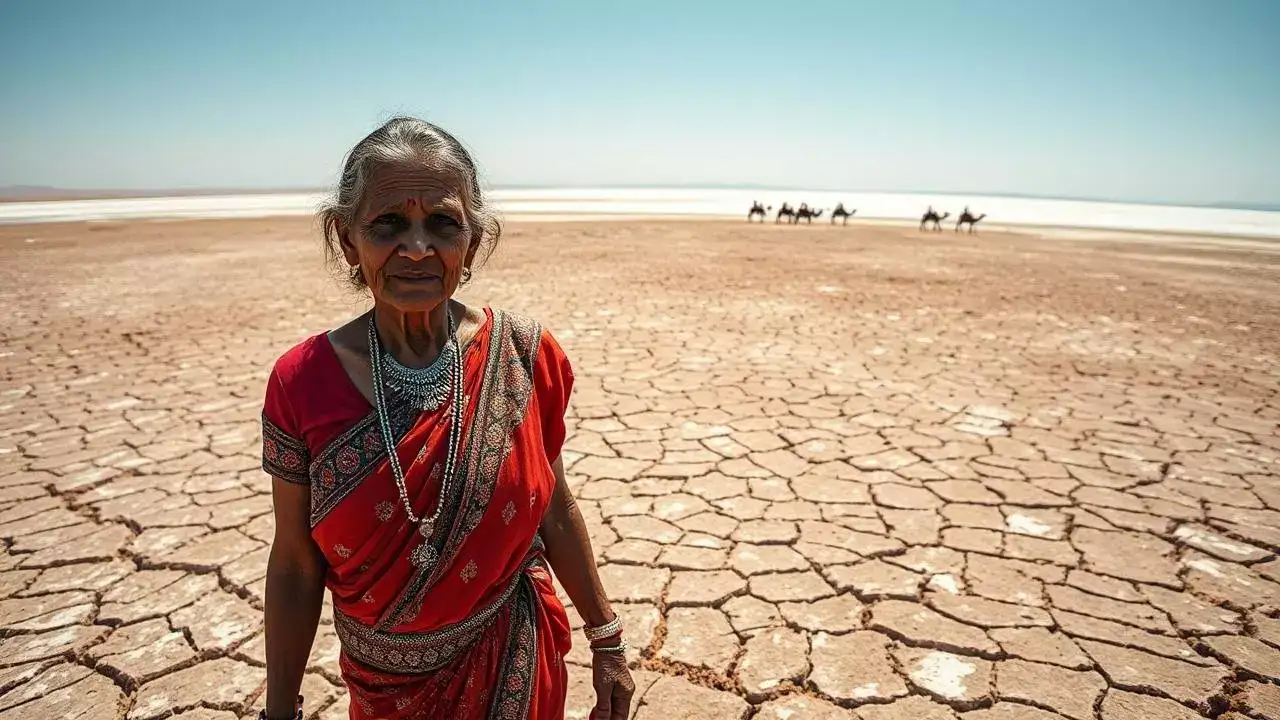
Despite its stunning size, the population density of Kutch remains low due to its unique terrain. As per the 2011 Census, the district housed 2,092,371 people, with much of the region consisting of marshlands, desert stretches and the famous Rann of Kutch.
While some groups push for the creation of smaller administrative units, others argue that dividing Kutch could disrupt its cultural fabric and dilute the region’s identity. Political parties and community leaders remain divided, making the issue one of long-running debate.
The region is also home to the Rann of Kutch, a vast salt desert that transforms dramatically with the seasons. Flooded during the monsoon and gleaming white in winter, the Rann attracts tourists from across the globe.
Culturally, Kutch has preserved its distinct identity through its festivals, crafts and long-standing traditions. It is also home to India’s only wild ass sanctuary, adding ecological significance to its profile.
Adding to its economic importance is Mundra Port, one of India’s largest private ports. The port serves as a crucial logistics and trade gateway, handling massive volumes of cargo and supporting industries that continue to expand around the region.
Kutch is also home to Dholavira, an important archaeological site from the Indus Valley Civilisation and a recognised UNESCO World Heritage Site. This brings international academic interest and tourism into the district.
A District Larger Than Multiple Indian States
Kutch covers an astonishing 45,674 sq km, an area that exceeds the size of entire states such as Haryana (44,212 sq km) and Kerala (38,863 sq km). It is also much larger than Goa, Delhi, Puducherry, Lakshadweep and even the Andaman and Nicobar Islands. To illustrate its size, Kutch is roughly 31 times the area of Delhi and more than 12 times the size of Goa. The district alone accounts for about 23.27% of Gujarat’s total landmass.Despite its stunning size, the population density of Kutch remains low due to its unique terrain. As per the 2011 Census, the district housed 2,092,371 people, with much of the region consisting of marshlands, desert stretches and the famous Rann of Kutch.
Demand for Administrative Restructuring
Because of Kutch’s vast expanse, discussions periodically surface about dividing the district to improve governance and public service delivery. The terrain — a mix of salt plains, desert patches and seasonal marsh — presents logistical challenges that complicate transportation, connectivity and access to services.While some groups push for the creation of smaller administrative units, others argue that dividing Kutch could disrupt its cultural fabric and dilute the region’s identity. Political parties and community leaders remain divided, making the issue one of long-running debate.
A Region Rich in Culture and Heritage
Kutch is more than a geographical marvel — it is also a centre of vibrant tradition and craftsmanship. The district is globally renowned for its intricate embroidery, handcrafted textiles, metalwork, jewellery and woodcraft. Kutch’s artisans are celebrated worldwide, and their work forms a core part of India’s handicraft exports.The region is also home to the Rann of Kutch, a vast salt desert that transforms dramatically with the seasons. Flooded during the monsoon and gleaming white in winter, the Rann attracts tourists from across the globe.
Culturally, Kutch has preserved its distinct identity through its festivals, crafts and long-standing traditions. It is also home to India’s only wild ass sanctuary, adding ecological significance to its profile.
A Growing Hub for Renewable Energy and Trade
Over the years, Kutch has rapidly developed into one of India’s major renewable energy centres. The district hosts expansive wind farms and solar parks, contributing significantly to Gujarat’s green energy output. Its natural landscape and climatic conditions make it ideal for large-scale renewable projects.Adding to its economic importance is Mundra Port, one of India’s largest private ports. The port serves as a crucial logistics and trade gateway, handling massive volumes of cargo and supporting industries that continue to expand around the region.
Kutch is also home to Dholavira, an important archaeological site from the Indus Valley Civilisation and a recognised UNESCO World Heritage Site. This brings international academic interest and tourism into the district.
Smallest Districts in Contrast
While Kutch dominates the list of India’s largest districts, the smallest administrative units offer a sharp contrast. Mahe, part of the Union Territory of Puducherry, spans just 9 sq km and houses around 40,000 residents. Puducherry’s Yanam, covering around 30 sq km, and Lakshadweep’s tiny Kavaratti are also among India’s smallest districts. All districts within Delhi’s National Capital Territory are similarly compact when compared to the expanse of Kutch.Population Size: A Different Perspective
When size is measured not by land but by population, Mumbai takes the lead. With over 20 million residents, the city’s population exceeds that of states such as Goa, Arunachal Pradesh, Mizoram, Nagaland, Tripura and Meghalaya, based on the 2011 Census. Mumbai remains India’s most populous city, highlighting the vast demographic contrasts within the country.Next Story