Harvard plans introduction of limited A+ grades and awareness campaigns in bid to tackle persistent grade inflation


Harvard College is moving to overhaul its evaluation system in a bid to curb grade inflation, a longstanding concern at elite universities. The proposal, outlined in an October report by Dean of Undergraduate Education Amanda Claybaugh, calls for multiple reforms to be introduced simultaneously, signaling a departure from piecemeal approaches that have faltered at peer institutions, The Harvard Crimson reported.
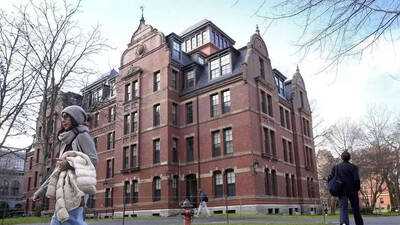
Claybaugh acknowledged that other elite universities have tried to address grade inflation — often unsuccessfully. “Grading is a problem too complex to admit a single solution,” she wrote. “Our approach bears that in mind. We are trying awareness raising, information sharing, and capping A+s all at the same time, and we are doing more than that as well,” according to the report.
Lessons from peer institutionsPrevious efforts at Ivy League and other top universities illustrate the difficulties of reform. At Cornell University, the administration introduced median grades on transcripts in 2008, hoping to encourage students to take more challenging courses. However, students pushed back, arguing that the practice put them at a disadvantage in the labor market. Cornell ultimately discontinued the policy, with faculty votes in 2023 finalizing its removal, The Harvard Crimson noted.
Similarly, Wellesley College and Princeton University attempted to curb high grades through caps in certain departments. At Wellesley, a 2004 policy limited mean grades in some courses to a B+. A 2014 study later found the policy widened racial gaps and reduced student enrollment in affected departments. Faculty gradually bypassed the caps, and the policy was officially removed in 2019.
Yale and Dartmouth have also struggled to implement reforms. Committees at both institutions recommended strategies to address grade inflation, but changes were minimal. “Every department probably did it in a kind of half-hearted way,” said Yale Philosophy professor Shelly Kagan, according to the report. Dartmouth biology professor Mark A. McPeek added that his committee’s 2015 recommendations “were turned in to the administration, and then that was the end of it.”
Harvard’s multi-policy approachHarvard’s plan differs in scale and ambition. Among the proposed reforms is the introduction of a limited number of A+ grades, a distinction not currently offered on Harvard transcripts. The report emphasizes collective action to align incentives across departments and reduce pressures that contribute to grade inflation.
Claybaugh acknowledged that the proposals may frustrate students in the short term. Yet, she wrote, “by reducing the pressures on grading, by altering the incentives, and by deciding to act collectively to solve the collective action problem, we can restore our grading to what it was before the dramatic changes of recent years,” as reported by The Harvard Crimson.
Challenges aheadExperts caution that the broader societal pressures around grading and academic performance make unilateral reforms difficult. Gennady Samorodnitsky, an engineering professor at Cornell, told The Harvard Crimson that “the problem is not just that of Cornell or Harvard or whatever. The problem, to a large extent, is that of the society.”
As Harvard seeks to implement its strategy, the university joins a long line of institutions wrestling with grade inflation — but with a bold, coordinated approach that has yet to be attempted on this scale.
Claybaugh acknowledged that other elite universities have tried to address grade inflation — often unsuccessfully. “Grading is a problem too complex to admit a single solution,” she wrote. “Our approach bears that in mind. We are trying awareness raising, information sharing, and capping A+s all at the same time, and we are doing more than that as well,” according to the report.
Similarly, Wellesley College and Princeton University attempted to curb high grades through caps in certain departments. At Wellesley, a 2004 policy limited mean grades in some courses to a B+. A 2014 study later found the policy widened racial gaps and reduced student enrollment in affected departments. Faculty gradually bypassed the caps, and the policy was officially removed in 2019.
Yale and Dartmouth have also struggled to implement reforms. Committees at both institutions recommended strategies to address grade inflation, but changes were minimal. “Every department probably did it in a kind of half-hearted way,” said Yale Philosophy professor Shelly Kagan, according to the report. Dartmouth biology professor Mark A. McPeek added that his committee’s 2015 recommendations “were turned in to the administration, and then that was the end of it.”
Claybaugh acknowledged that the proposals may frustrate students in the short term. Yet, she wrote, “by reducing the pressures on grading, by altering the incentives, and by deciding to act collectively to solve the collective action problem, we can restore our grading to what it was before the dramatic changes of recent years,” as reported by The Harvard Crimson.
As Harvard seeks to implement its strategy, the university joins a long line of institutions wrestling with grade inflation — but with a bold, coordinated approach that has yet to be attempted on this scale.
Next Story