
How Much Is IAS Officer Salary? Full Breakdown Of Monthly Pay, In-Hand Earnings And Perks

How Much Do IAS Officers Earn? Entry-Level Pay To Top Salary Explained: The Indian Administrative Service remains one of the most prestigious and competitive career paths in India. Each year, lakhs of candidates appear for the UPSC Civil Services Examination, with many aiming for the IAS due to its structured salary, career stability and administrative authority.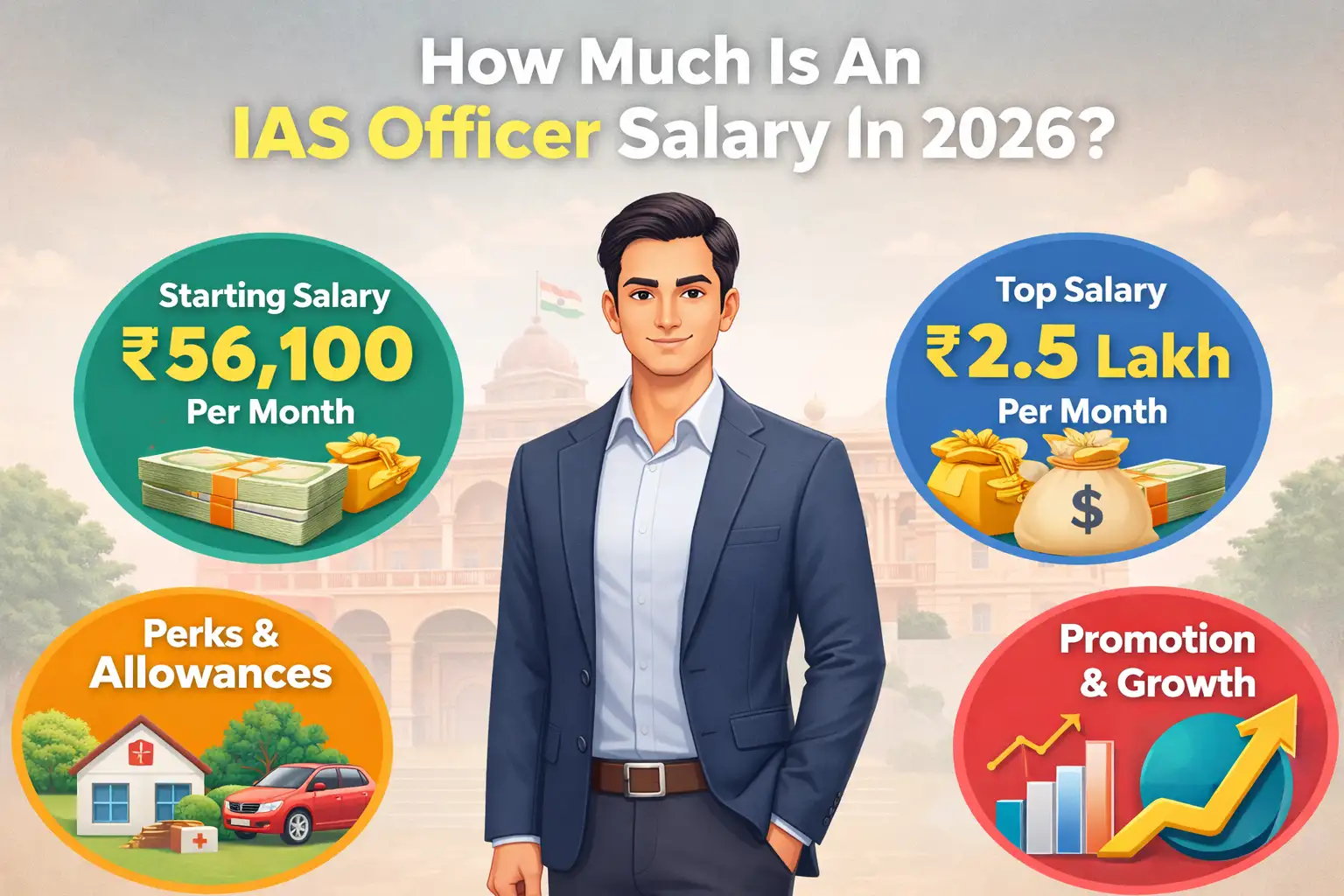
In 2026, an IAS officer starts with a basic monthly pay of ₹56,100 under Level 10 of the pay matrix. Over the years, this can rise to ₹2,50,000 per month at the level of Cabinet Secretary, which is the highest position in the administrative hierarchy.
Once training is completed, officers are posted in field roles such as Sub-Divisional Magistrate or equivalent positions. At this stage, the full salary structure applies, along with allowances that increase overall monthly earnings.
At the top, the Cabinet Secretary receives a fixed salary without additional grade pay, marking the peak of the IAS career ladder.
Dearness Allowance is revised periodically to adjust for inflation and forms a key component of the salary. House Rent Allowance depends on the city of posting, although officers are often provided official accommodation, which may reduce or replace HRA.
Medical benefits cover healthcare needs, while travel and transport allowances support official responsibilities. Additional reimbursements may include communication and other work-related expenses. Pension and retirement benefits further strengthen long-term financial security.
These IAS perks and allowances ensure that the overall package is both stable and comprehensive.
This structured growth ensures that the IAS officer salary per month increases consistently over time. Alongside financial progression, officers gain exposure to governance, administration and public policy at multiple levels.
The combination of stable earnings, allowances and career growth makes it a strong professional choice. However, its real value lies in the opportunity to influence governance and contribute to the country’s development.
For aspirants in 2026, understanding both the financial and professional aspects of the IAS is essential before making a long-term career decision.
Image Courtesy: ChatGPT
In 2026, an IAS officer starts with a basic monthly pay of ₹56,100 under Level 10 of the pay matrix. Over the years, this can rise to ₹2,50,000 per month at the level of Cabinet Secretary, which is the highest position in the administrative hierarchy.
Training Phase And Initial Earnings
After selection, candidates undergo a structured training programme. During this period, officers are entitled to Level 10 pay. However, the in-hand amount is lower due to standard deductions such as accommodation, mess charges and other training-related expenses.Once training is completed, officers are posted in field roles such as Sub-Divisional Magistrate or equivalent positions. At this stage, the full salary structure applies, along with allowances that increase overall monthly earnings.
IAS Salary Structure And Pay Levels
The IAS salary follows the 7th Pay Commission matrix, ensuring uniformity and clarity across ranks. Promotions are largely time-bound and linked to experience, with each level reflecting higher responsibility and better pay.| Position (Indicative Roles) | Pay Level | Basic Pay (₹) | Years of Service |
| SDM/Assistant Secretary | Level 10 | 56,100 | 1–4 years |
| Deputy Secretary/ADM | Level 11 | 67,700 | 5–8 years |
| District Magistrate/Director | Level 12 | 78,800 | 9–12 years |
| Senior Administrative Roles | Level 13 | 1,18,500 | 13–16 years |
| Commissioner/Secretary Roles | Level 14 | 1,44,200 | 16–24 years |
| Principal Secretary/Additional Secretary | Level 15 | 1,82,200 | 25–30 years |
| Additional Chief Secretary | Level 16 | 2,05,400 | 30–33 years |
| Chief Secretary/Secretary (Centre) | Level 17 | 2,25,000 | 34–36 years |
| Cabinet Secretary | Level 18 | 2,50,000 | 37+ years |
At the top, the Cabinet Secretary receives a fixed salary without additional grade pay, marking the peak of the IAS career ladder.
Allowances That Define In-Hand Salary
Basic pay is only one part of total earnings. IAS officers receive several allowances that significantly enhance their compensation.Dearness Allowance is revised periodically to adjust for inflation and forms a key component of the salary. House Rent Allowance depends on the city of posting, although officers are often provided official accommodation, which may reduce or replace HRA.
Medical benefits cover healthcare needs, while travel and transport allowances support official responsibilities. Additional reimbursements may include communication and other work-related expenses. Pension and retirement benefits further strengthen long-term financial security.
You may also like
- JPSC prelims answer key 2026 expected to be released at jpsc.gov.in: Check steps to download here
- Manipur Board HSE result 2026: Is the website down? Check direct link to download Class 12 scores here
- PGCIL Diploma Trainee recruitment 2026: Registration begins today for 668 posts; check eligibility and steps to apply
- J&K Bank apprentice recruitment 2026: 614 vacancies announced, apply till April 26
- Bangkok issues high tide alert: What tourists should know as river levels rise
These IAS perks and allowances ensure that the overall package is both stable and comprehensive.
Career Growth And Long-Term Earnings
The IAS career path is defined by steady progression. As officers gain experience, they move from field administration roles to senior positions in state and central governments. Responsibilities expand significantly at each stage, from district management to policy formulation.This structured growth ensures that the IAS officer salary per month increases consistently over time. Alongside financial progression, officers gain exposure to governance, administration and public policy at multiple levels.
The Role Beyond Salary
While the UPSC salary structure is a key attraction, it does not fully define the IAS. The role comes with significant responsibility, requiring decision-making, leadership and a commitment to public service.The combination of stable earnings, allowances and career growth makes it a strong professional choice. However, its real value lies in the opportunity to influence governance and contribute to the country’s development.
For aspirants in 2026, understanding both the financial and professional aspects of the IAS is essential before making a long-term career decision.
Image Courtesy: ChatGPT






More from our partners


Loving Newspoint? Download the app now
