
Iceland's Reynisfjara beach collapses as winter erosion wipes out black sand


Iceland’s Reynisfjara Beach, known for its black volcanic sand and sea stacks, is rapidly eroding after strong easterly winds battered the southern coast through winter. A large section beneath Reynisfjall mountain has collapsed, access to parts of the beach has closed, and most of the sand has disappeared, according to weather.com and local reports.
The shoreline, a major tourist site in Iceland, has changed within months. Visitors who walked along the beach in November 2025 saw wide stretches of black sand and basalt caves. Now, waves have covered parts of those areas, and large rocks lie scattered across the shore.
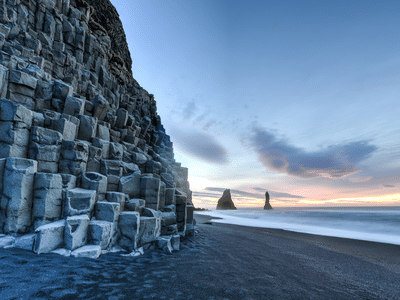
Reynisfjara sits below Reynisfjall mountain and faces the North Atlantic Ocean. It attracts tourists year-round for its volcanic sand and the Reynisdrangar sea stacks rising from the water. Despite the risk of sneaker waves, visitors often walk close to the basalt columns and explore caves along the beach.
A recent landslide under the mountain has blocked walking access to parts of the area. Residents who grew up nearby told local media that this was the worst landslide they have seen at the site. They said they were shocked by the scale of erosion.
Experts have linked the erosion to unusual wind patterns this winter. Sigurður Sigurðarson, a coastal engineer at the Icelandic Road Administration, told RUV News, “There are persistent easterly winds that have been present all winter. Often heavy with very high waves. And it is the easterly winds that carry sand along the south coast to the west.” He said, “Usually the prevailing winds are southwesterly, which carries the sand eastward.”
According to Icelandic media, the nearby Reynisfjall mountain extends into the sea and acts as a barrier. When sand moves westward under easterly winds, it stops against the mountain. As a result, Reynisfjara does not receive fresh sand from the east, causing the shoreline to shrink.
A longtime tour guide told the Iceland Monitor that the coastline is always changing but has never shifted this quickly. Experts say the sand could return if wind direction and ocean currents change. However, with large rocks and boulders now scattered along the shore, the landscape may remain altered.
The shoreline, a major tourist site in Iceland, has changed within months. Visitors who walked along the beach in November 2025 saw wide stretches of black sand and basalt caves. Now, waves have covered parts of those areas, and large rocks lie scattered across the shore.
Reynisfjara sits below Reynisfjall mountain and faces the North Atlantic Ocean. It attracts tourists year-round for its volcanic sand and the Reynisdrangar sea stacks rising from the water. Despite the risk of sneaker waves, visitors often walk close to the basalt columns and explore caves along the beach.
A recent landslide under the mountain has blocked walking access to parts of the area. Residents who grew up nearby told local media that this was the worst landslide they have seen at the site. They said they were shocked by the scale of erosion.
Experts have linked the erosion to unusual wind patterns this winter. Sigurður Sigurðarson, a coastal engineer at the Icelandic Road Administration, told RUV News, “There are persistent easterly winds that have been present all winter. Often heavy with very high waves. And it is the easterly winds that carry sand along the south coast to the west.” He said, “Usually the prevailing winds are southwesterly, which carries the sand eastward.”
According to Icelandic media, the nearby Reynisfjall mountain extends into the sea and acts as a barrier. When sand moves westward under easterly winds, it stops against the mountain. As a result, Reynisfjara does not receive fresh sand from the east, causing the shoreline to shrink.
A longtime tour guide told the Iceland Monitor that the coastline is always changing but has never shifted this quickly. Experts say the sand could return if wind direction and ocean currents change. However, with large rocks and boulders now scattered along the shore, the landscape may remain altered.
Next Story