
States push learning reset as Centre readies Samagra Shiksha 3.0


NEW DELHI: With several states, including Tamil Nadu, Punjab, Uttar Pradesh and Maharashtra, pushing for an expansion of foundational learning targets, stronger central backing for teacher training and a deeper integration of nutrition with schooling, Union education minister Dharmendra Pradhan on Friday signalled a decisive rethink of school education policy as the Centre moves towards Samagra Shiksha 3.0.
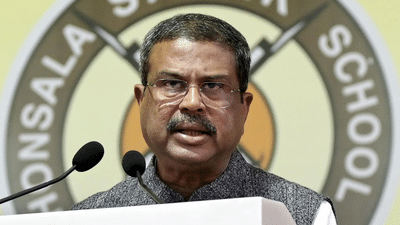
Chairing a day-long consultation on the future roadmap of the flagship scheme, Pradhan said India must move beyond bureaucratic management of schools and restore them as community-owned institutions if learning gaps, drop-outs and uneven outcomes are to be addressed. “The government must take responsibility for systems and salaries, but schools cannot be run through files alone. They must once again belong to society,” he said.
The Centre is preparing a revamped Samagra Shiksha framework for 2026–27, aligned with the Viksit Bharat vision , with officials indicating that societal representation in school governance is likely to be strengthened in the next phase. The minister said the emphasis would shift from inputs and expenditure to measurable learning outcomes and holistic child development .
At the consultation, 11 states and Union Territories—including Tamil Nadu, Punjab, Assam, Delhi, Maharashtra, Uttar Pradesh, Jammu & Kashmir and Odisha—called for extending NIPUN Bharat beyond its current focus on early grades, recommending that the mission be expanded from Classes I–II to cover Classes III–V to tackle persistent learning deficits.
States also sought enhanced central support for teacher capacity building, flagging growing classroom complexity and the need for continuous professional development under the National Education Policy framework. Officials said teacher training would be a key pillar of Samagra Shiksha 3.0.
Pradhan also underscored the link between classroom learning and nutrition outcomes, stressing the role of PM Poshan in improving attendance, retention and cognitive outcomes. “Learning and nutrition outcomes must move together,” he said.
Officials said inputs from the consultations would feed into a national plan for 2026–27, with the Centre signalling that the next phase of school reform will be judged less by allocations and more by outcomes on the ground.
Chairing a day-long consultation on the future roadmap of the flagship scheme, Pradhan said India must move beyond bureaucratic management of schools and restore them as community-owned institutions if learning gaps, drop-outs and uneven outcomes are to be addressed. “The government must take responsibility for systems and salaries, but schools cannot be run through files alone. They must once again belong to society,” he said.
The Centre is preparing a revamped Samagra Shiksha framework for 2026–27, aligned with the Viksit Bharat vision , with officials indicating that societal representation in school governance is likely to be strengthened in the next phase. The minister said the emphasis would shift from inputs and expenditure to measurable learning outcomes and holistic child development .
At the consultation, 11 states and Union Territories—including Tamil Nadu, Punjab, Assam, Delhi, Maharashtra, Uttar Pradesh, Jammu & Kashmir and Odisha—called for extending NIPUN Bharat beyond its current focus on early grades, recommending that the mission be expanded from Classes I–II to cover Classes III–V to tackle persistent learning deficits.
States also sought enhanced central support for teacher capacity building, flagging growing classroom complexity and the need for continuous professional development under the National Education Policy framework. Officials said teacher training would be a key pillar of Samagra Shiksha 3.0.
Pradhan also underscored the link between classroom learning and nutrition outcomes, stressing the role of PM Poshan in improving attendance, retention and cognitive outcomes. “Learning and nutrition outcomes must move together,” he said.
Officials said inputs from the consultations would feed into a national plan for 2026–27, with the Centre signalling that the next phase of school reform will be judged less by allocations and more by outcomes on the ground.
Next Story