
States told to take care of stay, travel for ITI trainees


New Delhi: The government has asked states and union territories to provide accidental insurance cover as well as make provisions for travel and accommodation for trainees as it formalises the mandatory 150 hours of on-the-job training (OJT) under the Craftsmen Training Scheme (CTS) of the skill development and entrepreneurship ministry.
It also directed that OJT be included as a parameter for grading the performance of industrial training institutes (ITIs) imparting skills training under the scheme.
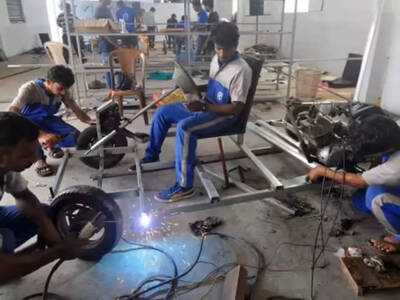
The move is aimed at enabling and incentivising trainees to gain hands-on experience in their respective trades, familiarise themselves with the work environment, practices and technologies used in industry and develop work ethics, communication skills and teamwork abilities as they prepare to enter the job market, besides urging ITIs to prioritise OJTs.
The mandate is part of the guidelines issued by the ministry recently to streamline the process of the mandatory 150 hours of on-the-job training or group projects for ITI trainees under CTS while reducing the classroom training duration under the scheme to 1,200 hours from 1,500 hours.
"The guidelines signal a move from policy intent to structured compliance and measurable outcomes, especially through evaluation integration and portal-based recording," said a senior official, who did not wish to be identified.
As part of the guidelines, trainees will be eligible for OJT or project work only after admission to an ITI and completing a minimum of three months of training. They will be trained under the guidance of industry mentors, who will provide practical training and assess their performance.
On-the-job training may be conducted either continuously for about eight hours per day or in a staggered manner based on mutually agreed terms between the industry and the ITI, while ensuring adherence to safety and security protocols.
"To ensure the safety and well-being of ITI trainees throughout their training period, including on-the-job training, state directorate and institutes may consider provisions such as accidental group insurance for ITI trainees to provide coverage against any unforeseen incidents," the ministry said in the circular, a copy of which was seen by ET.
It also directed that OJT be included as a parameter for grading the performance of industrial training institutes (ITIs) imparting skills training under the scheme.
The move is aimed at enabling and incentivising trainees to gain hands-on experience in their respective trades, familiarise themselves with the work environment, practices and technologies used in industry and develop work ethics, communication skills and teamwork abilities as they prepare to enter the job market, besides urging ITIs to prioritise OJTs.
The mandate is part of the guidelines issued by the ministry recently to streamline the process of the mandatory 150 hours of on-the-job training or group projects for ITI trainees under CTS while reducing the classroom training duration under the scheme to 1,200 hours from 1,500 hours.
"The guidelines signal a move from policy intent to structured compliance and measurable outcomes, especially through evaluation integration and portal-based recording," said a senior official, who did not wish to be identified.
As part of the guidelines, trainees will be eligible for OJT or project work only after admission to an ITI and completing a minimum of three months of training. They will be trained under the guidance of industry mentors, who will provide practical training and assess their performance.
On-the-job training may be conducted either continuously for about eight hours per day or in a staggered manner based on mutually agreed terms between the industry and the ITI, while ensuring adherence to safety and security protocols.
"To ensure the safety and well-being of ITI trainees throughout their training period, including on-the-job training, state directorate and institutes may consider provisions such as accidental group insurance for ITI trainees to provide coverage against any unforeseen incidents," the ministry said in the circular, a copy of which was seen by ET.
Next Story