View: Buckingham Palace would be an excellent museum


Take a holiday trip to London this winter and you’ll be spoiled for choice when it comes to visitor attractions. But if you’re trying to keep costs down, there are some that are best ignored: the royal palaces and collections.
While entry to the capital’s magnificent national museums and galleries, including the National Gallery, the Tate, the Victoria and Albert and the British Museum, has been free since 2001, the palaces, castles and stately homes occupied by King Charles III and his kin all charge substantial ticket fees — if they’re open to the public at all. That’s despite the fact that the buildings and most of the treasures they house officially belong to Charles’ subjects, who already pay for their upkeep through their taxes.
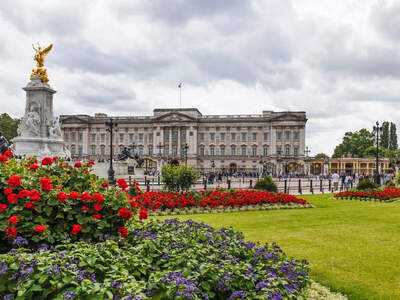
Those Brits willing to splash out to view the fabulous items of art, jewelry and other riches which are in theory owned by the state only ever see a fraction of the full collection. At any one time, a small percentage is available to be viewed by the public in the two royal galleries in London’s Buckingham Palace and Holyrood House in Edinburgh. The rest are squirreled away in vaults or adorn the walls and rooms of the royals’ private apartments.
A visit to Buckingham Palace is a pricey business. A standard ticket will set you back £37 (just under $50 — £33 if you book in advance online), while a stroll around the gardens takes the price up to £48. Meanwhile, the most popular royal attraction, Windsor Castle, costs £35 per adult (£31 in advance) and Holyrood House, the royals’ official Scottish residence, is £25 (£21.) That’s on top of the millions taxpayers have paid over the years for the upkeep of the royal residences; Buckingham Palace is currently in the middle of a £369 million state-funded refurb.
Ticket fees go toward to the Royal Collection Trust, the outfit that maintains the government-owned but Windsor-inhabited regal properties. Last year, the royal residences attracted 2.65 million visitors who shelled out almost £90 million on tickets and souvenirs. The Trust’s commercial arm, the Royal Collection Enterprises, donates the profit back to its own charitable branch.
In a statement, the Trust said: “Income from admissions and retail sales contributes directly to the care and conservation of the Collection and activities to share it with as many people as possible. These include exhibitions, an extensive loans programme, and free and discounted community and school visits for under-represented and disadvantaged people who are less likely to visit independently.” Annual passes and £1 tickets for those on some benefits are also available.
The current occupiers of the British throne, the Windsors, are among the wealthiest families on the planet. In a recent BBC documentary, royal expert David Dimbleby described Charles as the UK’s first “billionaire king.” Over the last century, the family has built up a priceless collection of art, jewels, furniture, stamps, property, race horses and other treasures in addition to the collection belonging to the state.
It’s often difficult to differentiate between items given to the royals in their capacity as representatives of the UK — which, in line with the Nolan principles of public life, they ought to either pass on to the nation or pay the value of the gift to the government — and those received as private individuals.
While it isn’t formally codified anywhere, items of art, jewellry and other expensive objects acquired before Queen Victoria’s death in 1901 are broadly considered part of the Royal Collection and therefore the property of the “state” rather than the current king and his family. The royals can’t sell these items, or cash in on official buildings such as Buckingham Palace, or the crown jewels housed in the Tower of London.
The items which form the Collection are numerous, fabulous and priceless. Among the million-plus individual pieces are hundreds of works by Leonardo da Vinci and 50 Canalettos, along with paintings by Stubbs, Holbein, Rembrandt, Rubens, Vermeer, Van Dyck, Raphael and Gainsborough. There’s a Roman coin from the era of the Emperor Claudius, the 1660 Cambridge bible, a fabric cross that belonged to Mary Queen of Scots, a Faberge cigarette case, the world’s largest collection of Sevres Porcelain and original Mozart manuscripts.
At Buckingham Palace, on top of the entry fee, popping into the King’s Gallery to see items from the Royal Collection on display as part of a series of rotating exhibitions will cost you an additional £22 for an adult. When I visited last summer, the exhibition was devoted to the Edwardian age. While it was fascinating to see Queen Alexandra’s 1901 coronation gown and learn about the extraordinary collection of diamonds she and her husband Edward VII pulled in during an official tour of India, I couldn’t help feeling shortchanged: Only 1% to 2% of what is described on the Royal Collection website as “one of the most important art collections in the world and one of the last great European royal collections to survive intact” is on display at any time, and I was through the gallery and into the gift shop in less than an hour.
I couldn’t help agreeing with the late royal finances expert David McClure, who suggested in his book The Queen’s True Worth that, as the equivalent of the British Museum or V&A, the Royal Collection should be taken out of Buckingham Palace’s cellars and put into a new, public museum so visitors can enjoy their full extent.
Given the Windsors famously detest being forced to live in Buckingham Palace — Charles has yet to make the move from his favored Clarence House three years after the death of his mother Queen Elizabeth II, meaning the majority of the building, which is closed to tourists, is inhabited largely by staff — what better Christmas gift could the King bestow than turning it over to his subjects as a museum? This exquisite treasure trove is too precious and consequential to be hoarded by one family: The royals should throw open the doors and let the whole world view them.
While entry to the capital’s magnificent national museums and galleries, including the National Gallery, the Tate, the Victoria and Albert and the British Museum, has been free since 2001, the palaces, castles and stately homes occupied by King Charles III and his kin all charge substantial ticket fees — if they’re open to the public at all. That’s despite the fact that the buildings and most of the treasures they house officially belong to Charles’ subjects, who already pay for their upkeep through their taxes.
Those Brits willing to splash out to view the fabulous items of art, jewelry and other riches which are in theory owned by the state only ever see a fraction of the full collection. At any one time, a small percentage is available to be viewed by the public in the two royal galleries in London’s Buckingham Palace and Holyrood House in Edinburgh. The rest are squirreled away in vaults or adorn the walls and rooms of the royals’ private apartments.
A visit to Buckingham Palace is a pricey business. A standard ticket will set you back £37 (just under $50 — £33 if you book in advance online), while a stroll around the gardens takes the price up to £48. Meanwhile, the most popular royal attraction, Windsor Castle, costs £35 per adult (£31 in advance) and Holyrood House, the royals’ official Scottish residence, is £25 (£21.) That’s on top of the millions taxpayers have paid over the years for the upkeep of the royal residences; Buckingham Palace is currently in the middle of a £369 million state-funded refurb.
Ticket fees go toward to the Royal Collection Trust, the outfit that maintains the government-owned but Windsor-inhabited regal properties. Last year, the royal residences attracted 2.65 million visitors who shelled out almost £90 million on tickets and souvenirs. The Trust’s commercial arm, the Royal Collection Enterprises, donates the profit back to its own charitable branch.
In a statement, the Trust said: “Income from admissions and retail sales contributes directly to the care and conservation of the Collection and activities to share it with as many people as possible. These include exhibitions, an extensive loans programme, and free and discounted community and school visits for under-represented and disadvantaged people who are less likely to visit independently.” Annual passes and £1 tickets for those on some benefits are also available.
The current occupiers of the British throne, the Windsors, are among the wealthiest families on the planet. In a recent BBC documentary, royal expert David Dimbleby described Charles as the UK’s first “billionaire king.” Over the last century, the family has built up a priceless collection of art, jewels, furniture, stamps, property, race horses and other treasures in addition to the collection belonging to the state.
It’s often difficult to differentiate between items given to the royals in their capacity as representatives of the UK — which, in line with the Nolan principles of public life, they ought to either pass on to the nation or pay the value of the gift to the government — and those received as private individuals.
While it isn’t formally codified anywhere, items of art, jewellry and other expensive objects acquired before Queen Victoria’s death in 1901 are broadly considered part of the Royal Collection and therefore the property of the “state” rather than the current king and his family. The royals can’t sell these items, or cash in on official buildings such as Buckingham Palace, or the crown jewels housed in the Tower of London.
The items which form the Collection are numerous, fabulous and priceless. Among the million-plus individual pieces are hundreds of works by Leonardo da Vinci and 50 Canalettos, along with paintings by Stubbs, Holbein, Rembrandt, Rubens, Vermeer, Van Dyck, Raphael and Gainsborough. There’s a Roman coin from the era of the Emperor Claudius, the 1660 Cambridge bible, a fabric cross that belonged to Mary Queen of Scots, a Faberge cigarette case, the world’s largest collection of Sevres Porcelain and original Mozart manuscripts.
At Buckingham Palace, on top of the entry fee, popping into the King’s Gallery to see items from the Royal Collection on display as part of a series of rotating exhibitions will cost you an additional £22 for an adult. When I visited last summer, the exhibition was devoted to the Edwardian age. While it was fascinating to see Queen Alexandra’s 1901 coronation gown and learn about the extraordinary collection of diamonds she and her husband Edward VII pulled in during an official tour of India, I couldn’t help feeling shortchanged: Only 1% to 2% of what is described on the Royal Collection website as “one of the most important art collections in the world and one of the last great European royal collections to survive intact” is on display at any time, and I was through the gallery and into the gift shop in less than an hour.
I couldn’t help agreeing with the late royal finances expert David McClure, who suggested in his book The Queen’s True Worth that, as the equivalent of the British Museum or V&A, the Royal Collection should be taken out of Buckingham Palace’s cellars and put into a new, public museum so visitors can enjoy their full extent.
Given the Windsors famously detest being forced to live in Buckingham Palace — Charles has yet to make the move from his favored Clarence House three years after the death of his mother Queen Elizabeth II, meaning the majority of the building, which is closed to tourists, is inhabited largely by staff — what better Christmas gift could the King bestow than turning it over to his subjects as a museum? This exquisite treasure trove is too precious and consequential to be hoarded by one family: The royals should throw open the doors and let the whole world view them.
Next Story