
Why US universities are losing their edge to China: Here's what Pfizer CEO Albert Bourla says


For years, the world’s brightest students chased a familiar dream: ivy-covered campuses, cutting-edge labs, and degrees stamped by institutions like Harvard, Stanford, and Oxford. These universities didn’t just offer education; they represented the pinnacle of research, discovery, and global influence. But that long-standing dominance is beginning to look less certain.
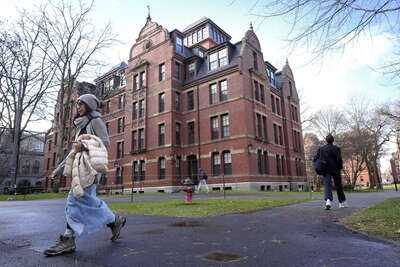
At a recent conversation hosted by the Council on Foreign Relations , as reported by Fortune, Pfizer CEO Albert Bourla put it plainly, perhaps more bluntly than most policymakers would dare. Research in China, he said, is moving “three times faster, at half the cost.” It was not a throwaway line. It was a warning.
A shift that didn’t happen overnight
What’s unfolding is not a sudden upset, it’s the result of years of quiet, deliberate planning. Data from the Nature Index, which tracks contributions to top-tier scientific journals, tells part of the story. In 2020, the US and Europe comfortably dominated the global top 10 institutions. Just five years later, Chinese universities occupy nine of those spots. That’s not a marginal gain, it’s a dramatic reshaping of the research landscape.
Bourla attributes this to a system that has been carefully tuned for speed and scale. China has invested heavily in research funding, strengthened intellectual property systems, and streamlined regulations that once slowed scientific work elsewhere. In practical terms, that means fewer delays in launching studies, quicker approvals, and a faster path from idea to outcome.
And increasingly, artificial intelligence is doing what it does best, cutting through time. From designing clinical trials to analysing results, AI is accelerating processes that once took years.
The pipeline begins in the classroom
What’s perhaps more striking is where this momentum begins. In parts of China, exposure to artificial intelligence starts early, sometimes in primary school. Students are not just learning to use technology; they’re being trained to think alongside it. Add to that longer classroom hours and a culture that prizes academic rigour, and you begin to see how the pipeline is being built.
There’s data to back this up. A study by the Paulson Institute found that nearly one in three top AI researchers globally was born in China. At the same time, a growing number of Chinese scientists trained in the US are heading back home. Research from Princeton, Harvard, and MIT showed that more than 1,400 made that move in 2021 alone, a noticeable jump from previous years.
Jun Liu, who left Harvard to join Tsinghua University, summed it up in a conversation with Bloomberg: the energy around AI in China, across government, industry, and academia—is hard to ignore. Funding is flowing, and so is talent.
This has happened before, but not like this
Bourla has seen shifts in research leadership before. He recalled how Pfizer’s own centre of gravity once sat in the UK before moving to the US, largely driven by strong public investment through institutions like the National Institutes of Health. That funding model helped universities innovate—and then spin those ideas into successful companies.
But China’s rise feels different. It’s not just about funding or talent in isolation. It’s the coordination—the sense that policy, education, and industry are all pulling in the same direction.
A moment of reckoning
For now, the US still leads in producing the highest-quality research. But Bourla’s concern is about trajectory, not just position. “They’re very close,” he said to Fortune. And if current trends hold, that gap may not last long.
His bigger point, though, is about mindset. Focusing too much on slowing China down, he argued, risks missing the real challenge, speeding up internally.
It’s a shift in thinking that is already influencing Pfizer. China is no longer just a place to sell medicines; it’s becoming a place where new ideas are born.
What happens next
The next decade could decide where the world looks for answers, to diseases, to technology, to the biggest scientific questions of our time.
This isn’t just a competition between countries. It’s a test of how systems adapt. China has built one that moves quickly, at scale, with clear intent. The West still has deep strengths, world-class universities, strong biotech ecosystems, and a culture of innovation, but those alone may not be enough. The real question now isn’t who leads today. It’s who learns to move faster tomorrow.
At a recent conversation hosted by the Council on Foreign Relations , as reported by Fortune, Pfizer CEO Albert Bourla put it plainly, perhaps more bluntly than most policymakers would dare. Research in China, he said, is moving “three times faster, at half the cost.” It was not a throwaway line. It was a warning.
A shift that didn’t happen overnight
What’s unfolding is not a sudden upset, it’s the result of years of quiet, deliberate planning. Data from the Nature Index, which tracks contributions to top-tier scientific journals, tells part of the story. In 2020, the US and Europe comfortably dominated the global top 10 institutions. Just five years later, Chinese universities occupy nine of those spots. That’s not a marginal gain, it’s a dramatic reshaping of the research landscape.
Bourla attributes this to a system that has been carefully tuned for speed and scale. China has invested heavily in research funding, strengthened intellectual property systems, and streamlined regulations that once slowed scientific work elsewhere. In practical terms, that means fewer delays in launching studies, quicker approvals, and a faster path from idea to outcome.
And increasingly, artificial intelligence is doing what it does best, cutting through time. From designing clinical trials to analysing results, AI is accelerating processes that once took years.
The pipeline begins in the classroom
What’s perhaps more striking is where this momentum begins. In parts of China, exposure to artificial intelligence starts early, sometimes in primary school. Students are not just learning to use technology; they’re being trained to think alongside it. Add to that longer classroom hours and a culture that prizes academic rigour, and you begin to see how the pipeline is being built.
There’s data to back this up. A study by the Paulson Institute found that nearly one in three top AI researchers globally was born in China. At the same time, a growing number of Chinese scientists trained in the US are heading back home. Research from Princeton, Harvard, and MIT showed that more than 1,400 made that move in 2021 alone, a noticeable jump from previous years.
Jun Liu, who left Harvard to join Tsinghua University, summed it up in a conversation with Bloomberg: the energy around AI in China, across government, industry, and academia—is hard to ignore. Funding is flowing, and so is talent.
This has happened before, but not like this
Bourla has seen shifts in research leadership before. He recalled how Pfizer’s own centre of gravity once sat in the UK before moving to the US, largely driven by strong public investment through institutions like the National Institutes of Health. That funding model helped universities innovate—and then spin those ideas into successful companies.
But China’s rise feels different. It’s not just about funding or talent in isolation. It’s the coordination—the sense that policy, education, and industry are all pulling in the same direction.
A moment of reckoning
For now, the US still leads in producing the highest-quality research. But Bourla’s concern is about trajectory, not just position. “They’re very close,” he said to Fortune. And if current trends hold, that gap may not last long.
His bigger point, though, is about mindset. Focusing too much on slowing China down, he argued, risks missing the real challenge, speeding up internally.
It’s a shift in thinking that is already influencing Pfizer. China is no longer just a place to sell medicines; it’s becoming a place where new ideas are born.
What happens next
The next decade could decide where the world looks for answers, to diseases, to technology, to the biggest scientific questions of our time.
This isn’t just a competition between countries. It’s a test of how systems adapt. China has built one that moves quickly, at scale, with clear intent. The West still has deep strengths, world-class universities, strong biotech ecosystems, and a culture of innovation, but those alone may not be enough. The real question now isn’t who leads today. It’s who learns to move faster tomorrow.
Next Story