
Anup Jalota Targets AR Rahman After Controversy, Tells Him to ‘Convert Back to Hinduism’ to Get More Work

Singer Anup Jalota has publicly responded to the controversy sparked by Oscar-winning composer AR Rahman’s recent remarks about his work opportunities in the Hindi film industry. Jalota suggested that if Rahman truly believes his religion has hindered his career, he should consider reconverting to Hinduism.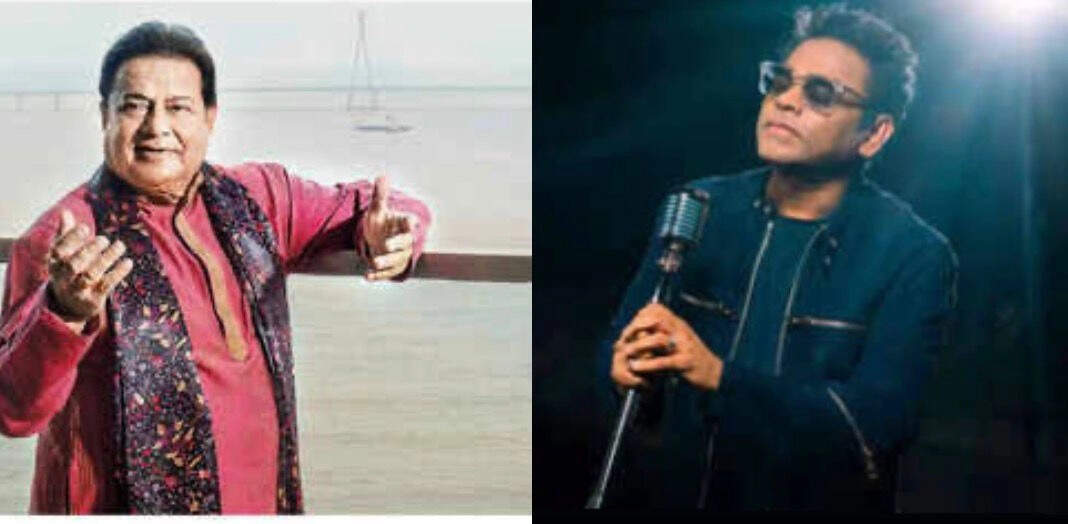
Rahman recently became the focus of widespread discussion following comments he made in an interview about the industry’s changing dynamics. During that conversation, he said that over the past eight years, he had noticed fewer opportunities and suggested this could partly be due to a “power shift” within the industry - remarks some interpreted as hinting at underlying communal issues. He also attracted further attention by describing the blockbuster Chhapaak as divisive, which contributed to the ongoing debate around his statement.
In response, Anup Jalota appeared in a social media video expressing strong disagreement with Rahman’s claims. He began by acknowledging Rahman’s past achievements and immense success in Indian cinema. Jalota then stated that if Rahman sincerely believes being Muslim is the reason behind his perceived decline in work, he should “convert back to Hinduism” and see if that changes his career prospects. While framed as advice, Jalota’s comment carried clear religious and cultural undertones that ignited further controversy.
Jalota’s statement relied on the premise that the composer’s faith has influenced his professional trajectory, a point Rahman himself did not explicitly claim in his original interview. Rahman later issued a clarification and apology after the backlash, saying that his intention was not to offend and that his remarks had been misunderstood, emphasising his lifelong dedication to music and India as his inspiration and home.
The exchange has stirred debate across social media and entertainment circles. Some commentators supported Jalota’s suggestion, arguing that Rahman’s comments about bias were unfounded, while others saw Jalota’s advice as inappropriate given the sensitive nature of religion and identity. Several prominent industry figures have also weighed in, with some dismissing the idea of a communal bias in film projects and others defending Rahman’s legacy and contributions to cinema.
Rahman’s comments, which sparked the debate, were part of a broader reflection on his career path and the evolving landscape of Bollywood. He had spoken about not actively seeking work and believing that what is meant for him will come, highlighting that power structures in the industry have shifted over time. This broader context continues to shape discussion around opportunities for artists in Indian cinema.
Jalota’s remark added fuel to an already heated conversation about communal perceptions, career trajectories and how public figures navigate complex cultural issues. As the debate unfolds, it underscores how statements about industry bias can provoke strong reactions across entertainment and cultural spheres.
Rahman recently became the focus of widespread discussion following comments he made in an interview about the industry’s changing dynamics. During that conversation, he said that over the past eight years, he had noticed fewer opportunities and suggested this could partly be due to a “power shift” within the industry - remarks some interpreted as hinting at underlying communal issues. He also attracted further attention by describing the blockbuster Chhapaak as divisive, which contributed to the ongoing debate around his statement.
In response, Anup Jalota appeared in a social media video expressing strong disagreement with Rahman’s claims. He began by acknowledging Rahman’s past achievements and immense success in Indian cinema. Jalota then stated that if Rahman sincerely believes being Muslim is the reason behind his perceived decline in work, he should “convert back to Hinduism” and see if that changes his career prospects. While framed as advice, Jalota’s comment carried clear religious and cultural undertones that ignited further controversy.
Jalota’s statement relied on the premise that the composer’s faith has influenced his professional trajectory, a point Rahman himself did not explicitly claim in his original interview. Rahman later issued a clarification and apology after the backlash, saying that his intention was not to offend and that his remarks had been misunderstood, emphasising his lifelong dedication to music and India as his inspiration and home.
The exchange has stirred debate across social media and entertainment circles. Some commentators supported Jalota’s suggestion, arguing that Rahman’s comments about bias were unfounded, while others saw Jalota’s advice as inappropriate given the sensitive nature of religion and identity. Several prominent industry figures have also weighed in, with some dismissing the idea of a communal bias in film projects and others defending Rahman’s legacy and contributions to cinema.
Rahman’s comments, which sparked the debate, were part of a broader reflection on his career path and the evolving landscape of Bollywood. He had spoken about not actively seeking work and believing that what is meant for him will come, highlighting that power structures in the industry have shifted over time. This broader context continues to shape discussion around opportunities for artists in Indian cinema.
Jalota’s remark added fuel to an already heated conversation about communal perceptions, career trajectories and how public figures navigate complex cultural issues. As the debate unfolds, it underscores how statements about industry bias can provoke strong reactions across entertainment and cultural spheres.
Next Story