
From Sacred Shrines to Global Runways: Temple Jewellery Steals Spotlight at Paris Couture Week

Indian temple jewellery known for its intricate craftsmanship, divine motifs and cultural significance found itself at the centre of global fashion conversations after featuring prominently at Paris Couture Week during designer Gaurav Gupta’s couture showcase. Long associated with South Indian traditions, Bharatanatyam dancers and temple rituals, the jewellery’s presence at an international fashion event marked a powerful moment for Indian heritage crafts on the world stage.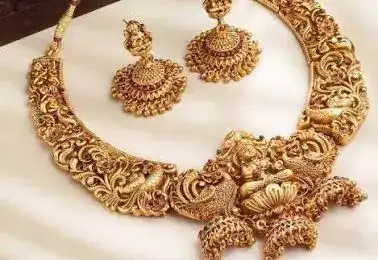
Gaurav Gupta’s Paris presentation blended contemporary couture silhouettes with traditional Indian ornamentation, allowing temple jewellery to transcend its conventional cultural context. Heavy gold-toned necklaces, elaborate chokers, layered waist belts and sculpted earrings inspired by deities and temple carvings were styled alongside avant-garde gowns, creating a striking contrast between ancient symbolism and futuristic fashion.
Temple jewellery has historically been crafted using gold and semi-precious stones, often depicting gods, goddesses, lotuses, peacocks and mythological imagery. Originally designed as offerings to temple idols, these ornaments later became a defining element of classical Indian dance costumes. By reintroducing them in a couture setting, the showcase highlighted how traditional forms can evolve without losing their identity.
The Paris Couture Week appearance also reflects a growing global appetite for handcrafted luxury and culturally rooted design. International audiences are increasingly drawn to fashion that tells a story, values artisanal skill and reflects authenticity. Temple jewellery’s detailed workmanship and spiritual symbolism align naturally with this shift away from mass-produced aesthetics.
Industry observers noted that the styling avoided making the jewellery feel costume-like. Instead, the pieces were presented as powerful statement accessories, reinforcing the idea that heritage jewellery can coexist with modern, high-fashion narratives. The show positioned Indian craftsmanship not as an exotic add-on but as a central design language.
For Indian fashion, the moment signalled renewed recognition of indigenous art forms at global fashion capitals. It also opened conversations around preserving traditional jewellery-making techniques while adapting them for contemporary audiences. As designers continue to reinterpret cultural elements through modern lenses, temple jewellery’s Paris moment stands as a reminder that Indian heritage carries both timeless beauty and international relevance.
The showcase reaffirmed that fashion rooted in history can still feel bold, modern and aspirational especially when presented with confidence on platforms like Paris Couture Week.
Gaurav Gupta’s Paris presentation blended contemporary couture silhouettes with traditional Indian ornamentation, allowing temple jewellery to transcend its conventional cultural context. Heavy gold-toned necklaces, elaborate chokers, layered waist belts and sculpted earrings inspired by deities and temple carvings were styled alongside avant-garde gowns, creating a striking contrast between ancient symbolism and futuristic fashion.
Temple jewellery has historically been crafted using gold and semi-precious stones, often depicting gods, goddesses, lotuses, peacocks and mythological imagery. Originally designed as offerings to temple idols, these ornaments later became a defining element of classical Indian dance costumes. By reintroducing them in a couture setting, the showcase highlighted how traditional forms can evolve without losing their identity.
The Paris Couture Week appearance also reflects a growing global appetite for handcrafted luxury and culturally rooted design. International audiences are increasingly drawn to fashion that tells a story, values artisanal skill and reflects authenticity. Temple jewellery’s detailed workmanship and spiritual symbolism align naturally with this shift away from mass-produced aesthetics.
Industry observers noted that the styling avoided making the jewellery feel costume-like. Instead, the pieces were presented as powerful statement accessories, reinforcing the idea that heritage jewellery can coexist with modern, high-fashion narratives. The show positioned Indian craftsmanship not as an exotic add-on but as a central design language.
For Indian fashion, the moment signalled renewed recognition of indigenous art forms at global fashion capitals. It also opened conversations around preserving traditional jewellery-making techniques while adapting them for contemporary audiences. As designers continue to reinterpret cultural elements through modern lenses, temple jewellery’s Paris moment stands as a reminder that Indian heritage carries both timeless beauty and international relevance.
The showcase reaffirmed that fashion rooted in history can still feel bold, modern and aspirational especially when presented with confidence on platforms like Paris Couture Week.
Next Story