
What Are Exit Polls? How Does It Works?

What are exit polls ? They’re a set of surveys that ask voters whom they voted for, as well as additional questions about their political opinions, the factors they considered in the election and their own backgrounds more broadly. Exit polls are conducted by media houses in India in accordance with rules of Election Commission of India .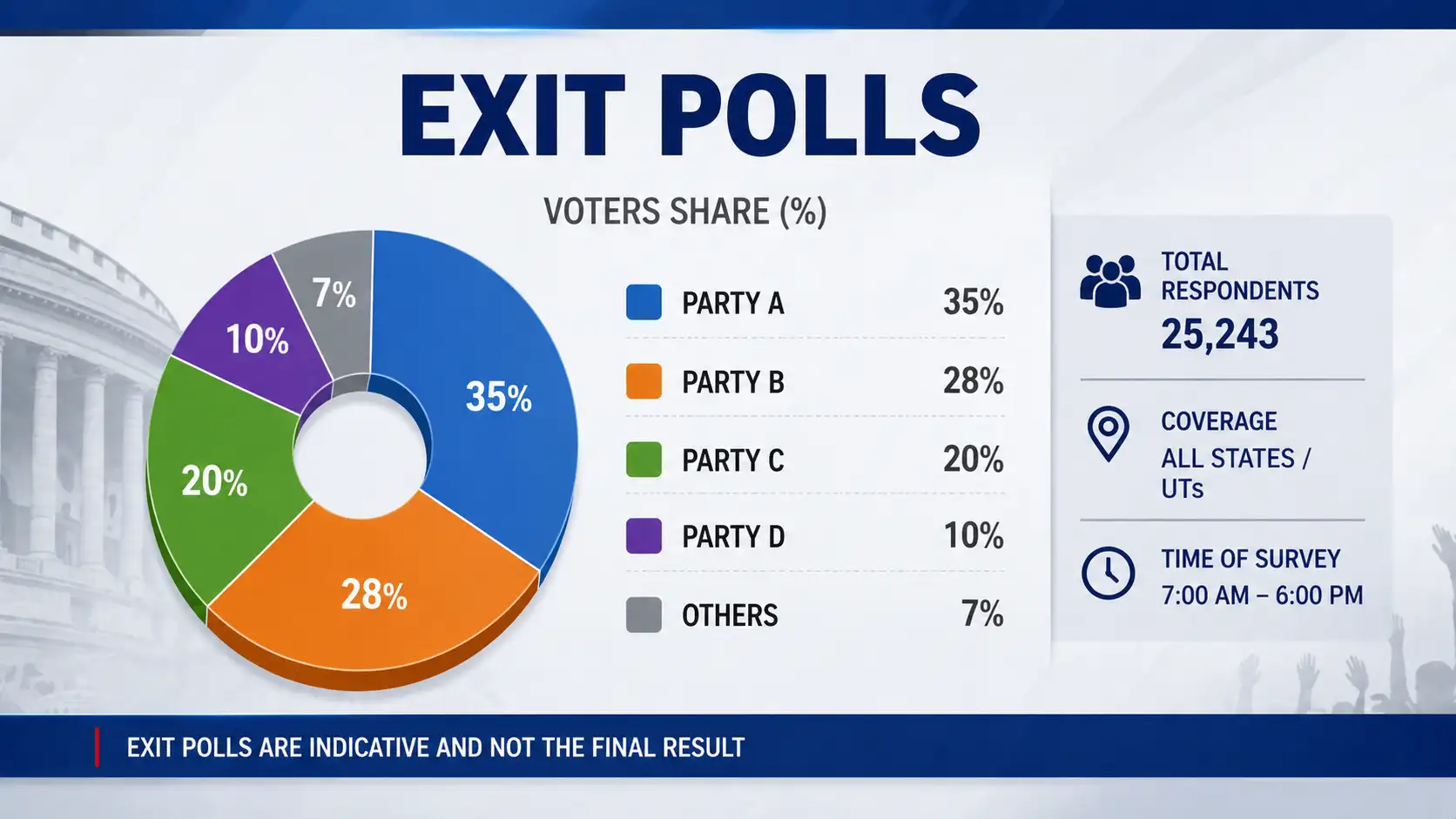
That helps us better understand who came out to vote, how different groups of people voted and how they feel about some of the biggest issues of the campaign. However, exit polls are not always correct. It can be wrong too. They can also be misleading due to less sample sizes.
The first national exit poll of voters leaving the polls was conducted in 1972 by the late Warren Mitofsky who directed polling at CBS for the U.S.A . In the 1970s and 1980s, the networks had their own exit polls.
In the presidential election in 2016, the five networks worked together with the Associated Press to conduct the exit poll, now called the National Election Pool (NEP). Edison Media Research in New Jersey conducted the exit poll for the NEP.
They get their name because interviewers on Election Day are stationed outside roughly 500 polling locations throughout the country, where they conduct surveys with a randomly selected sample of voters who’ve just cast their ballots. The polling locations were themselves selected through random sampling, meaning the resulting interviews should be representative of Election Day voters across the state or nationally. The interviewers call back to report their results several times throughout the day which means that the early numbers will likely change as more data comes in.
And the results also include voters who cast early absentee ballots or voted by mail. This part of the electorate is reached by more traditional pre-election surveys, which are conducted by calling, emailing and sending text messages to people chosen from lists of all registered voters.
In-person exit polls are conducted using paper surveys that respondents fill out themselves; those reached by email or text message answer the questions online, while those reached by telephone answer questions asked by a live interviewer. Each exit poll includes about 20 to 25 questions and is designed to take around five minutes to complete. Each voter’s answers are anonymous.
Ultimately, exit polls will include interviews with tens of thousands of voters. That scope makes them a powerful tool for understanding the demographic profile and political views of voters in this year’s election. And their findings will eventually be weighted against the ultimate benchmark: the results of the elections themselves.
Even so, exit polls are still polls, with margins for error which means they’re most useful when treated as estimates, rather than precise measurements. That’s particularly true for the earliest exit poll numbers, which won’t yet have been adjusted to match the final election results.
That helps us better understand who came out to vote, how different groups of people voted and how they feel about some of the biggest issues of the campaign. However, exit polls are not always correct. It can be wrong too. They can also be misleading due to less sample sizes.
History of exit polls
The first national exit poll of voters leaving the polls was conducted in 1972 by the late Warren Mitofsky who directed polling at CBS for the U.S.A . In the 1970s and 1980s, the networks had their own exit polls.
In the presidential election in 2016, the five networks worked together with the Associated Press to conduct the exit poll, now called the National Election Pool (NEP). Edison Media Research in New Jersey conducted the exit poll for the NEP.
They get their name because interviewers on Election Day are stationed outside roughly 500 polling locations throughout the country, where they conduct surveys with a randomly selected sample of voters who’ve just cast their ballots. The polling locations were themselves selected through random sampling, meaning the resulting interviews should be representative of Election Day voters across the state or nationally. The interviewers call back to report their results several times throughout the day which means that the early numbers will likely change as more data comes in.
And the results also include voters who cast early absentee ballots or voted by mail. This part of the electorate is reached by more traditional pre-election surveys, which are conducted by calling, emailing and sending text messages to people chosen from lists of all registered voters.
How are they conducted
In-person exit polls are conducted using paper surveys that respondents fill out themselves; those reached by email or text message answer the questions online, while those reached by telephone answer questions asked by a live interviewer. Each exit poll includes about 20 to 25 questions and is designed to take around five minutes to complete. Each voter’s answers are anonymous.
Ultimately, exit polls will include interviews with tens of thousands of voters. That scope makes them a powerful tool for understanding the demographic profile and political views of voters in this year’s election. And their findings will eventually be weighted against the ultimate benchmark: the results of the elections themselves.
Even so, exit polls are still polls, with margins for error which means they’re most useful when treated as estimates, rather than precise measurements. That’s particularly true for the earliest exit poll numbers, which won’t yet have been adjusted to match the final election results.
Next Story