
Indian Railways At 173: Authentic Historic Thane Bridge Image Revives A Forgotten Chapter Of Railway Legacy

In a moment that resonated deeply with railway enthusiasts, historians and heritage followers, Union Railway Minister Ashwini Vaishnaw on Thursday, 16 April, marked 173 years of Indian Railways by sharing what is believed to be one of the oldest available authentic images of the historic Thane railway bridge along with an early train.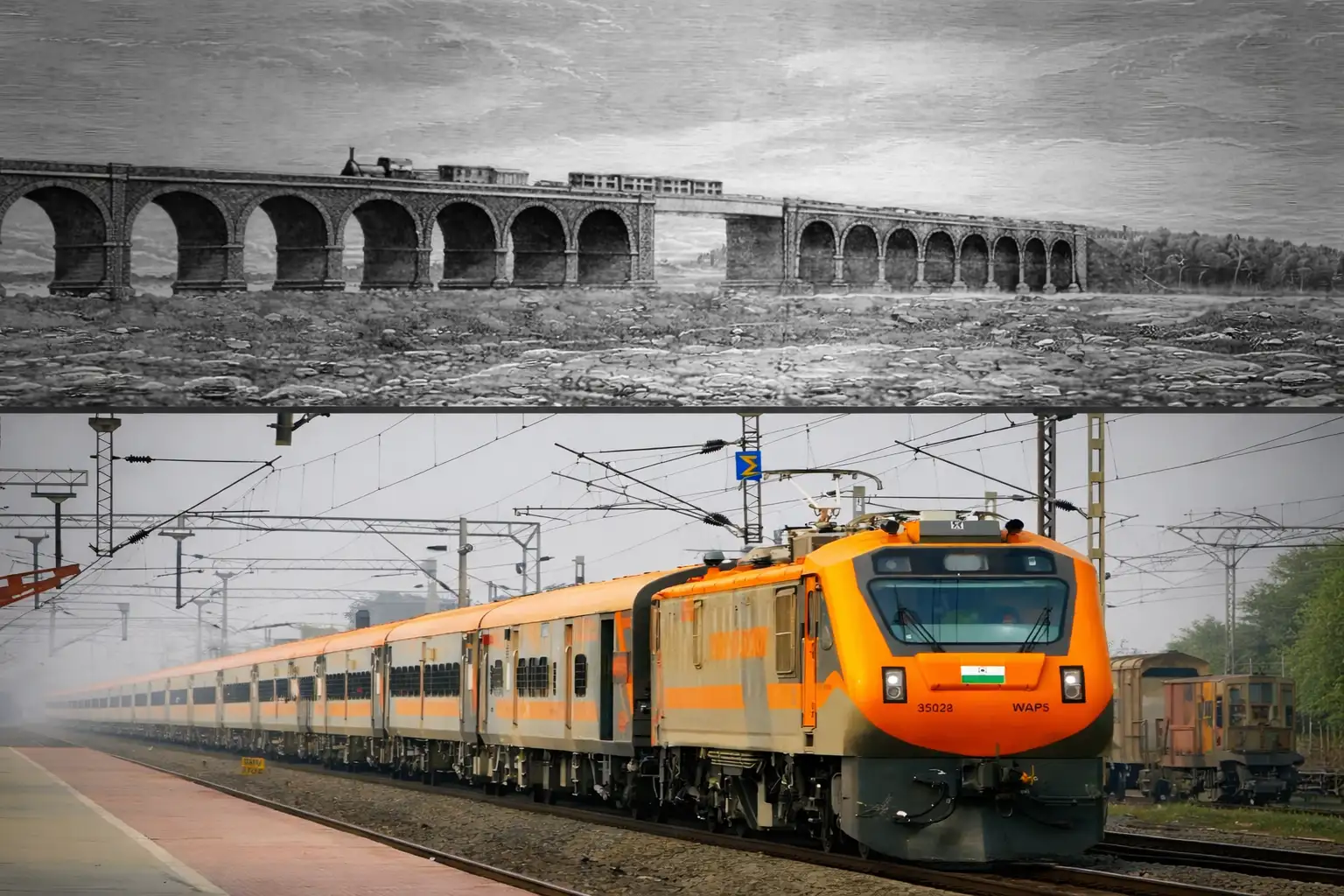
The development has drawn attention not only for its symbolic timing but also for its larger historical significance. For years, several images linked to the early days of Indian Railways have circulated widely, many of which were later considered inaccurate, stylised or wrongly attributed. The newly shared verified photograph is now being seen as an important step in restoring faith in the documented visual history of the railway network.
Because of this connection, visuals related to the bridge have long held strong emotional and educational value. The release of an authentic image therefore offers more than nostalgia. It provides a clearer and more reliable reference point for one of the most defining milestones in the nation’s transport journey.
The verified photograph also strengthens the way the story of the first railway era is remembered, particularly at a time when public interest in railway heritage continues to grow.
For years, an image of a train on a bridge was commonly believed to represent the original Thane structure. However, according to historical records, that visual did not actually depict the real bridge.
Author and historian Rajendra B. Aklekar noted that the minister’s use of the authenticated image has effectively corrected years of misinformation and helped set the historical record straight. He said this move would go a long way in documenting the 173-year-old history of Indian Railways with greater accuracy.
This renewed emphasis on archival accuracy is particularly significant because visual records often shape how generations understand the past.
Public memory is often built not just through written accounts but through powerful visuals that become symbolic of an era. When those images are inaccurate, myths can slowly replace facts. The re-emergence of an authenticated Thane railway bridge photograph therefore serves as an important reminder that heritage preservation must be rooted in documented reality.
For railway enthusiasts and historians alike, this moment goes beyond a single image. It underlines the responsibility of institutions to ensure that legacy is presented faithfully and that future generations inherit an accurate understanding of the milestones that shaped the nation.
As Indian Railways completes 173 years, the renewed focus on the Thane railway bridge and its authentic historic train image has added fresh depth to the anniversary. More importantly, it has reinforced the idea that even a single corrected visual can reshape how history is remembered, discussed and preserved for years to come.
Image Courtesy: X ( formerly Twitter)/Ashwini Vaishnaw
The development has drawn attention not only for its symbolic timing but also for its larger historical significance. For years, several images linked to the early days of Indian Railways have circulated widely, many of which were later considered inaccurate, stylised or wrongly attributed. The newly shared verified photograph is now being seen as an important step in restoring faith in the documented visual history of the railway network.
A Historic Bridge Linked To India’s First Passenger Train
The Thane railway bridge occupies a unique place in Indian Railways history . It is closely associated with the construction period of the country’s first passenger train service, which famously began operations in 1853.Because of this connection, visuals related to the bridge have long held strong emotional and educational value. The release of an authentic image therefore offers more than nostalgia. It provides a clearer and more reliable reference point for one of the most defining milestones in the nation’s transport journey.
The verified photograph also strengthens the way the story of the first railway era is remembered, particularly at a time when public interest in railway heritage continues to grow.
You may also like
- Priyadarshini Mattoo murder case: Delhi HC flags public sentiment bias by SRB in Santosh Singh release plea
- MP: CM Mohan Yadav fills self-enumeration form as Census begins in state, urges public participation
- West Bengal polls: CM Yogi pitches "double-engine" growth, highlights Ayodhya's Ram Mandir
- Kerala cancels SSLC, Class 12 exams for Gulf students: Minister Sivankutty
- 'Terrorist act': Plea in Supreme Court over TCS Nashik case; seeks 'stringent steps' against forced religious conversions
Correcting A Long-Standing Visual Narrative
The gesture has been widely viewed as a subtle yet significant correction of a long-standing misunderstanding in public memory. Historians have often pointed out that archival accuracy remains one of the biggest challenges in preserving railway heritage.For years, an image of a train on a bridge was commonly believed to represent the original Thane structure. However, according to historical records, that visual did not actually depict the real bridge.
Author and historian Rajendra B. Aklekar noted that the minister’s use of the authenticated image has effectively corrected years of misinformation and helped set the historical record straight. He said this move would go a long way in documenting the 173-year-old history of Indian Railways with greater accuracy.
This renewed emphasis on archival accuracy is particularly significant because visual records often shape how generations understand the past.
Why Authentic Records Matter In Public Memory
The use of a verified historical photograph has also triggered a wider online discussion about the importance of preserving original documents, photographs and records.Public memory is often built not just through written accounts but through powerful visuals that become symbolic of an era. When those images are inaccurate, myths can slowly replace facts. The re-emergence of an authenticated Thane railway bridge photograph therefore serves as an important reminder that heritage preservation must be rooted in documented reality.
For railway enthusiasts and historians alike, this moment goes beyond a single image. It underlines the responsibility of institutions to ensure that legacy is presented faithfully and that future generations inherit an accurate understanding of the milestones that shaped the nation.
As Indian Railways completes 173 years, the renewed focus on the Thane railway bridge and its authentic historic train image has added fresh depth to the anniversary. More importantly, it has reinforced the idea that even a single corrected visual can reshape how history is remembered, discussed and preserved for years to come.
Image Courtesy: X ( formerly Twitter)/Ashwini Vaishnaw






More from our partners


Loving Newspoint? Download the app now
