
PSLV Mission Setback: 16 ‘Satellites’ Onboard, Only ‘KID’ Survives

What looked like a complete loss after the failed PSLV-C62 launch has taken an unexpected turn, thanks to a tiny capsule aptly named KID, which lived up to its name with remarkable resilience.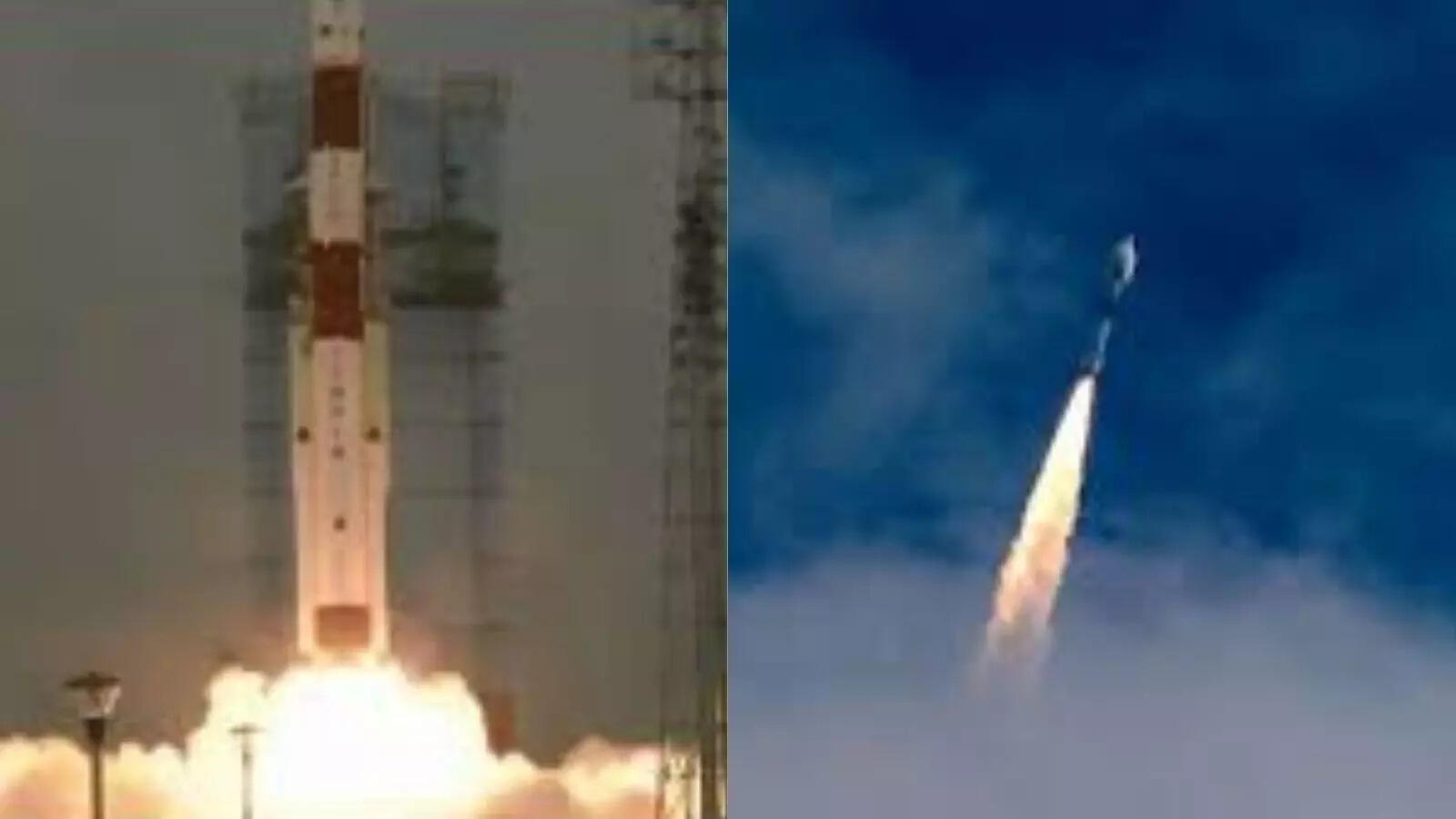
When the Polar Satellite Launch Vehicle failed on Monday, it was initially believed that all 16 payloads onboard including key Indian satellites had been lost. But a day later, Spanish startup Orbital Paradigm revealed that its experimental capsule, the Kestrel Initial Demonstrator (KID), had not only survived but also managed to separate from the rocket and transmit data.
Sharing the update on X, the company wrote: “Our KID capsule, against all odds, separated from PSLV C62, switched on, and transmitted data. We’re reconstructing trajectory. Full report will come.” The announcement stood out as a rare positive note in an otherwise disappointing mission.
Orbital Paradigm focuses on what it calls “space industrialisation,” with a long-term goal of making cargo return trips from orbit to Earth frequent, efficient, and affordable. Central to this vision are re-entry capsules designed to withstand extreme heat and pressure. KID was a technology demonstrator essentially a prototype for the company’s planned return vehicle, Kernel, which is designed to bring back up to 120 kg of payload from orbit.
Ahead of the launch, Orbital Paradigm’s co-founder and CEO Francesco Cacciatore had explained the importance of the mission. The goal, he wrote, was to move closer to mastering atmospheric re-entry. “Unlike other mission phases, there is no way to accurately replicate on ground at the same time all the conditions encountered during re-entry,” he noted.
While KID emerged as the lone success story, the remaining 15 payloads were not as fortunate. These included the EOS-N1 Earth observation satellite and Anvesha, a surveillance satellite developed by DRDO, intended to aid defence operations by tracking enemy movement and build-ups. Also onboard were AyulSat, a dedicated tanker satellite, satellites built by Dhruva Space, and payloads developed by student teams.
ISRO’s PSLV-C62 marked the space agency’s first mission of 2026 and lifted off from Sriharikota at 10.18 am. According to ISRO, the launch went smoothly at first, with the initial stages performing as expected. Trouble began during the third stage of flight.
Explaining the failure, ISRO Chairman V Narayanan said, “Disturbances in the rocket and later deviation from the flight path were observed when strap-on motors were providing thrust during the flight's third stage to propel the vehicle to the intended altitude.”
While the mission did not achieve its primary objectives, KID’s unexpected survival has offered engineers valuable data and a reminder that even in failure, space missions can deliver surprising breakthroughs.
When the Polar Satellite Launch Vehicle failed on Monday, it was initially believed that all 16 payloads onboard including key Indian satellites had been lost. But a day later, Spanish startup Orbital Paradigm revealed that its experimental capsule, the Kestrel Initial Demonstrator (KID), had not only survived but also managed to separate from the rocket and transmit data.
Sharing the update on X, the company wrote: “Our KID capsule, against all odds, separated from PSLV C62, switched on, and transmitted data. We’re reconstructing trajectory. Full report will come.” The announcement stood out as a rare positive note in an otherwise disappointing mission.
Orbital Paradigm focuses on what it calls “space industrialisation,” with a long-term goal of making cargo return trips from orbit to Earth frequent, efficient, and affordable. Central to this vision are re-entry capsules designed to withstand extreme heat and pressure. KID was a technology demonstrator essentially a prototype for the company’s planned return vehicle, Kernel, which is designed to bring back up to 120 kg of payload from orbit.
Ahead of the launch, Orbital Paradigm’s co-founder and CEO Francesco Cacciatore had explained the importance of the mission. The goal, he wrote, was to move closer to mastering atmospheric re-entry. “Unlike other mission phases, there is no way to accurately replicate on ground at the same time all the conditions encountered during re-entry,” he noted.
While KID emerged as the lone success story, the remaining 15 payloads were not as fortunate. These included the EOS-N1 Earth observation satellite and Anvesha, a surveillance satellite developed by DRDO, intended to aid defence operations by tracking enemy movement and build-ups. Also onboard were AyulSat, a dedicated tanker satellite, satellites built by Dhruva Space, and payloads developed by student teams.
ISRO’s PSLV-C62 marked the space agency’s first mission of 2026 and lifted off from Sriharikota at 10.18 am. According to ISRO, the launch went smoothly at first, with the initial stages performing as expected. Trouble began during the third stage of flight.
Explaining the failure, ISRO Chairman V Narayanan said, “Disturbances in the rocket and later deviation from the flight path were observed when strap-on motors were providing thrust during the flight's third stage to propel the vehicle to the intended altitude.”
While the mission did not achieve its primary objectives, KID’s unexpected survival has offered engineers valuable data and a reminder that even in failure, space missions can deliver surprising breakthroughs.
Next Story