
Sabarimala case: Can non-devotees challenge temple customs? SC asks Centre


NEW DELHI: The Supreme Court on Wednesday asked the Centre whether individuals who are not devotees of Lord Ayyappa can challenge the customs of the Sabarimala Temple in Kerala.
The observation came during hearings by a nine-judge Constitution bench led by Chief Justice of India Surya Kant on petitions concerning women's entry into religious places and the broader scope of religious freedom .
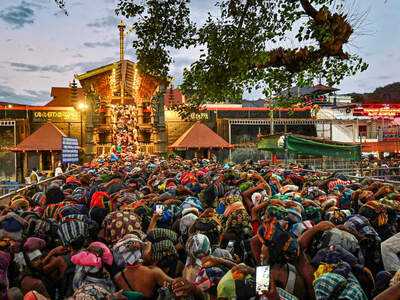
According to news agenct PTI, the bench flagged a key question: can a person who does not belong to a particular religious denomination question its practices through a public interest litigation (PIL)?
Justice BV Nagarathna pointed out that the original petitioners in the Sabarimala case were not devotees, asking whether such petitions should be entertained at all. Solicitor General Tushar Mehta responded that the plea had been filed by the Indian Young Lawyers Association .
Raising concerns over maintainability, Justice Nagarathna noted that in ordinary civil cases, lack of direct connection or cause of action could lead to rejection at the threshold.
The Centre argued that many PILs today are driven by "motivated interests," with Mehta describing the issue as a clash between a "silent majority" and a "vocal minority." He said the expansion of access to courts has reduced the need for third-party interventions.
The CJI, however, said courts have evolved safeguards and apply strict parameters before entertaining PILs, adding that only cases with merit are taken up.
The hearing is part of a larger review of issues arising from the 2018 verdict allowing entry of women of all ages into Sabarimala, which was later referred to a larger bench to examine broader questions of religious freedom.
The observation came during hearings by a nine-judge Constitution bench led by Chief Justice of India Surya Kant on petitions concerning women's entry into religious places and the broader scope of religious freedom .
According to news agenct PTI, the bench flagged a key question: can a person who does not belong to a particular religious denomination question its practices through a public interest litigation (PIL)?
Justice BV Nagarathna pointed out that the original petitioners in the Sabarimala case were not devotees, asking whether such petitions should be entertained at all. Solicitor General Tushar Mehta responded that the plea had been filed by the Indian Young Lawyers Association .
Raising concerns over maintainability, Justice Nagarathna noted that in ordinary civil cases, lack of direct connection or cause of action could lead to rejection at the threshold.
The Centre argued that many PILs today are driven by "motivated interests," with Mehta describing the issue as a clash between a "silent majority" and a "vocal minority." He said the expansion of access to courts has reduced the need for third-party interventions.
The CJI, however, said courts have evolved safeguards and apply strict parameters before entertaining PILs, adding that only cases with merit are taken up.
The hearing is part of a larger review of issues arising from the 2018 verdict allowing entry of women of all ages into Sabarimala, which was later referred to a larger bench to examine broader questions of religious freedom.
Next Story