
Tele-Law 2026 Update – Dial 14454 To Get Free Legal Advice From Certified Lawyers At Home

Need Legal Advice? Tele-Law 2026 Lets You Speak To Experienced Lawyers At Home Through 14454: Access to timely legal guidance has long been a challenge for many citizens, particularly those living in remote areas or with limited financial means. In 2026, that barrier is steadily shrinking. Through the Tele-Law service India , the government has created a system that connects people directly with qualified lawyers without the need to step into a courtroom. Whether it concerns a family disagreement or a property matter, individuals can now seek free legal advice India simply by making a call or visiting a nearby service centre.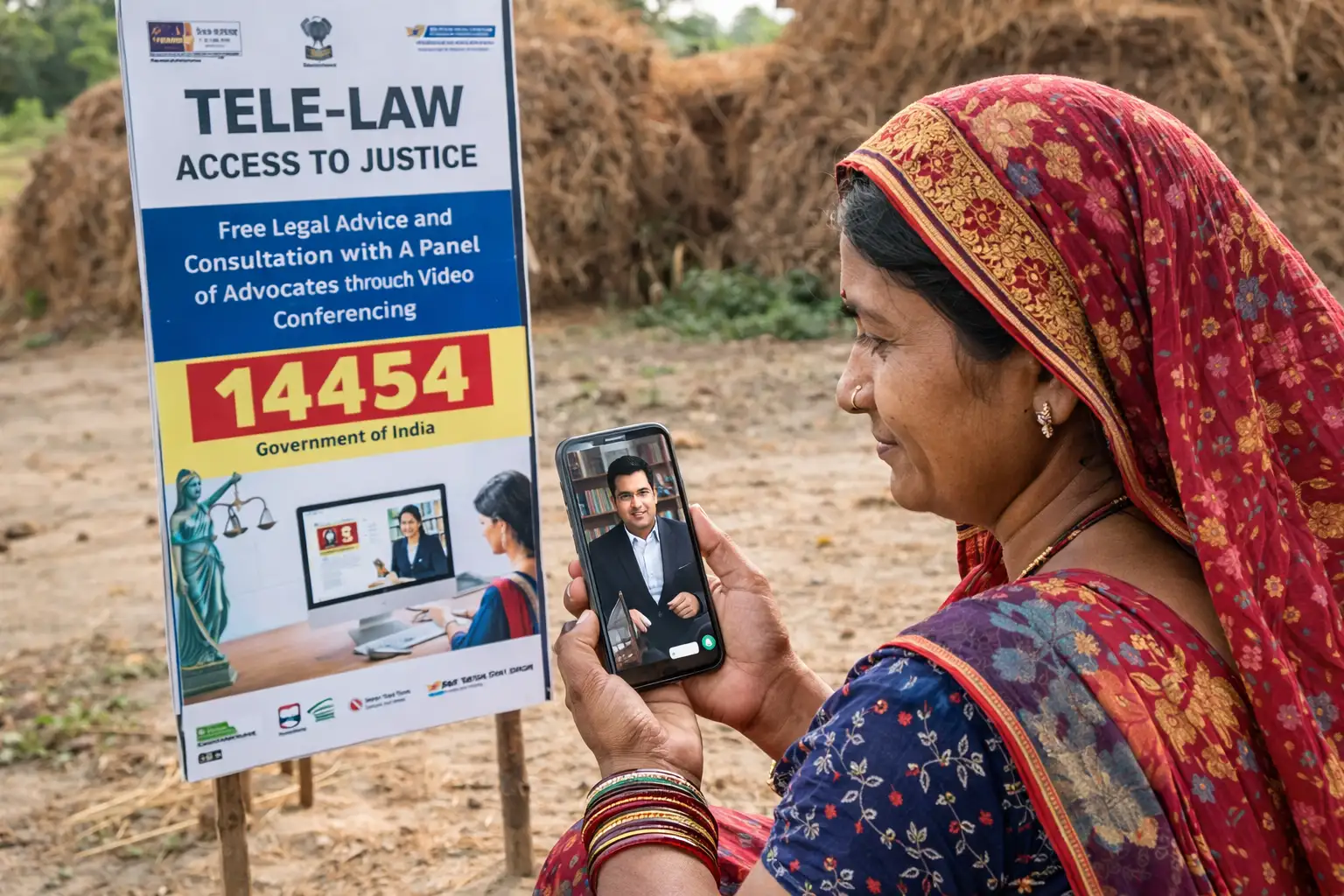
This government legal aid scheme uses technology to bridge the gap between citizens and legal professionals. Through telephone and video consultations, people can discuss their concerns with empanelled lawyers in a secure environment. The system is structured to maintain confidentiality, allowing individuals to speak openly about sensitive matters without fear of exposure.
By reducing dependency on physical visits to law offices, the service saves both time and money. It also minimises the confusion that often surrounds legal procedures, particularly for those unfamiliar with court processes.
Women and children facing domestic violence can receive direction on the appropriate legal steps to take. Similarly, employees who are denied wages or other lawful entitlements may obtain advice on how to proceed.
In addition, beneficiaries struggling to access welfare schemes, pensions or ration benefits can seek clarity on their rights and available remedies. By covering everyday legal concerns, the Common Service Centre legal help model ensures that assistance is not restricted to complex court battles but extends to practical issues affecting daily life.
For those without internet access or smartphones, the nearest Common Service Centre provides support. Staff members help register the complaint digitally and arrange either a phone call or video interaction with a legal expert. This hybrid approach ensures inclusivity, particularly for rural communities.
Once connected, the citizen can discuss the matter in detail and receive guidance on possible legal remedies and next steps. The emphasis is on clarity, confidentiality and practical advice.
The service also eliminates the need for long queues or travel to distant towns. Conversations remain private, and consultations are conducted by trained, government-certified lawyers. Moreover, assistance is available in several regional languages, making communication easier for people from diverse backgrounds.
By combining technology with legal expertise, the government legal aid scheme is helping to ensure that justice is not limited by geography or income. Tele-Law stands as a practical step towards making the legal system more approachable, transparent and citizen-friendly in today’s digital era.
Image Courtesy: ChatGPT
What Is The Tele-Law Service?
The Tele-Law programme is a Department of Justice initiative designed to make legal support accessible to every section of society. Its central aim is to ensure that even the most marginalised individuals understand their rights and the remedies available to them under the law.This government legal aid scheme uses technology to bridge the gap between citizens and legal professionals. Through telephone and video consultations, people can discuss their concerns with empanelled lawyers in a secure environment. The system is structured to maintain confidentiality, allowing individuals to speak openly about sensitive matters without fear of exposure.
By reducing dependency on physical visits to law offices, the service saves both time and money. It also minimises the confusion that often surrounds legal procedures, particularly for those unfamiliar with court processes.
Types Of Issues Covered Under Tele-Law
The scope of online legal consultation India under Tele-Law is broad. Citizens can seek guidance on family-related disputes, including divorce, maintenance, and child custody. Property conflicts, such as disagreements over ancestral land or unlawful occupation, are also addressed.You may also like
- Gujarat Urban Development Mission (GUDM) bags the best Community Impact Project award
- Trump's terror-like actions must be resisted: CPI (M) leader
- BJP's Anirban Ganguly opposes West Bengal name change, says "TMC wants to erase history"
- Two Bangladeshis arrested in Meghalaya's West Jaintia Hills
- Rohini POCSO Court seeks conclusive report from Delhi Police CP over delay, contradictory status reports in child sexual assault case
Women and children facing domestic violence can receive direction on the appropriate legal steps to take. Similarly, employees who are denied wages or other lawful entitlements may obtain advice on how to proceed.
In addition, beneficiaries struggling to access welfare schemes, pensions or ration benefits can seek clarity on their rights and available remedies. By covering everyday legal concerns, the Common Service Centre legal help model ensures that assistance is not restricted to complex court battles but extends to practical issues affecting daily life.
How To Access The Service
The process to use the Tele-Law service India is intentionally straightforward. Individuals can dial the toll-free number 14454 and briefly describe their concern to an operator. A suitable time is then arranged for consultation with a lawyer.For those without internet access or smartphones, the nearest Common Service Centre provides support. Staff members help register the complaint digitally and arrange either a phone call or video interaction with a legal expert. This hybrid approach ensures inclusivity, particularly for rural communities.
Once connected, the citizen can discuss the matter in detail and receive guidance on possible legal remedies and next steps. The emphasis is on clarity, confidentiality and practical advice.
Key Benefits Of Tele-Law
One of the most significant advantages of this Department of Justice initiative is that it offers free legal advice India without charging consultation fees. Legal services can often be expensive, deterring people from seeking help. Tele-Law removes this financial hurdle.The service also eliminates the need for long queues or travel to distant towns. Conversations remain private, and consultations are conducted by trained, government-certified lawyers. Moreover, assistance is available in several regional languages, making communication easier for people from diverse backgrounds.
By combining technology with legal expertise, the government legal aid scheme is helping to ensure that justice is not limited by geography or income. Tele-Law stands as a practical step towards making the legal system more approachable, transparent and citizen-friendly in today’s digital era.
Image Courtesy: ChatGPT






More from our partners


Loving Newspoint? Download the app now
